
Soil Bioengineering Methods
Compare methods for eroding slopes, streambanks and disturbed mine land. Treatment selection depends on site conditions and the problem to address.
Soil bioengineering uses living plant material as part of a restoration treatment. Wattle fences retain surface soil, and live pole drains provide paths for seepage. Rough and loose surface preparation creates protected places where vegetation can establish.
PES selects and combines living treatments, drainage, planting and conventional protection to suit the site. Water, soil, access, suitable species and establishment care all affect the choice. The techniques below support our services.
Field-Tested Techniques
From live staking and joint planting to brush layering and wattle fencing, each method is matched to the plant materials and site conditions found across British Columbia.
Site-Specific Selection
Soil type, slope gradient, hydrology, and biogeoclimatic zone all determine which technique will perform. We specify based on conditions, not convenience.
Ecological Recovery
The goal is recovery beyond initial stabilization: techniques can create conditions for vegetation to establish and ecological function to develop over time.
The Techniques
Open a method to explore its purpose, installation approach and site requirements.

Live Staking
The foundational technique. Dormant willow, cottonwood, or red-osier dogwood cuttings inserted directly into an eroding slope or streambank, where they root and rebuild the biological systems that hold soil in place.
Learn more →
Wattle Fencing
Living retaining walls of horizontal willow stems laid behind vertical posts, backfilled and lightly tamped down that terrace a slope into small steps, intercepting eroding material and creating protected microsites for native vegetation to establish. Used on documented slopes as steep as 70 degrees, where site conditions are suitable.
Learn more →
Live Bank Protection
Dense wattle construction along a stream or river edge that forms a woody buffer protecting against lateral erosion while re-establishing functional riparian vegetation. Often combined with brush mats on high-erosion sites.
Learn more →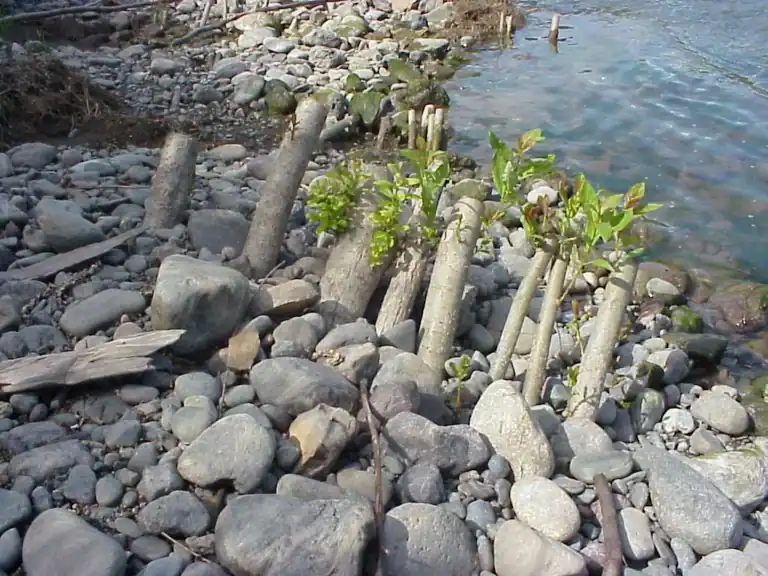
Live Palisades
Large living cottonwood posts set by excavator beside eroding riverbanks. Suitability depends on bank conditions, water levels and whether the posts can establish.
Learn more →
Live Gravel Bar Staking
Large willow and cottonwood cuttings installed in suitable gravel bars to encourage sediment deposition and woody vegetation establishment.
Learn more →
Modified Brush Layers
Logs placed on the contour of dry, raveling slopes and anchored with live stakes, forming small terraces that arrest downslope movement and create protected planting microsites. The method for slopes too dry for wattle fences.
Learn more →
Live Pole Drains
Living French drains: trenches filled with willow poles that intercept the subsurface seepage causing slope instability, combining immediate hydraulic drainage with growing-season transpiration. Often paired with wattle fences.
Learn more →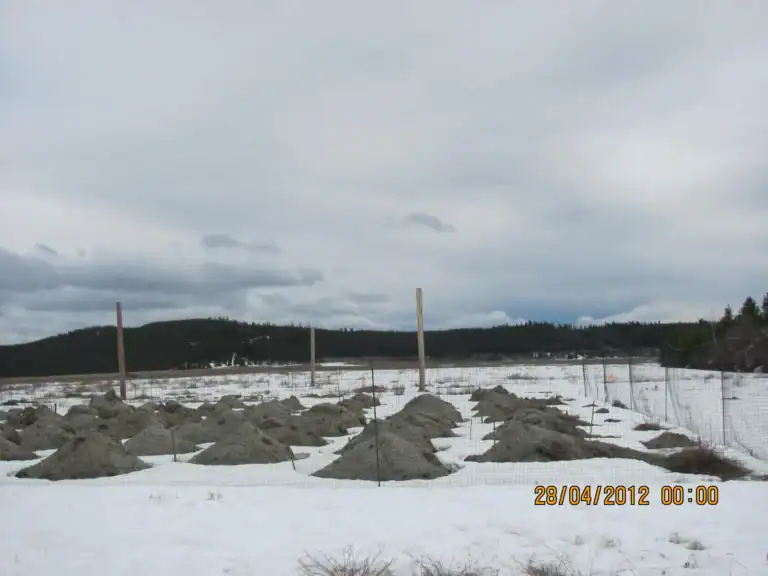
Rough and Loose Surface Treatment
An excavator creates holes and mounds across disturbed ground. This uneven surface traps seed, moisture, and organic matter and provides sheltered microsites for natural colonization.
Learn more →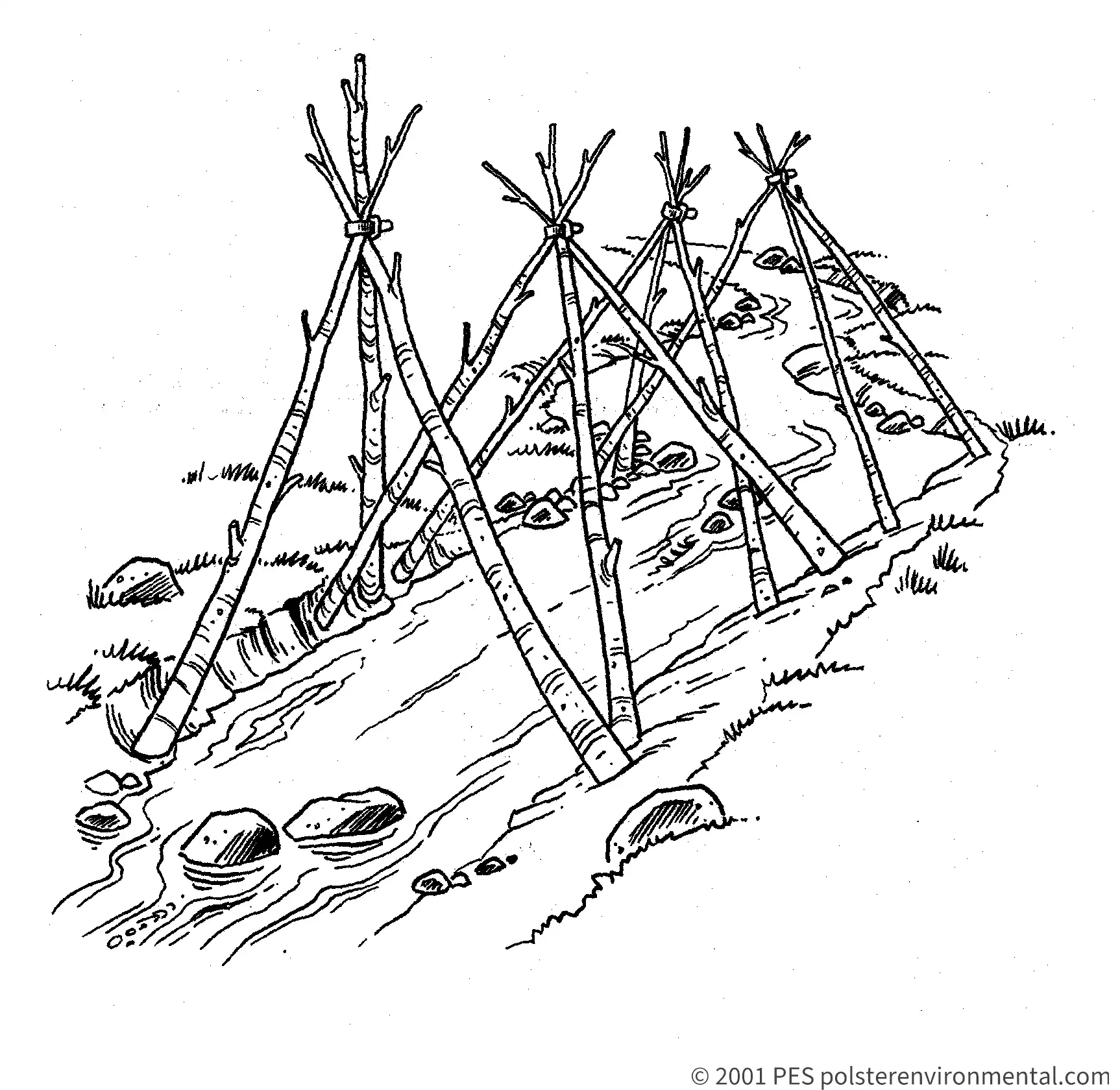
Live Shade
A-frame structures of live poles span a stream channel to provide shade. The diagram shows how the poles are arranged above the water; establishment depends on suitable species, moisture, and site conditions.
Learn more →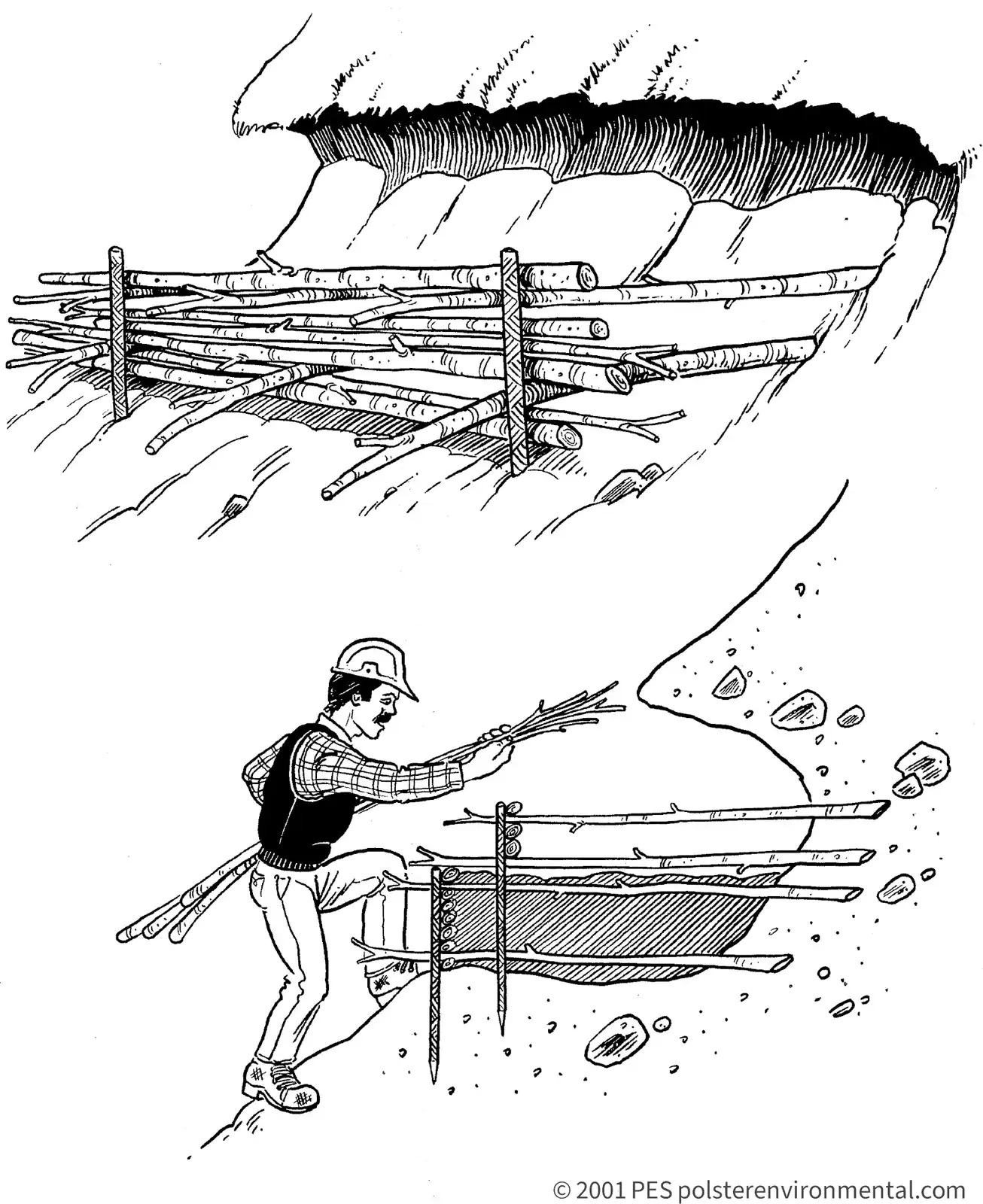
Live Reinforced Earth Walls
Structural earthworks reinforced with live willow elements: the walls hold the slope while the willows grow through them, combining immediate structural stability with long-term biological reinforcement and deepening root systems.
Learn more →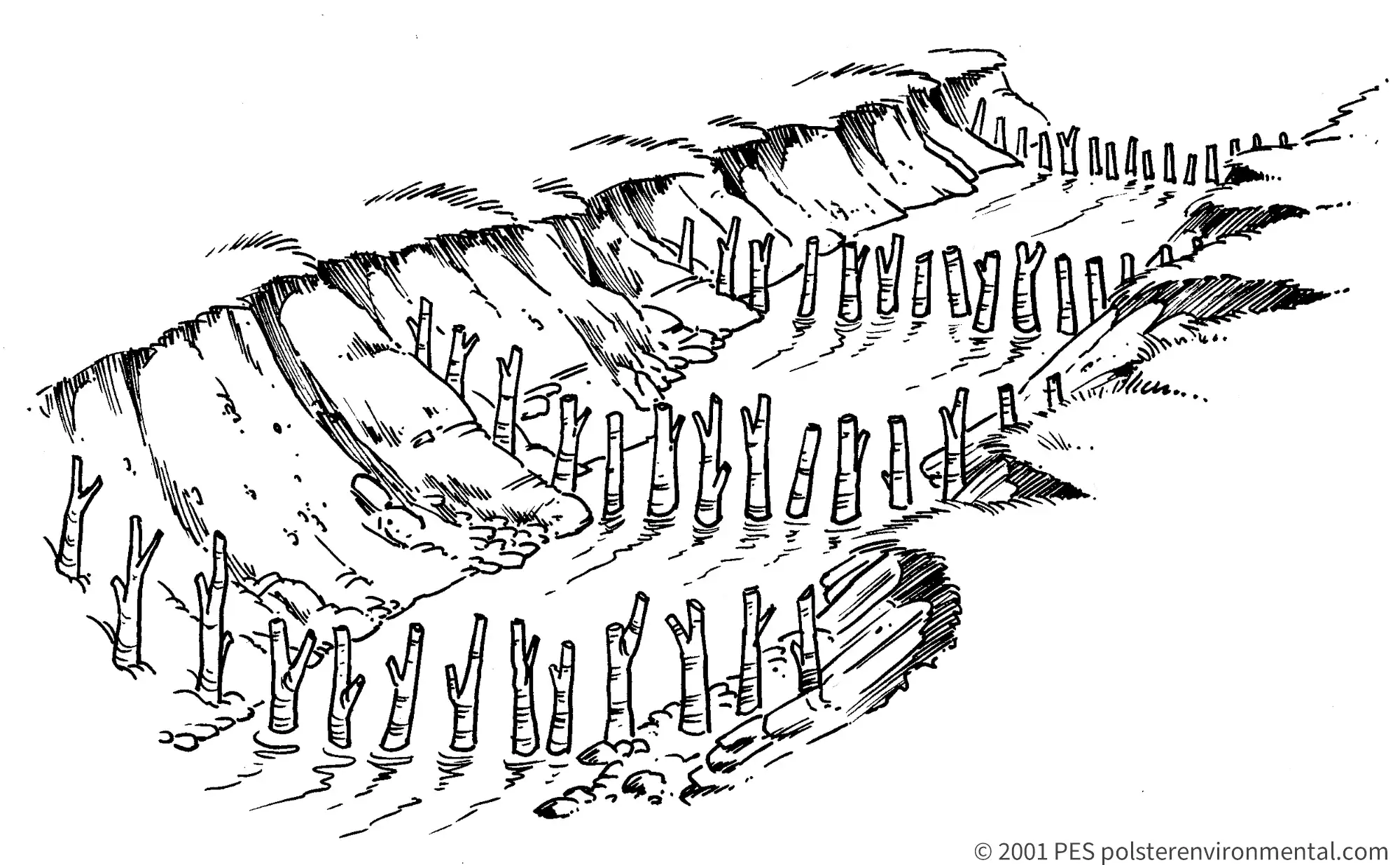
Live Silt Fences
Temporary sediment barriers constructed with live willow cuttings and biodegradable fabric. They intercept eroding material during site establishment, then root in place as permanent living fence lines requiring no removal.
Learn more →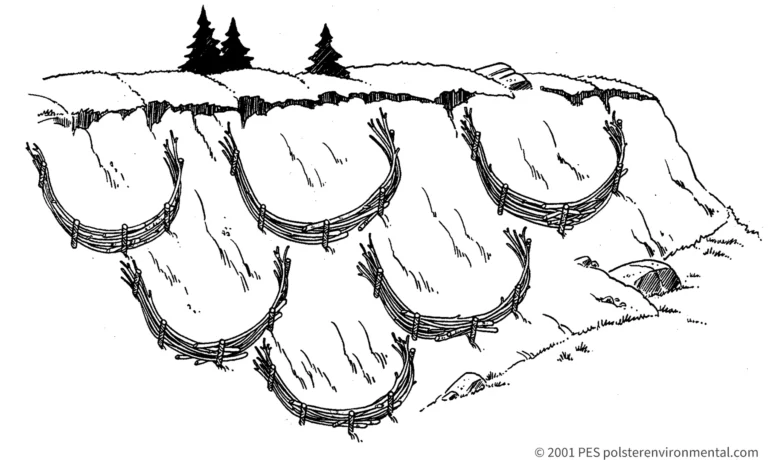
Live Smiles
Willow bundles anchored across confined drainages in a catenary arc. The curved form works in tension against flowing silt, while the live cuttings can root where moisture and site conditions support establishment.
Learn more →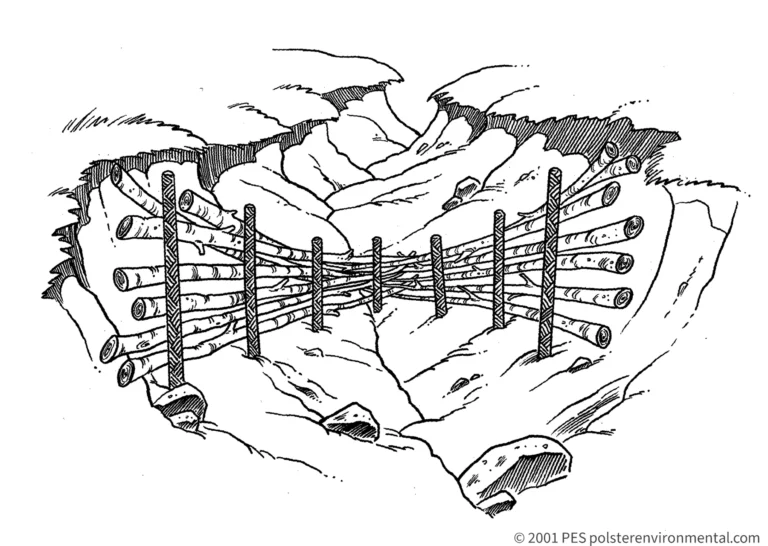
Live Sills
A low-profile structure of living willow cuttings across small gullies and drainages, used to slow water and retain sediment while vegetation establishes.
Learn more →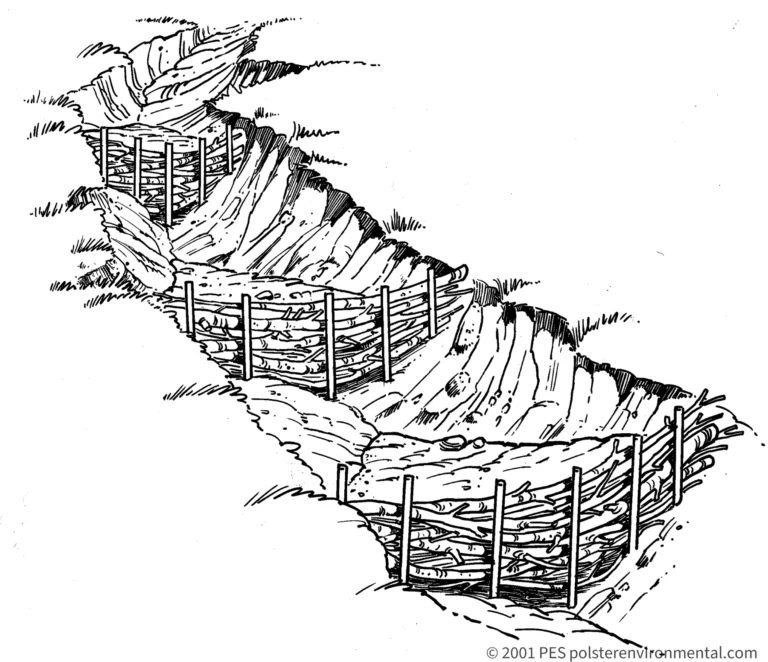
Live Gully Protection
A sequential system of living structures, including sills, wattle fences, and live stakes, installed along an active gully to arrest headward erosion, trap sediment, and close the gully with native vegetation from the bottom up.
Learn more →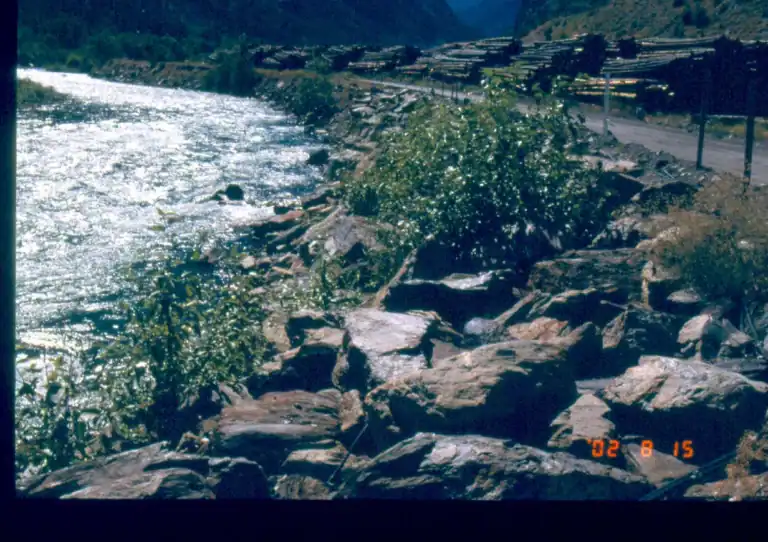
Pocket Planting
Individual pockets of loosened soil create planting sites in compacted or coarse ground, including mine waste rock and highway cut slopes.
Learn more →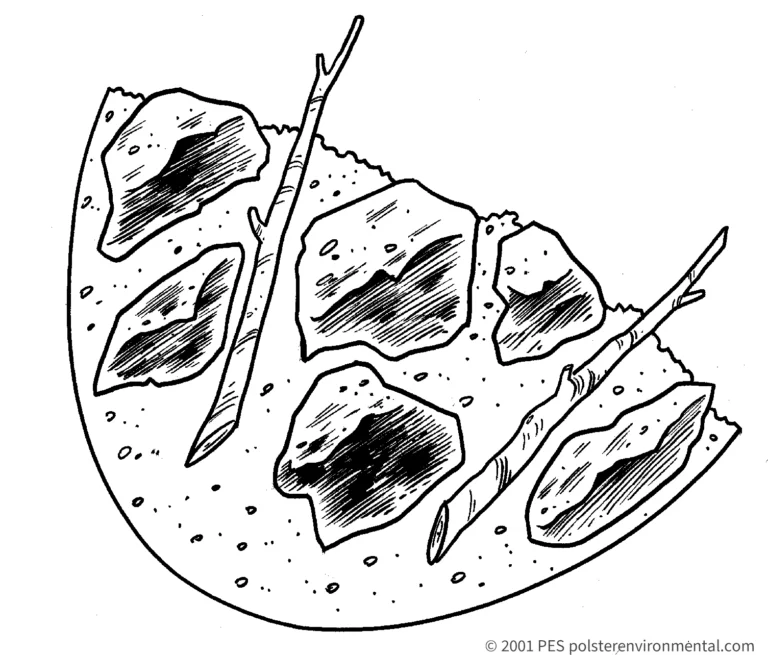
Vegetated Riprap
Conventional rock armouring with living willow and cottonwood cuttings installed in the voids and upper surface of the riprap layer. The plants root into the bank, progressively supplementing the structural role of the rock with living reinforcement and restoring riparian habitat.
Learn more →Start with the Site
Technique selection begins with soil type, slope angle, hydrology, and plant availability specific to the location.
Combine Treatments Where Needed
Living treatments, surface preparation, drainage and conventional protection can be combined where the site requires them.
Establishment Window Matters
Dormancy timing, species sourcing, and seasonal soil moisture determine whether plantings survive their first year.
Which Technique Fits Your Site?
Matching treatment to site is the most important step in any project. The right method depends on what is driving the problem, the moisture regime, the scale, and the substrate:
Stream erosion cutting a bank → live bank protection, wattle fences, live palisades
Braided channel with bare gravel → live gravel bar staking
Subsurface seepage causing slope failure → live pole drains
Overland flow eroding a slope → wattle fences, modified brush layers
Dry, well-drained slope → modified brush layers
Mine waste rock and tailings → rough and loose plus live staking
Most real sites have several problems at once, and the techniques combine readily, for example live pole drains to intercept seepage, wattle fences to terrace the slope above, and live staking throughout to accelerate revegetation. The right combination is a site-specific judgment, which is what our assessment provides.
Field Resources That Support These Methods
The methods library now connects to practical support pages that help crews and planners move from theory to implementation.
Not Sure Which Method Your Site Needs?
We assess slope angle, moisture regime, soil type, disturbance history, and your restoration objectives, then recommend the right technique or combination.
Serving municipal governments, mining and resource companies, developers, First Nations, and provincial agencies across British Columbia.