
Rights-of-way, access roads and footprints
Oil, Gas & Linear Disturbance Reclamation
Apply natural-process restoration to compacted corridors and industrial footprints, with the treatment matched to the actual disturbance.
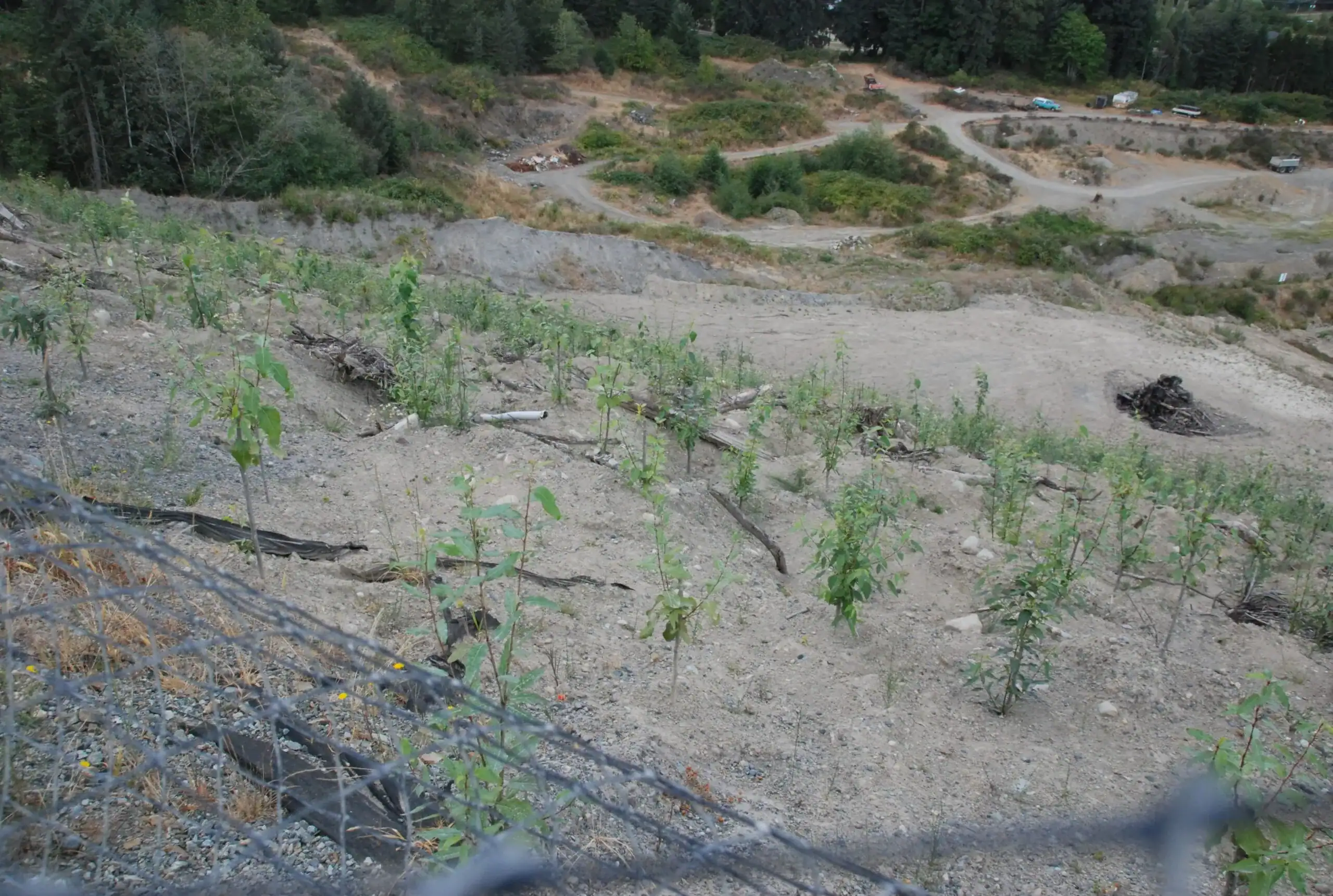
What may be happening
Diagnose before prescribing
Access roads, wellpads, pipeline rights-of-way and other linear disturbances often leave compacted, smooth surfaces that concentrate runoff and interrupt natural vegetation patterns. The same corridor can contain wet pockets, exposed mineral soil, eroding grades and intact edges, so a uniform prescription is rarely the best answer.
We treat the parts of a corridor that need work. Rough and loose preparation, live staking and slope treatments each fit different conditions. Intact native edges and nearby seed sources can help recovery, so the assessment comes before a uniform prescription.
Methods that may fit
Treatment follows site conditions
Rough and loose
Break compaction and create microsites across suitable footprints.
Live silt fences
Trap mobile sediment while living cover develops.
Modified brush layers
Reinforce eroding fills and corridor slopes.
Live staking
Reintroduce suitable pioneering woody species.
Field evidence
See the method in context
Highway living systems
Roadside examples showing diagnosis before treatment selection.
View the evidence →Butler Bros
Rough and loose treatment and live staking on compacted industrial disturbance.
View the evidence →West Portal succession
Natural succession lessons from a major linear infrastructure disturbance.
View the evidence →Read the source material
PES starts with a practical question: what is stopping this site from recovering? The treatment should address that limiting condition and support the next stage of succession.
Where this service fits
Common site types and project needs
These are starting points, not a substitute for assessment. A project may combine several service areas.
- Pipeline rights-of-way
- Wellpads and industrial footprints
- Access-road decommissioning
- Utility and transportation corridors
From first look to field follow-through
A practical four-part path
Assess
Review the site, disturbance history, forces, constraints and desired outcome.
Select
Match methods, species, materials and timing to the limiting process.
Support
Provide specifications, installation guidance and field decisions where required.
Learn
Monitor trajectory and adjust when field evidence shows a better path.
Questions clients ask
Oil, Gas & Linear Disturbance FAQ
Has PES documented oil-and-gas project work?
Not in the current portfolio. The service description covers method applicability, and its evidence links are clearly identified analogues from roads, mines and other compacted disturbances.
Can rough and loose treatment be used across an entire right-of-way?
Only after checking drainage, soil, slope, safety, access and recovery objectives. Some areas may need decompaction while others should be left intact or treated with a different method.
Can the work be integrated into a reclamation plan?
Yes. PES can support treatment selection, specifications, field direction and monitoring criteria so natural-process methods are clearly defined within a broader plan.
Bring the site problem into focus
Send the location, current photographs, known history and the outcome you need. PES will help identify the right next step.