
Oceanfront property work · British Columbia coast
Oceanfront Shoreline Restoration
Living shoreline work for coastal properties dealing with an eroding bank, wave run-up, unstable fill or a beach edge that has lost its vegetation.
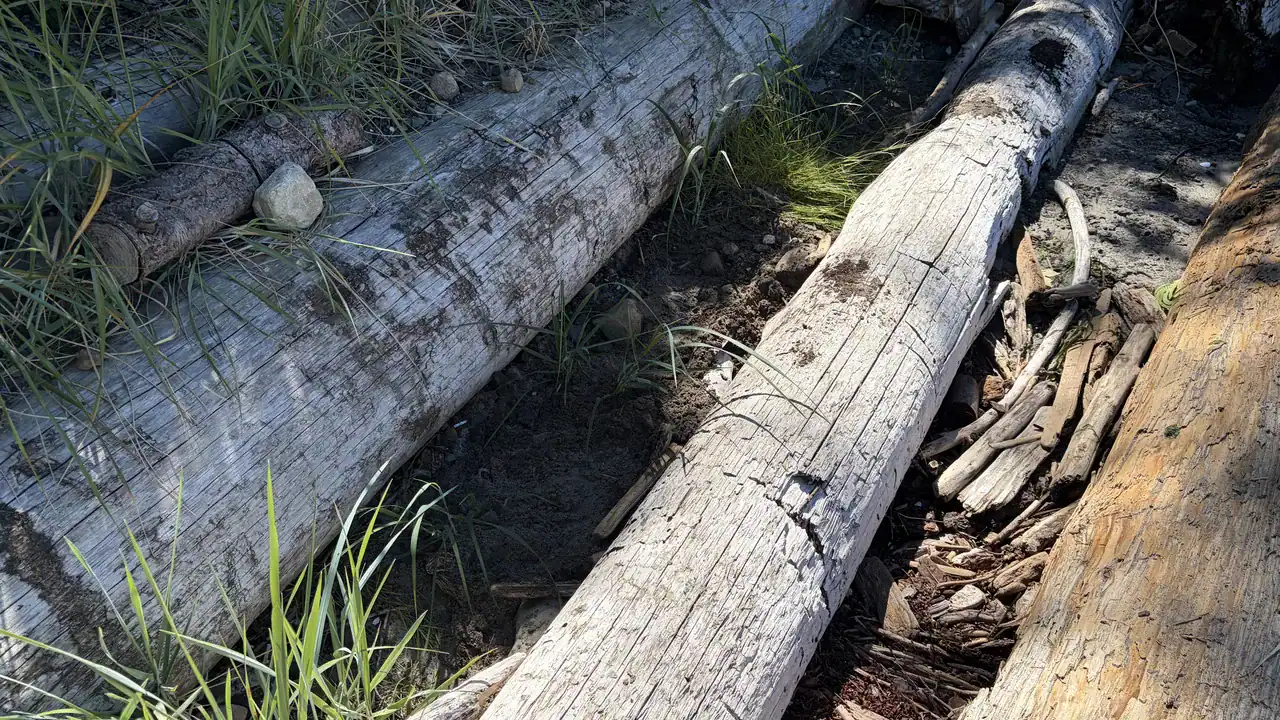
Start with the shoreline
Work With Coastal Processes
A softer shoreline is not simply a planting job. The shape of the bank, the direction of drainage, the beach material and the way waves reach the toe all matter first.
PES looks for the process that is keeping a site unstable. Where conditions allow, the work may combine regrading, anchored beach logs, live wattle rows and native planting. The logs interrupt wave run-up and hold beach material. The vegetation then builds a living root network through the bank.
The aim is not to overpower the shoreline. It is to remove what is blocking recovery and give natural processes a small, well-placed push.
What the first assessment looks for
Four parts of the same problem
Wave exposure
Where wave run-up reaches, how driftwood moves, and whether a log-based treatment can remain stable.
Bank geometry
Over-steepened slopes and loose fill must be corrected before roots can do useful structural work.
Upland water
Roof water, paths and concentrated drainage can continue cutting a bank even after the shoreline face is repaired.
Planting zones
Willow, nursery stock and dune grass are placed according to moisture, elevation, salt exposure and wave action.
Pender Island field example
An eroding bank, rebuilt as a living shoreline
Green Shores for Homes Gold · 2025The Pender site gives a useful view of the sequence: first make the bank physically workable, then install the living structure, then watch how it responds.
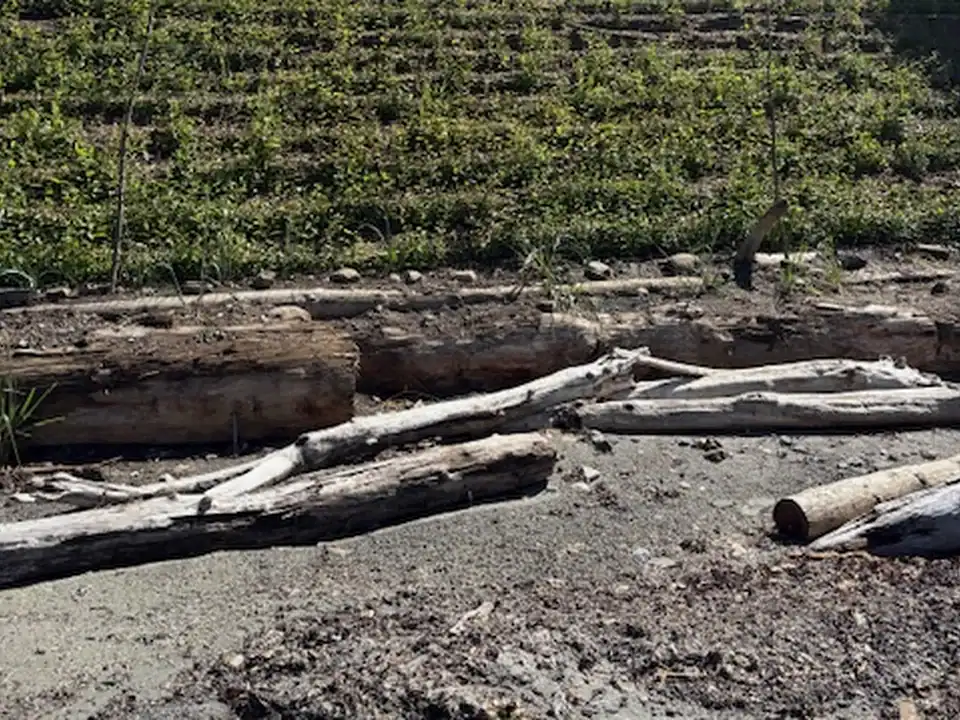
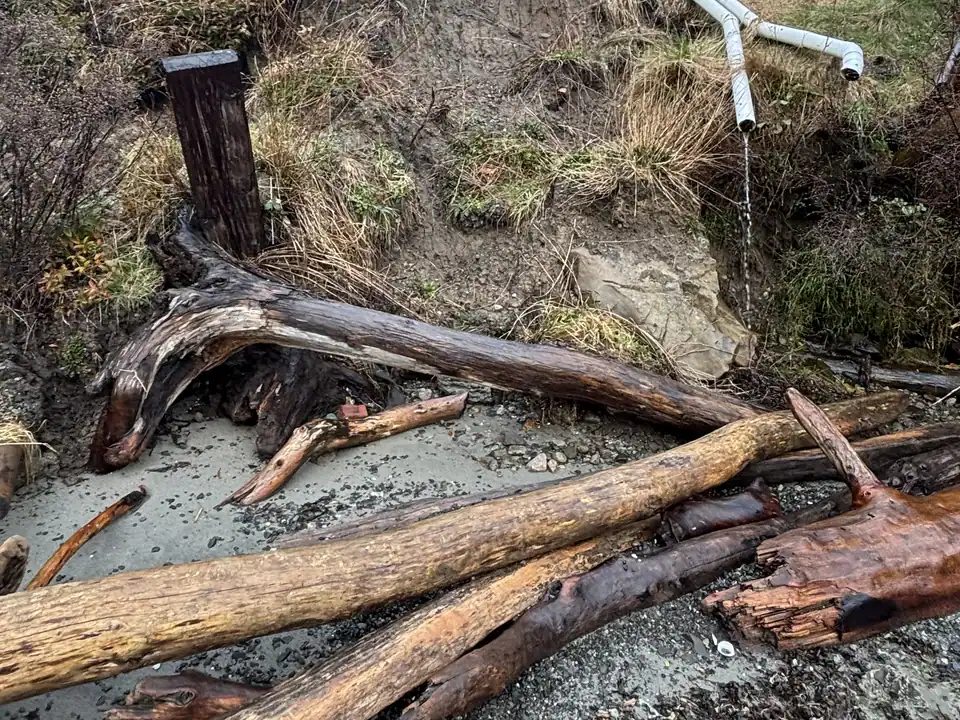
Drag the control or use the arrow keys. The residence has been cropped from the public comparison.
What changed on site
In March 2025, sections of the bank were over-steepened and actively eroding around the beach access. The project team treated the causes in sequence.
- Regrade the bank so surface planting was not being asked to hold an unstable slope.
- Anchor beach logs near the toe to work with material already natural to this shore.
- Install live wattle rows across the face and plant native nursery stock between them.
- Place dune grass only in the shore elevations suited to its growth and wave exposure.
How the work is developed
A practical sequence, not a standard package
Read the site
Review shoreline exposure, drainage, bank material, vegetation, access and the history of failure.
Set the grade
Correct unstable geometry and deal with concentrated water before relying on live materials.
Build living structure
Combine logs, wattles, cuttings and nursery plants according to the zones that each material can tolerate.
Monitor
Check anchoring, plant response and new erosion after the site has experienced real weather and tides.
Monitoring matters
The installation is only the beginning
A June 2026 site check found the anchored logs still in place from June 2025 and the cables intact. Willow, native nursery plants and dune grass were growing, with the dune grass performing where its elevation and wave exposure suited it.
That is the useful question after construction: not whether a project looked finished on installation day, but whether the living system is establishing and the structural pieces are still doing their jobs.
Questions from shoreline owners
Oceanfront restoration FAQ
Can beach logs replace riprap?
Sometimes, but not everywhere. Exposure, bank height, sediment, infrastructure and the way waves reach the property all affect whether logs and vegetation are suitable. Some sites need a hybrid treatment or engineered protection.
What plants are used on an oceanfront bank?
Species are matched to the shore zone. Live willow and wattle material may fit moist portions of the bank; nursery-grown native shrubs and groundcovers can fill other zones; dune grass belongs only where elevation, salinity and wave action suit it.
Do I need permits?
Oceanfront work may involve local development permits, provincial foreshore requirements and environmental review. The exact path depends on location and scope, so it should be checked while the concept is being developed.
How quickly will the slope turn green?
Live material can begin growing in its first season, but establishment varies with timing, moisture, browsing and weather. The Pender photographs show early growth, not a promise that every site will respond at the same rate.
What should I send for an initial review?
Current photographs from the beach and the top of the bank, any known drainage problems, a short history of the erosion, and the location are the best starting points. Private material can be reviewed without being published.
Start with a clear look at the shoreline
Send photographs and a short account of what has changed. PES can help determine whether a living shoreline, a hybrid treatment or a different first step makes sense.