
Making Sites Rough and Loose for Enhancing Natural Processes
David F. Polster, M.Sc., R.P.Bio. | Polster Environmental Services Ltd., July 26, 2013
Rough and loose surface treatments (Polster 2009) provide an effective way to control erosion and create conditions that promote the revegetation of the site. Rough and loose sites create conditions that promote the natural recovery of the disturbed sites. By creating topographic heterogeneity (Larkin et al. 2008) the rough and loose surface configurations provides increased diversity of habitats therefore improves ecological resilience (Holling 1973). This brief document shows how sites can be made rough and loose to gain these ecosystem benefits and initiate natural successional processes (Polster 1989).
Natural processes are the non-human methods that serve to re-establish ecosystems on disturbed sites (Polster 2013). These sites can be naturally disturbed such as glaciation, landslides or stream erosion, or they can be caused by human activities such as mines, oil and gas operations, forestry and urban developments. In either case, natural processes will eventually establish a vegetation cover on the site. By analyzing how these processes operate, we can apply them to the disturbances humans make. For instance, one of the key issues associated with revegetation of disturbances is the ability of seeds to find safe sites to land in, germinate and grow. Making sites rough and loose provides a solution to this problem.
Compaction is one of the major constraints (filters) preventing recovery of disturbed sites. Excessively compacted sites lack micro-sites for seeds to lodge in and plants to grow. In addition, compaction limits root growth, resulting in stunted trees (Photograph 1). Weathering, including repeated freeze/thaw cycles will loosen the soils over hundreds of years. The inability of vegetation to establish on compacted surfaces can be easily addressed by making the surface rough and loose.
Rough and loose surface configurations (Photographs 2 and 3) can be achieved by using an excavator to open holes on the slope, dumping the material that is generated from the holes in mounds between the holes. The excavator, using a digging bucket (not clean-up), takes a large bucket full of soil and places it to the left of the hole that was just opened, half a bucket width from the hole so it is half in and half out of the hole. A second hole is then excavated half a bucket width to the right of the first hole. Material from this hole is then placed between the first and second holes. A third hole is now opened half a bucket width to the right of the second hole, with the excavated soil placed between the second and third holes. Care should be taken when excavating the holes to shatter the material between the holes as the hole is dug. The process of making holes and dumping soil is continued until the reasonable operating swing of the excavator is reached. The excavator then backs up the width of a hole and repeats this process, being sure to line up the holes in the new row with the space between the holes (mounds) on the previous row.
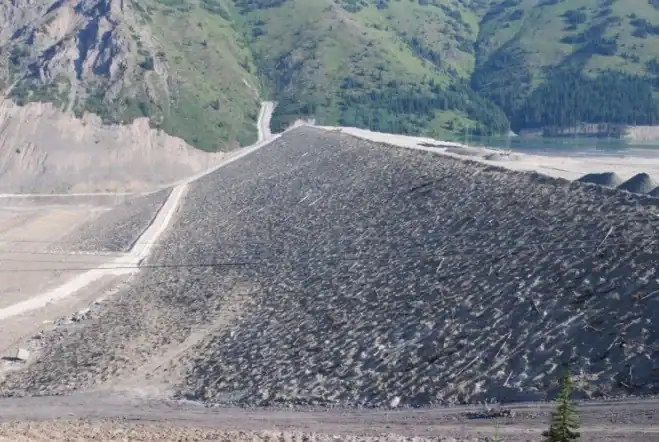
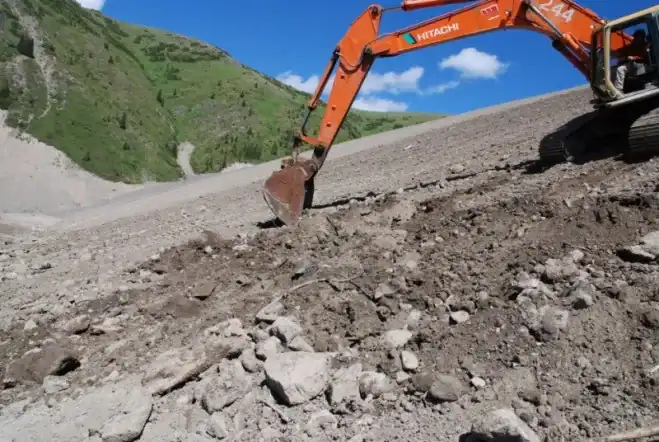

Rough and loose surface treatments can be used in confined areas as well as in large open areas (Photograph 4). These treatments are ideal for recovering hydrologic integrity on resource access roads and where unauthorized access by motor vehicles ("quads" and "dirt bikes") is causing ecological degradation. The rough and loose treatments can be used on coarse textured substrates and can be applied in areas where potentially droughty conditions dictates that planting be conducted on north facing slopes (Photograph 5).
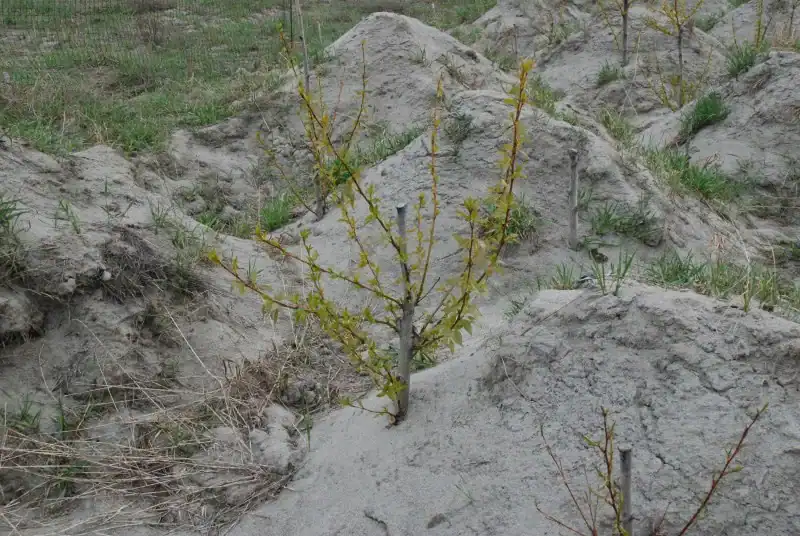
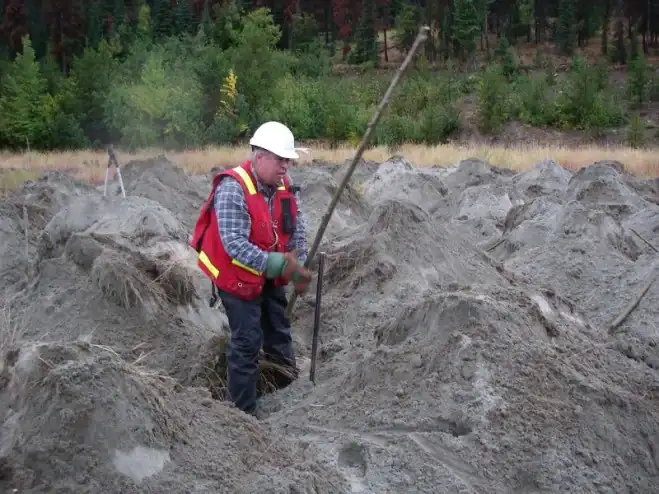
The rough and loose treatment provides ideal conditions for live staking (Polster 2006) as the soils are loose so the stakes can be planted deeply and roots can grow unencumbered by compaction (Photographs 6 and 7). Live staking can be used to establish pioneering species such as Balsam Poplar and Willow. Two meter long cuttings inserted one meter into the substrate allows substantial root systems to develop and fosters successful establishment of these species.


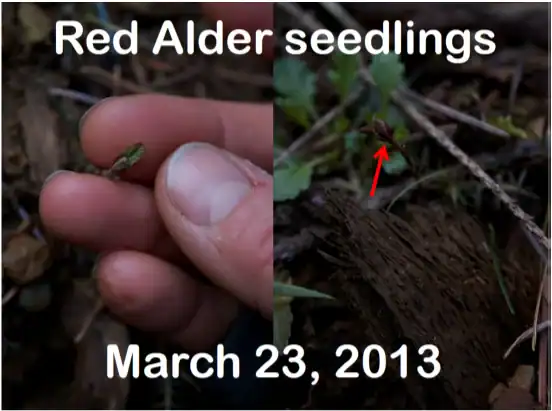
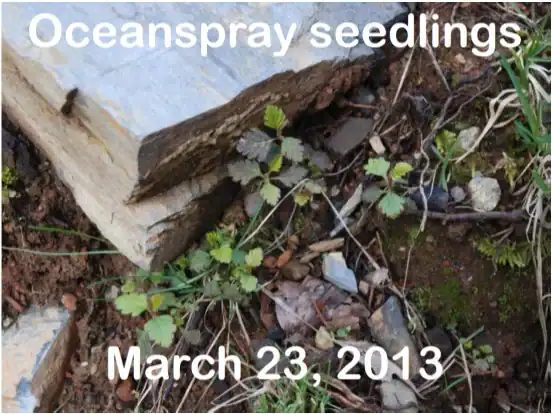
The rough and loose surface treatments provide ideal microsites for seeds to lodge in and for seedlings to grow (Photograph 8, 9 and 10). Where local conditions provide ample seed, a diversity of native species will naturally establish. In general, these species will be appropriate for the sites where they establish so that moisture loving species will establish in the bottoms of the holes while species that favour dry sites will be found on the tops of the mounds. This species diversity enhances ecosystem resilience.

Literature Cited
Holling, C.S. 1973. Resilience and stability of ecological systems. Annu. Rev. Ecol. Syst. 4: 1-23.
Larkin, Daniel J., Sharook P. Madon, Janelle M. West, and Joy B. Zedler. 2008. Topographic heterogeneity influences fish use of an experimentally restored tidal marsh. Ecological Applications 18:483 – 496.
Polster, D.F. 1989. Successional reclamation in Western Canada: New light on an old subject. Paper presented at the Canadian Land Reclamation Association and American Society for Surface Mining and Reclamation conference, Calgary, Alberta, August 27-31, 1989.
Polster, D.F. 2009. Natural Processes: The Application of Natural Systems for the Reclamation of Drastically Disturbed Sites. paper presented at the B.C. Technical and Research Committee on Reclamation, BC Mine Reclamation Symposium. Cranbrook, B.C. September 14-17, 2009.
Polster, D.F. 2013. Processes and Functions: A new approach for mine reclamation. paper presented at the B.C. Technical and Research Committee on Reclamation, BC Mine Reclamation Symposium. Vancouver, B.C. September 16-19, 2013.
Put these methods to work on your site
Polster Environmental Services designs and installs soil bioengineering and natural-process restoration across British Columbia, including mine reclamation, riparian restoration, and slope stabilization.