
Butler Bros: Gravel Pit Slope Restoration
Gravel Pit, British Columbia · Rough and Loose + Live Staking
Project Overview
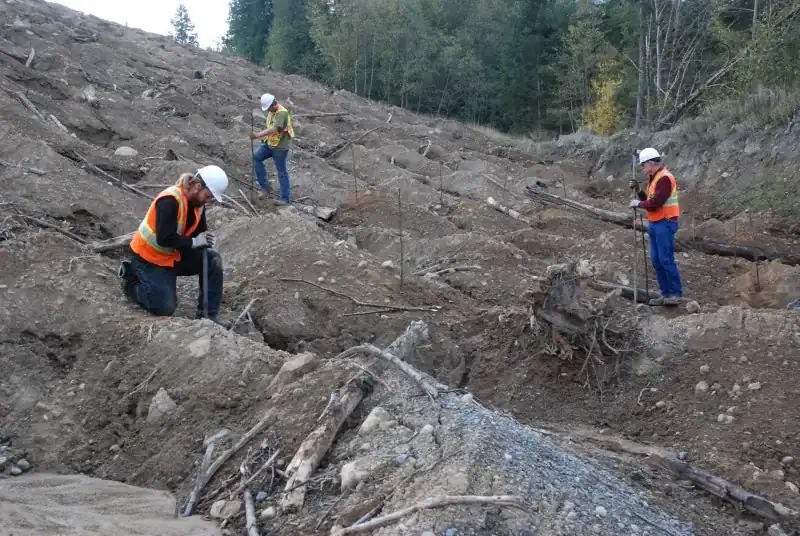
This regraded gravel pit slope in British Columbia had exposed ground and surface erosion. Restoration combined rough and loose preparation, woody debris, live staking and a deer-exclusion fence.
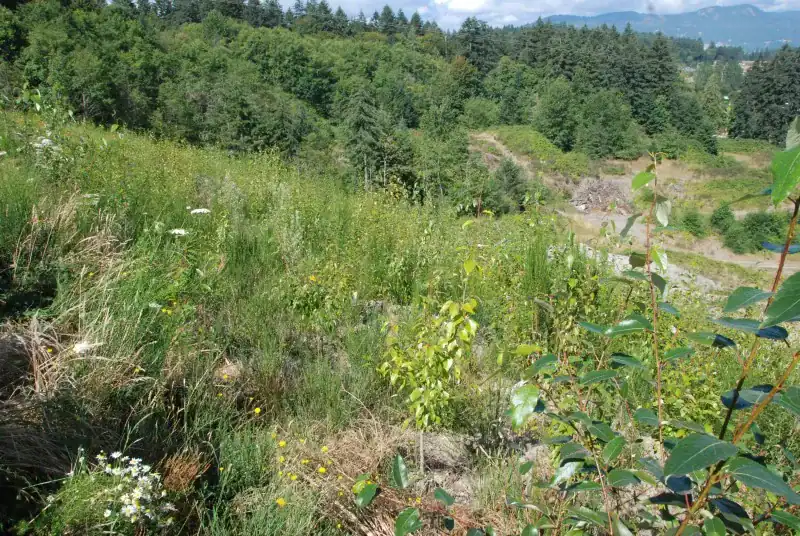
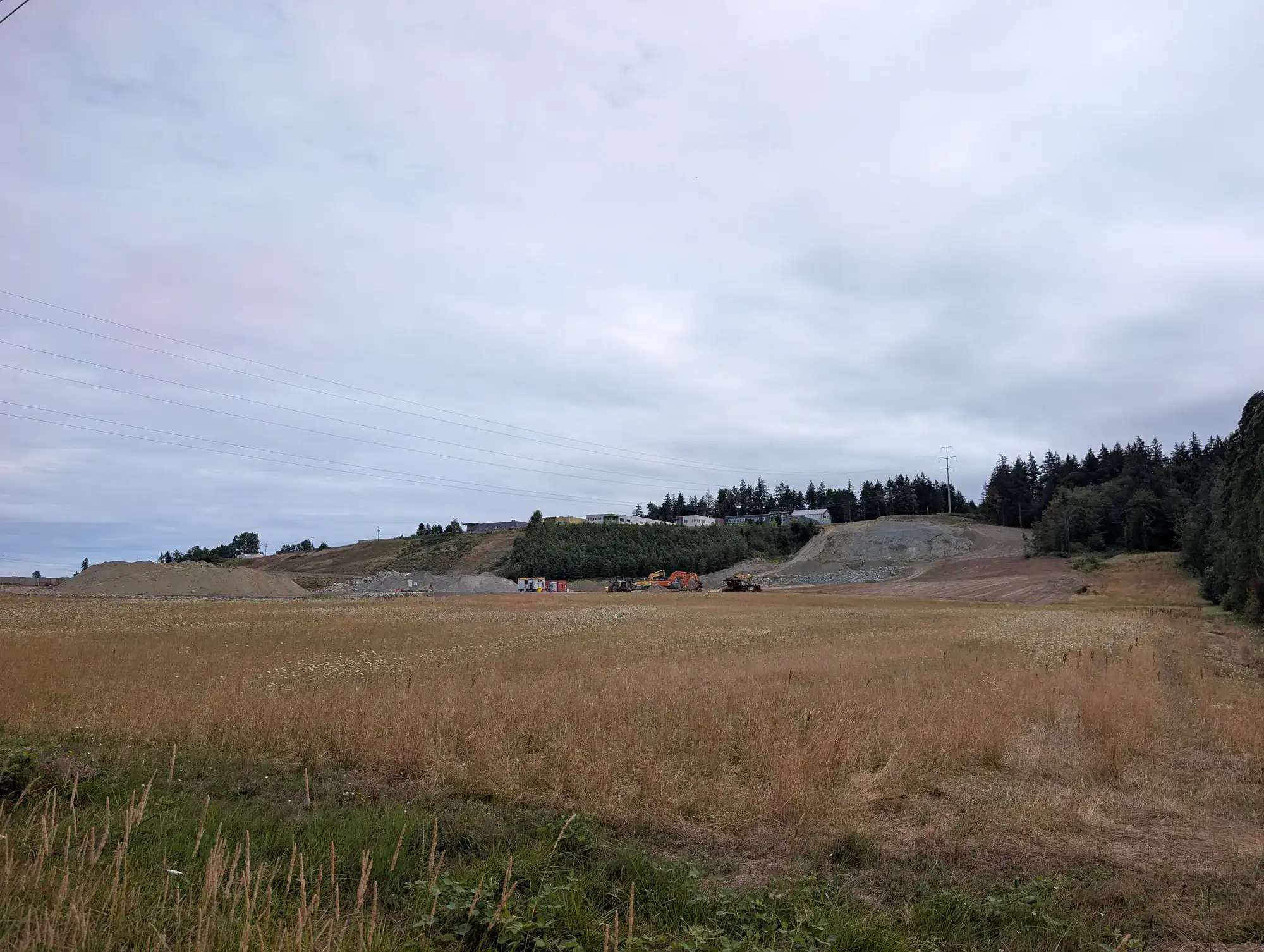
Photographs follow the slope from 2014 through later woody establishment, with additional site views from July 2026. David Polster’s presentation records the treatment sequence.
For a comparable site, explore restoration support for organizations and project teams, or discuss restoration options for a disturbed slope with PES.
Preparing the Slope for Woody Plants
Rough and loose preparation created mounds and hollows on the gravel slope. Woody debris and live staking complemented the surface preparation.
David Polster's presentation reports 2,500 live stakes installed on November 18, 2014, followed by a deer-exclusion fence. Later photographs show woody establishment. They provide a visual account of growth rather than a measured survival rate or slope stability assessment.
For similar slopes, PES assesses ground conditions, water and browsing pressure before selecting treatments, and identifies where specialist input is needed.
Butler Bros: Vegetation Development
These photographs follow the same treated slope from bare, eroding ground through installation and later woody cover.
The photographs show the same slope from different positions; dates are shown with each image.
Planning Restoration on a Disturbed Slope?
We assess the ground, water and available plant material to plan treatments for vegetation establishment. Rough and loose preparation and live staking are among the methods we consider.