
Filters to Recovery on Disturbed Sites
Learn the key abiotic and biotic filters that stop disturbed land from recovering, and how soil bioengineering methods remove or work around those barriers on BC restoration sites.
Filters to recovery are the site conditions that prevent vegetation and ecological processes from re-establishing. Identifying these barriers helps explain why a disturbed site is recovering slowly and what needs to change.
What a Filter Means
A filter is any site condition that blocks vegetation establishment, slows succession, or repeatedly resets the site before recovery can gain traction.
Some filters are physical. Some are biological. Most badly performing sites have several acting at once.
Common Abiotic Filters
The most common physical filters on PES-type projects include:
erosion that removes seed, soil, or installed plant material
compaction that limits infiltration, rooting, and microsite formation
uniform grading that sheds water and captures little organic matter
moisture extremes such as droughty slopes or seepage-driven failures
toxic or poor substrates where conventional planting struggles to establish
These are the kinds of conditions that make a site stay bare even when vegetation is added.
Common Biotic Filters
Biological filters are just as important:
invasive plants that dominate the disturbed ground
herbivory pressure from deer or other ungulates
absence of pioneer species capable of colonizing the site
poor structural diversity, which limits the next wave of species establishment
In other words, a site can be physically stable enough to support growth and still remain stuck because the wrong species win or the right species never arrive.
Why Conventional Reclamation Often Misses the Real Problem
The old Polster material returns to this point repeatedly: many conventional treatments address only the visible surface.
For example:
seeding a compacted slope does not solve compaction
smoothing a dry, raveling slope does not solve instability
armouring a stream edge does not restore riparian vegetation structure
planting into a hostile surface without creating safe microsites often produces weak establishment
That is why the same sites are often treated again and again.
How Soil Bioengineering Responds to Filters
The PES method library is valuable because each technique addresses a different filter set.
- Rough and Loose addresses compaction, surface uniformity, and lack of moisture-holding microsites.
- Wattle Fencing addresses over-steepened slopes and active surface erosion where moisture is available.
- Modified Brush Layers address dry, raveling slopes where wattle fences would struggle to root.
- Live Pole Drains address seepage and moisture-driven instability.
- Live Staking restores the pioneer woody layer when moisture access is available.
Identify the filters controlling the site, then choose treatments that remove or work around them.
A Practical Way to Think About Site Diagnosis
On most sites, the right sequence is:
1. Identify what is stopping recovery right now.
2. Decide whether the barrier is physical, biological, or both.
3. Choose the method that changes those limiting conditions.
4. Let pioneer species and succession carry the system forward.
This is the opposite of generic revegetation. It is site diagnosis first, treatment second.
Why This Matters for Clients
For a landowner, municipality, or mining client, the filters concept matters because it reduces wasted spending. If the real problem is subsurface moisture, a surface-only treatment will underperform. If the real problem is lack of safe sites, seeding alone will not create them. If the real problem is invasive pressure, planting without follow-up ecology will disappoint.
Understanding filters leads to better scopes, better sequencing, and better outcomes.
Takeaway
Recovery is usually possible. The real question is what is preventing it. This concept helps explain why PES methods work so differently from generic restoration approaches: they are built to identify and remove the specific filters that stop recovery.
Filters to Recovery: Field Examples
Filters to recovery are the physical and biological conditions that prevent disturbed sites from recovering naturally. On the Butler Bros gravel pit slope (left), compacted substrate, lack of organic matter, and active erosion form a suite of abiotic filters that prevented grass seeding from succeeding over multiple attempts. The slope continued to erode because the underlying filters were never addressed. At the Brenda Mine (right), bioengineering treatments addressed the physical filters, compaction, erosion, and lack of safe sites for establishment, allowing natural succession to proceed. The result is a self-sustaining native plant community that continues to develop without further management input.
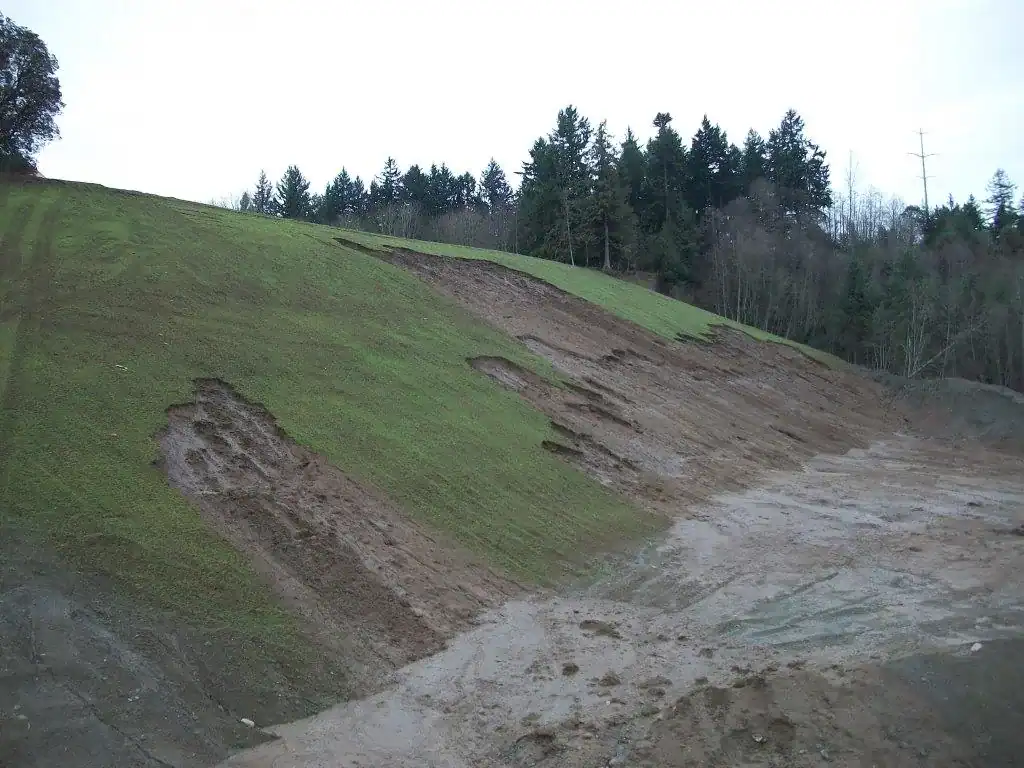
Active gully erosion on Butler Bros slope, compaction and loss of structure prevent natural recovery
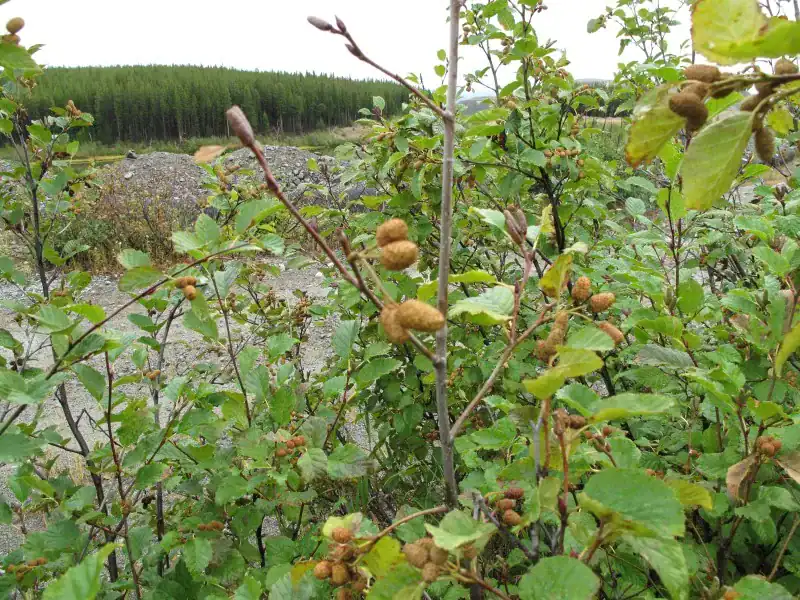
Brenda Mine recovery, once physical filters were addressed, native vegetation established without intervention
What This Means for Your Project
The filters concept explains why the same seed mix produces dramatically different results on different sites, and why physical site preparation work is almost always more important than species selection. Before specifying plants or seeding rates, assess each filter: Is surface roughness adequate? Is soil moisture accessible? Is wind erosion blocking establishment? Is livestock or wildlife browsing preventing recovery? Is the disturbance footprint still active? Each filter you remove increases establishment probability. Removing all of them on a mine tailings slope or a smooth-graded highway fill creates conditions where native pioneer species can do the rest without further intervention.
Field References for Filters to Recovery
These references describe the filters-to-recovery framework, including abiotic filters such as compaction, erosion, adverse texture, nutrient limitations, and the natural-process strategies used to overcome them.
- Polster, Natural Processes for the Restoration of Drastically Disturbed Sites | Download PES copy (2015 SER Northwest PDF)
- Polster, Natural Processes for the Restoration of Drastically Disturbed Sites, JASMR | Download PES copy (2016 JASMR PDF)
- Living on the Edge: Natural Processes Handbook, filters-to-recovery section (available through the Ecological Restoration course)
Filters Block Recovery
Physical, chemical, and biotic filters prevent re-colonisation of disturbed sites even when seed is present and conditions appear adequate.
Diagnose Before Treating
Identifying the dominant filter determines the correct bioengineering intervention and avoids wasted effort on secondary constraints.
Remove One Filter, Succession Follows
Eliminating the primary limiting factor allows natural recruitment from adjacent intact vegetation to proceed.
Need a Site-Specific Recommendation?
We can help interpret the conditions on your slope, streambank, shoreline, or disturbed site and recommend the right combination of soil bioengineering methods.
Source paper
Polster, D.F. 2013. Processes and Functions: A New Approach for Mine Reclamation. Paper presented at the B.C. Technical and Research Committee on Reclamation, BC Mine Reclamation Symposium, Vancouver, British Columbia, September 16 to 19, 2013.
The filters framework on this page is grounded in that paper and David Polster's related field teaching. See the David Polster Research Legacy for the wider research context.