
Soil Bioengineering Technique
Live Gully Protection
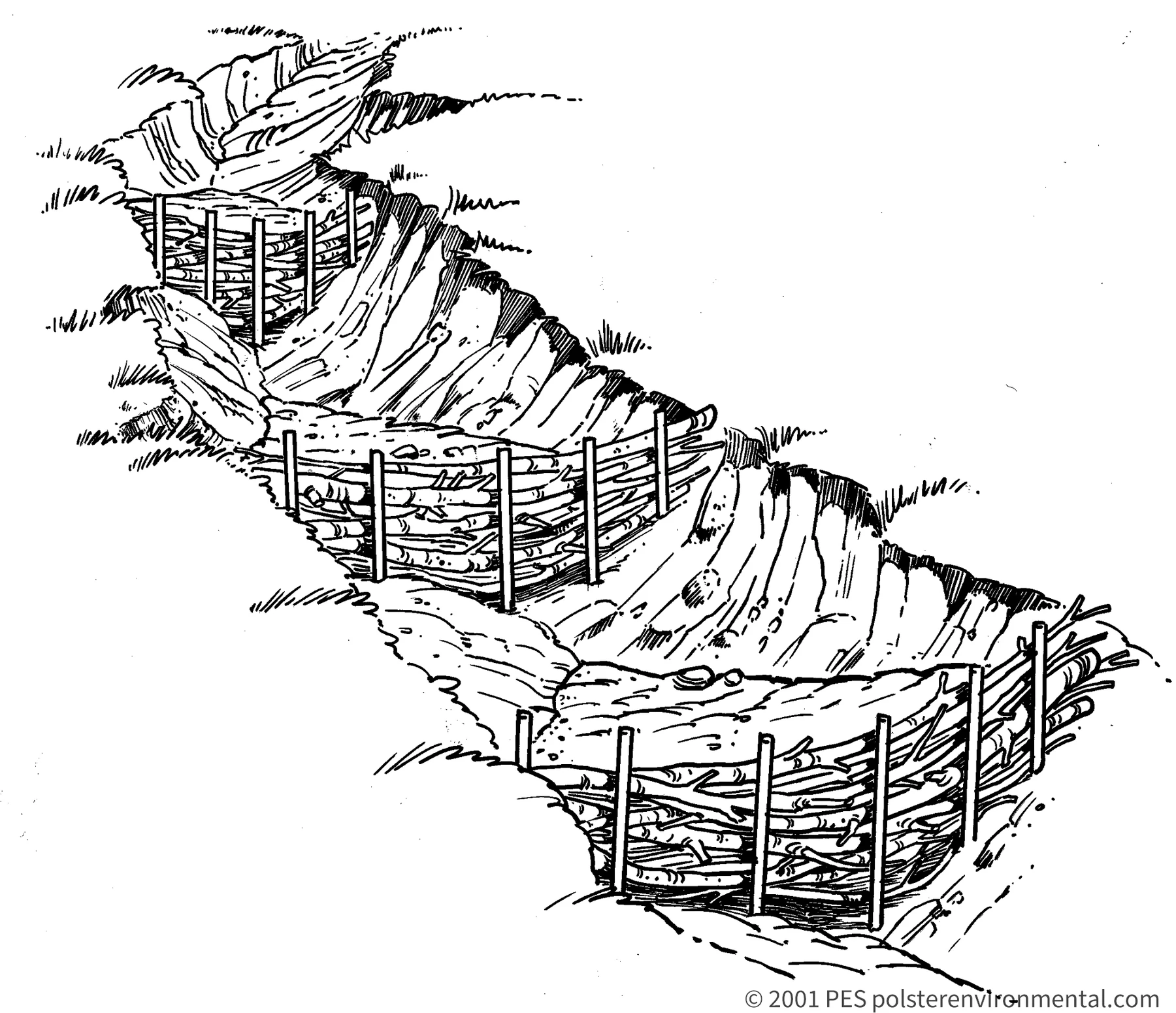
A multi-element living system for interrupting concentrated flow and supporting recovery in actively eroding gullies. Live staking, sills, brush layers, and wattle fences work together along the gully profile to slow headward erosion, trap sediment, and support native vegetation recovery from the bottom up where site conditions allow.
Interrupts Headcut Progression
Structural and live elements can interrupt the erosion cycle at its active face when the treatment is matched to flow and gully geometry.
Vegetates Gully Walls
Cuttings planted into gully walls may root and help reinforce exposed soil faces; establishment depends on moisture, species, and follow-up.
Supports Swale-Like Recovery
Where flow, sediment, and plant establishment align, the channel can move toward a more vegetated and stable swale-like condition over time.
Original live gully-break sequence
When to Use Live Gully Protection
Ideal conditions
Active gullies in fine-grained soils (silt loam, silty clay loam) where willow cuttings can root. Sites with seasonal concentrated flow from upslope disturbed ground, road surfaces, or cleared areas. Gullies 0.3–2.0 m deep with soil moisture adequate for cutting establishment.
Best outcomes seen at
Road and highway cut-slope drainage channels. Gullies in mine reclamation sites where rough and loose treatment has been applied on adjacent waste rock. Riparian margins where streambank undercutting is driving gully formation in adjacent upland soils.
Timing is critical
Install all structures and live stakes during the dormant season (late winter to early spring). The root system needs time to establish before warm-weather drying; installation timing, moisture, species, and follow-up all affect early performance.
Limitations
Large active channels with high-velocity peak flows may require other or combined treatments; confirm the hydraulic limits during site assessment. In coarse gravelly soils with insufficient fines, cutting establishment is unreliable. Very steep headcuts (>1 m vertical) may require rough grading before bioengineering structures will hold under flow events.
Active Gully Response
Can address gully erosion at the head, banks, and channel when a combined sequence is appropriate.
Lateral Root Networks
Installed live material can develop root systems that help bind gully walls as plants establish.
Progressive Sediment and Vegetation Recovery
As roots and sediment accumulate, the gully may become more stable over time where flow and plant establishment support recovery.
Gully Stabilization Starts with a Site Walk
A live gully protection system is designed around the specific geometry, flow regime, and available plant material at your site. A site assessment identifies the right structure sequence, spacing, and species selection before installation begins.
Request a Site Assessment →Sources and further reading
These references provide wider technical context. Method selection and design remain site-specific.
Need to Stop an Advancing Gully?
Send photos, approximate dimensions, drainage information, and the location of the active headcut. PES can assess whether living gully breaks, surface reshaping, drainage work, or a combined treatment is appropriate.
Request a Site Assessment