
Highway Bioengineering Examples and Lessons
Examples drawn from David Polster's highway bioengineering presentation, including wattle fences, live reinforced earth walls, and creek-side restoration lessons for infrastructure corridors.
This resource pulls out the most reusable lessons from David Polster's highway bioengineering presentation: how living structures support creek corridors, where reinforced living systems outperform bare grading, and what infrastructure owners can learn from long-term establishment.
Corridor Work Needs More Than Erosion Control
Highway and infrastructure corridors often inherit steep cuts, disturbed drainage patterns, and exposed slopes that are treated with smooth grading and quick cover. The slide examples show why that is not enough. Where water, slope geometry, and vegetation establishment are not considered together, failures reappear as slumping, gully initiation, toe erosion, or poor ecological recovery.
Example 1: Bowker Creek Wattle Fence Sequence
The Bowker Creek sequence is especially persuasive because it is dated over several seasons: construction in 2004, follow-up views in 2005 and 2006, and continued growth into 2007. That timeline matters. It lets readers judge the treatment after establishment instead of only admiring a fresh installation.
The slides show a corridor-scale use of wattle-style structures to support organic soils and stabilize the stream edge while vegetation establishes. The visual sequence demonstrates that a living structure can:
provide immediate edge definition
hold material through fluctuating flows
blend into a functioning riparian edge over time
This is the kind of evidence that helps municipal and transportation clients understand that bioengineering can be both structural and ecologically restorative.
Example 2: Live Reinforced Earth Walls
The presentation also includes live reinforced earth wall examples, including cuttings going directly into the slope face, early establishment, and later growth. The lesson here is that living structural systems are not just "soft landscaping." They are engineered assemblies that can resist movement while simultaneously rooting into the slope and improving long-term performance.
For corridor settings, that means:
fewer hard visual edges
better integration with drainage and vegetation
a system that strengthens as roots develop
Example 3: Roadside Failures Need a Better Surface Logic
One of the most useful highway slides shows a gully-ridden roadside slope before treatment. That image helps clarify a common corridor mistake: the surface is treated as if it only needs cover, when what it actually needs is structure, infiltration, and drainage control.
Choose treatments that address the processes affecting the corridor:
wattle fences where stepped living support is appropriate
live reinforced earth walls where stronger retaining structure is needed
related living systems where creek banks, road cuts, and drainage lines overlap
Practical Lessons from the Slide Set
Dated photo sequences are more valuable than one-off installation shots because they show whether the treatment actually rooted in.
Corridor treatments should be matched to water behavior, not just slope appearance.
Repeated photo sequences are the clearest evidence for public-sector and infrastructure clients.
Living systems can support both stability and habitat value in the same footprint.
Where This Fits in the PES Library
Use this resource alongside:
Corridor Photo Sequence
These archived highway slides make the corridor lessons concrete: Bowker Creek after construction, roadside failure conditions before treatment, freshly installed living structures, and the same channel carrying dense willow growth only months later.
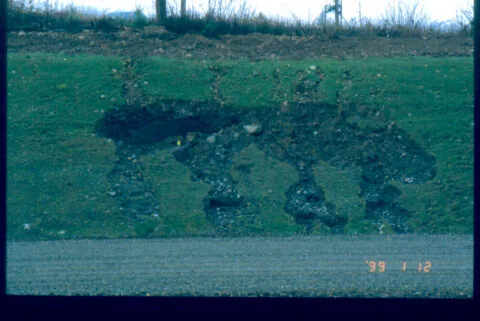
Roadside gully erosion before bioengineering treatment.
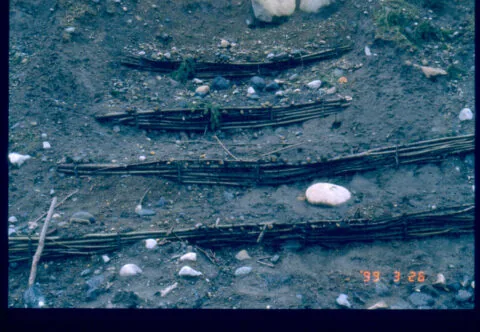
Freshly installed wattle fences showing the structural edge detail that a bare graded slope does not provide.
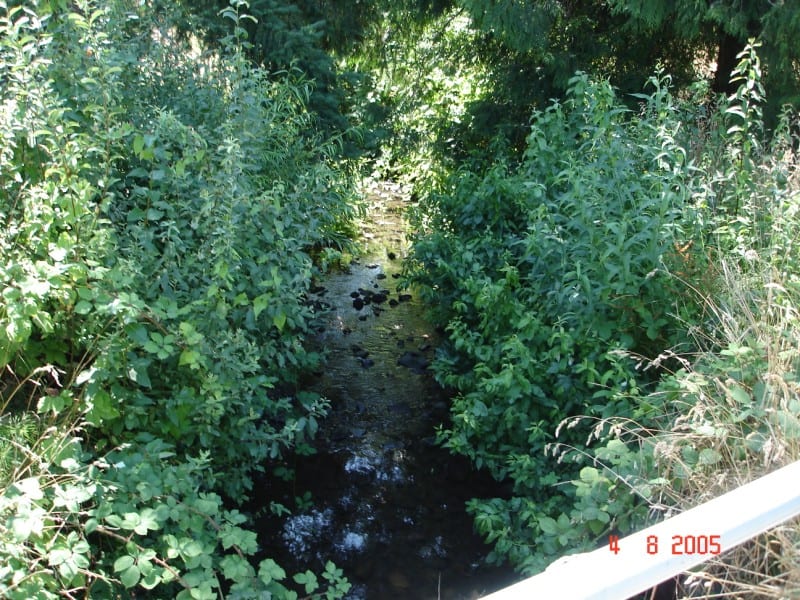
Dense willow growth five months after installation in the same corridor setting.
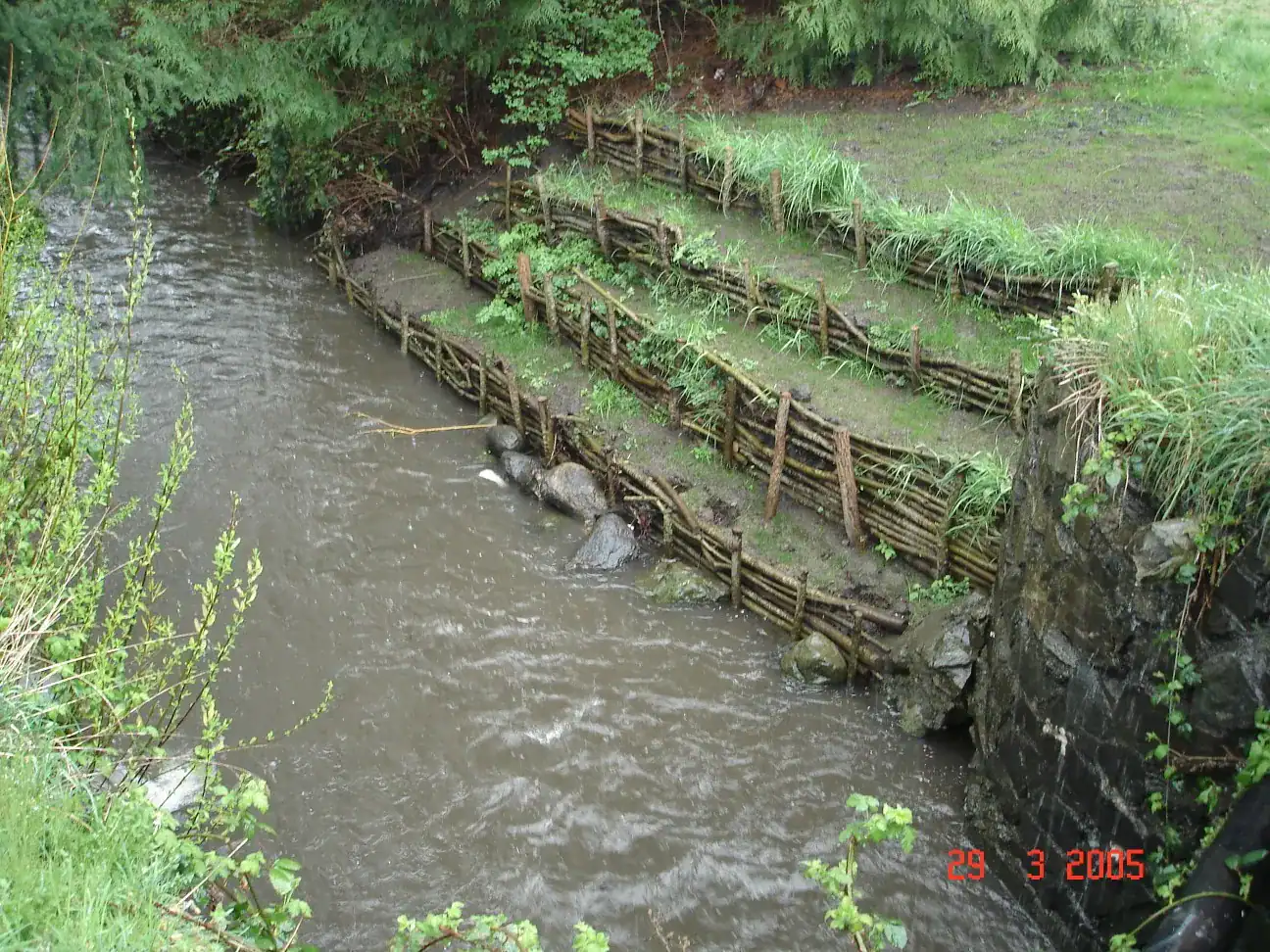
Bowker Creek in March 2005: terraced wattle fence installation supporting organic soils along the stream edge.
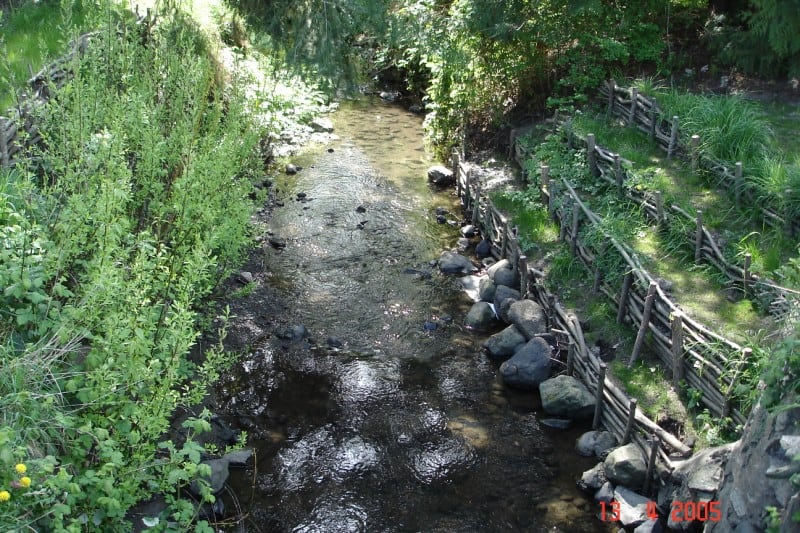
Bowker Creek after establishment: the living structure is already blending into a functioning riparian edge.
Engineered for Vibration
Species selection and technique choice accounts for compaction, vibration, and drainage conditions specific to highway corridors.
Lower Long-Term Cost
Bioengineered highway slopes require less repeat intervention than hard armour over a typical 20-year infrastructure lifecycle.
Proven Across BC Highways
Multiple BC highway corridor projects document vegetation cover exceeding conventional seeding benchmarks after three growing seasons.
Need a Site-Specific Recommendation?
We can help interpret the conditions on your slope, streambank, shoreline, or disturbed site and recommend the right combination of soil bioengineering methods.
K-16 road-fill slide: treatment and recovery
A David Polster field record showing a road-fill failure, soil-bioengineering treatment, rock capture, and early vegetation recovery.
A road-fill failure left a bare, unstable slide.
Source: David Polster’s K-16 Slide Restoration course record. The viewpoints vary between dates, so this is a dated treatment progression rather than a fixed-camera survey comparison.