Why Grass Seeding Fails on Mine Reclamation Sites
Why conventional grass and legume seeding often stalls mine reclamation, and how rough and loose treatment with pioneering species creates better long-term recovery.
One of the clearest themes in David Polster's mine reclamation material is that a green surface is not the same thing as ecological recovery.
Conventional reclamation often relies on agronomic grass and legume mixes to cover disturbed mine surfaces quickly. That can produce an immediate visual change, but it often creates the wrong ecological conditions for the site that is supposed to follow.
The Appeal of Seeding
Grass seeding is easy to specify. It creates quick colour. It can reduce bare-ground appearance and satisfy short-term expectations that the site has been "treated."
That visual response is part of the problem.
If the site is judged too early, a seeded surface can look successful while remaining stuck in a low-diversity, low-function state for years.
Why It Underperforms
On coarse, droughty, low-organic substrates, seeded grasses and legumes often create a barrier rather than a bridge to succession.
The main issues are:
- competition with woody pioneers that would otherwise begin building the next stage of the plant community
- slow soil development relative to systems driven by pioneer shrubs and trees
- uniform surface conditions that still lack protected safe sites for seed capture and establishment
- poor structural diversity for wildlife and long-term ecological function
- herbivory pressure, because grass-dominated sites can attract deer and elk without building resilient woody structure
The result can be a site that stays green without developing the diversity or safe sites needed for longer-term succession.
The Core Ecological Issue
The goal of reclamation is not just cover. It is to move the site back into functioning ecological processes.
That means:
rebuilding soil over time
establishing pioneering species suited to the disturbance
creating structural diversity
supporting natural succession instead of blocking it
A dense grass layer can work against those goals when it monopolizes the surface and suppresses woody establishment.
What Works Better
Polster's alternative is to recreate the conditions that let natural recovery begin.
That usually means:
loosening compacted material
creating rough microsites that trap moisture, seed, and organic matter
introducing or supporting native pioneering species such as willow, alder, and cottonwood
adding woody debris or habitat structure where appropriate
This approach does not force a finished ecosystem onto the site. It creates the conditions for the site to recover under its own ecological momentum.
Why Rough and Loose Changes the Outcome
Rough and loose treatment breaks up the smooth, compacted surface that keeps recovery stalled.
Instead of a continuous graded plane, it creates:
holes and mounds
variable moisture conditions
protected germination sites
reduced runoff concentration
easier conditions for live staking
Those changes matter because they remove the filters that keep native recovery from getting started.
What Clients Should Take From This
If a mine site is being judged mainly by how fast it turns green, conventional seeding can look attractive.
If the goal is an ecosystem that can continue developing with less intervention where site conditions support it, the better question is:
What is preventing natural recovery, and how do we remove that barrier?
That is where the PES approach is different. It starts with filters, site conditions, and succession, not generic surface cover.
For a broader technical explanation of why grass seeding fails across slope types and substrates, not just mine sites, see the site blog post Why Grass Seeding Fails on Disturbed Slopes in BC.
Related Reading
Source and Further Reading
Grass Seeding Failure: Field Documentation
On steep slopes and drastically disturbed substrates, grass seeding consistently fails to establish an effective cover. Grasses cannot root deeply enough to stabilize slope movement, do not withstand the moisture extremes common to unstable substrates, and compete poorly against erosion forces on steeper gradients. These images from the Butler Bros gravel pit slope illustrate the typical pattern: an initial application of grass seed followed by continued active erosion and gully development, with the grass seed unable to germinate or persist on the moving surface. Bioengineering treatments, which address the underlying instability rather than just the surface, were ultimately required to stabilize the site.

Failed grass seeding with active gully erosion, Butler Bros gravel pit slope before bioengineering

Slope instability and rill erosion, result of relying on grass seeding alone on unstable substrate
Island Copper Mine: Why Seeding Alone Stalls a Forest
On paper, seeding a disturbed site with grass and legumes works. It greens up fast and holds the soil. But David Polster documented the same outcome again and again across British Columbia: the dense cover that seeding creates becomes a barrier to recovery, holding sites in an artificial grassland that woody species cannot colonize. The Island Copper Mine on northern Vancouver Island is one of the clearest illustrations, and one of the clearest demonstrations of the way around it.

A seeded grass-and-legume cover greens the waste rock quickly.
Seeding grass and legumes is the conventional first step in mine revegetation. It controls erosion and looks like success within a season. The problem is what happens next: the dense sod the seeding creates is so competitive that the woody pioneer species which would normally drive recovery cannot break through it.
David Polster's answer was to plant red alder directly into the seeded cover, as a cover crop rather than a finished planting. Over 500,000 red alders went in at Island Copper. Alder grows fast enough to outpace the grass, fixes nitrogen that builds the thin mine soils, and casts the shade that starts to suppress the competing sod beneath it.

Red alder planted through the grass as a nurse crop.

Once the alder closes canopy, the grass loses.
The turning point is canopy closure. Until the alder forms a closed canopy the seeded grass keeps the upper hand; once it does, the grass is shaded out and the site shifts from a stalled grassland to a functioning young forest. The alder also shelters young conifers through hot summers, raising humidity so they can keep their stomata open and photosynthesize.
With grass pressure reduced and soil conditions improving under alder, later-successional conifers may establish without additional planting where seed sources and site conditions allow. This is the natural successional pathway David spent his career working with: pioneers first, conifers following under their shelter, exactly the deciduous-over-conifer sequence seen across recovering Canadian forests.

Conifers seed in naturally beneath the alder.

A mixed forest where a biological desert used to be.
Within a decade the seeded grassland has become a structurally diverse alder-conifer stand with a developing understory. The lesson generalizes well beyond Island Copper: seeding alone does not build a forest, and on most disturbed sites the more reliable, lower-cost route is to set up the conditions that let natural succession do the work.
References
- Polster, D.F., B. Welchman and C. Hanks. 2001. Revegetation Strategy at the Island Copper Mine. Proceedings of the 25th Annual British Columbia Mine Reclamation Symposium, Campbell River, BC.
- Polster, D.F. 2009. Natural Processes: The Application of Natural Systems for the Reclamation of Drastically Disturbed Sites. BC Mine Reclamation Symposium, Cranbrook, BC.
- Polster, D.F. 2011. Effective Reclamation: Understanding the Ecology of Recovery. BC Mine Reclamation Symposium, Lake Louise, AB.
Learn more
From David Polster’s Course: The Elk Valley Lesson
Drawn from David Polster's bioengineering course, the sequence compares an Elk Valley woody-species program with a grass-and-legume trench photographed 32 years after installation.
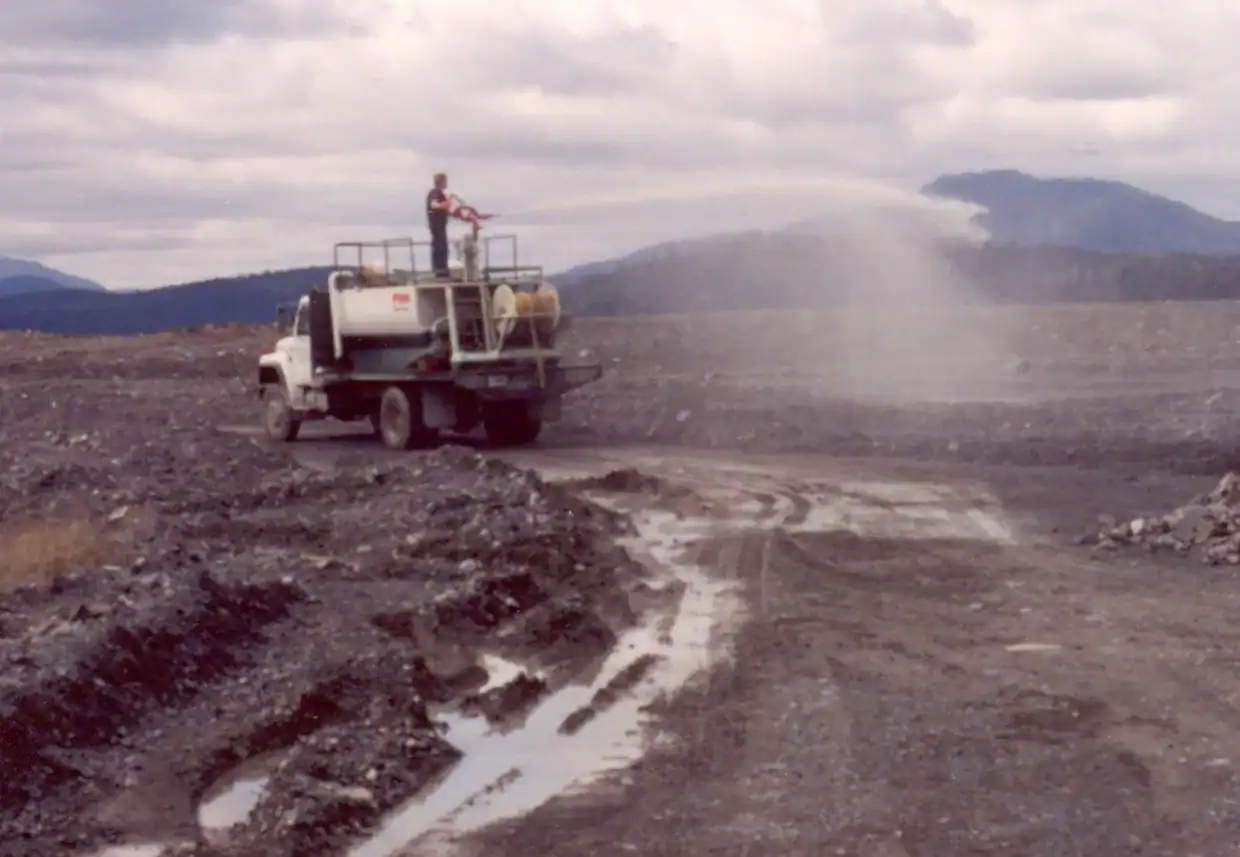
Seeding a grass and legume cover is the first step in the revegetation process. These plants provide erosion control as well as an environment into which later successional species can establish.
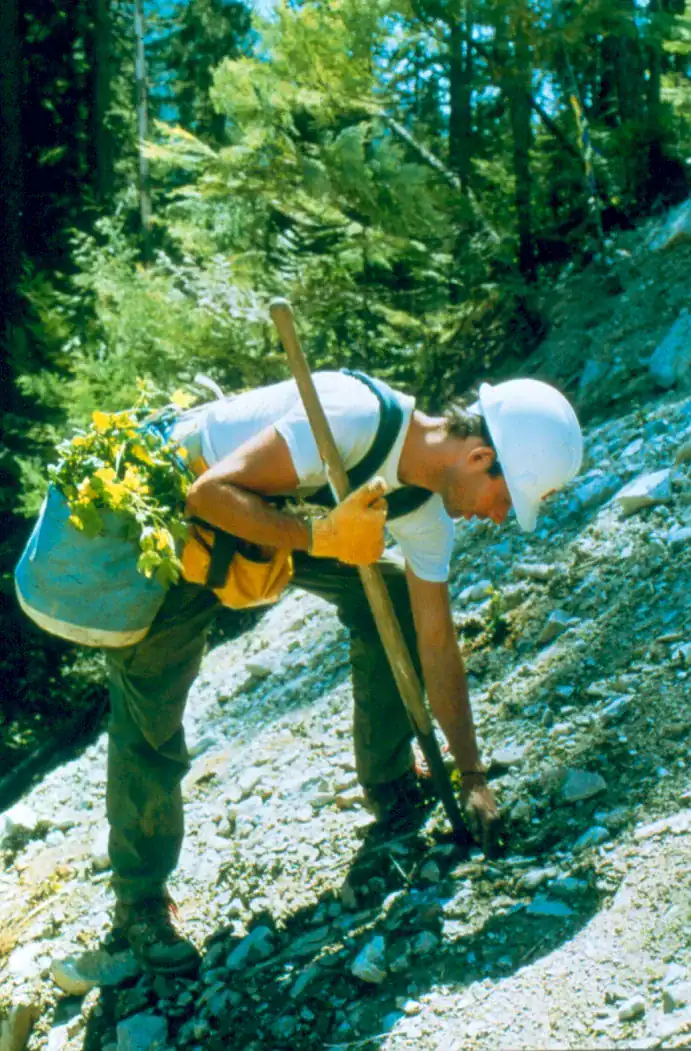
The second phase of the revegetation program has been the establishment of woody species. Most of the planted woody species were grown in greenhouses although in the early years of the revegetation program seedlings were transplanted from roadsides and other areas.
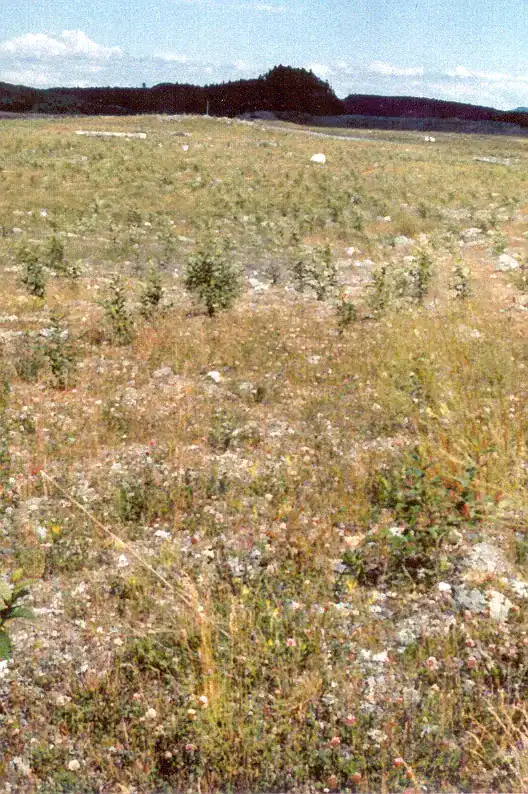
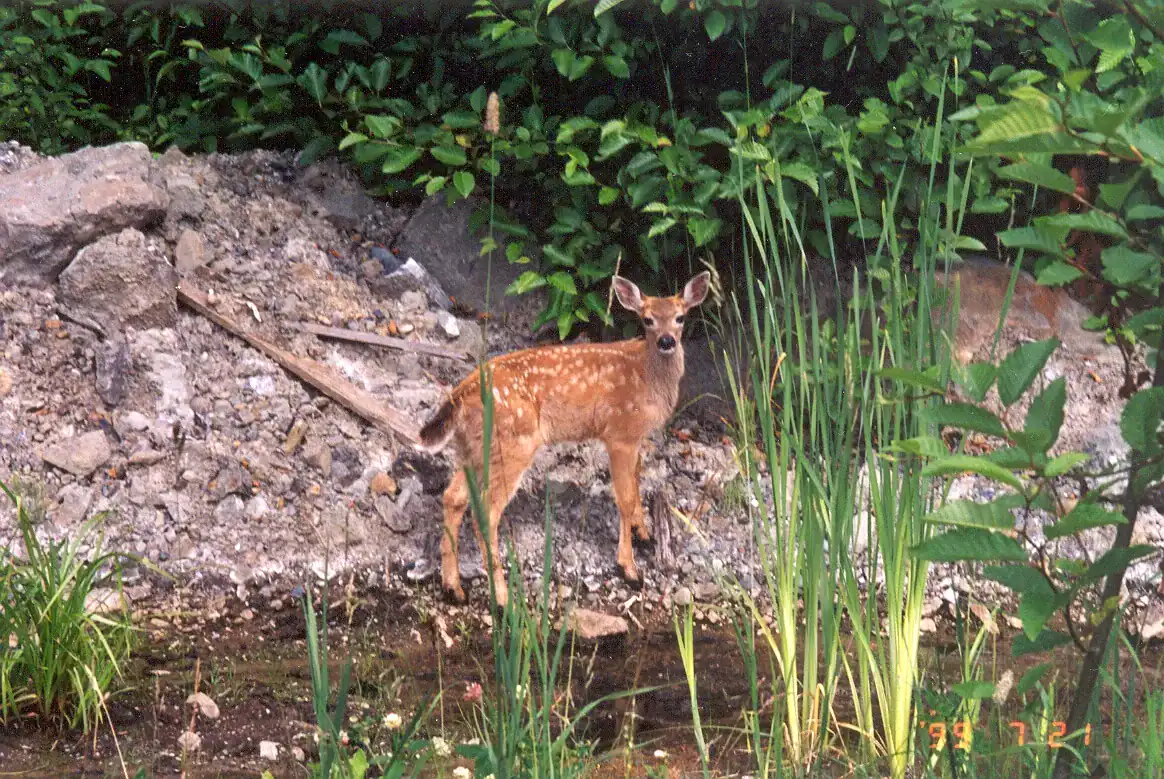
The rapid growth of the alder not only provides for a rapid amelioration of the adverse soil conditions, but also helps to create wildlife habitat. From an area where there is no cover for deer in 1998 to a site where deer can hide among the alder in 2000. There are numerous bedding sites in the alder where the deer hang out.
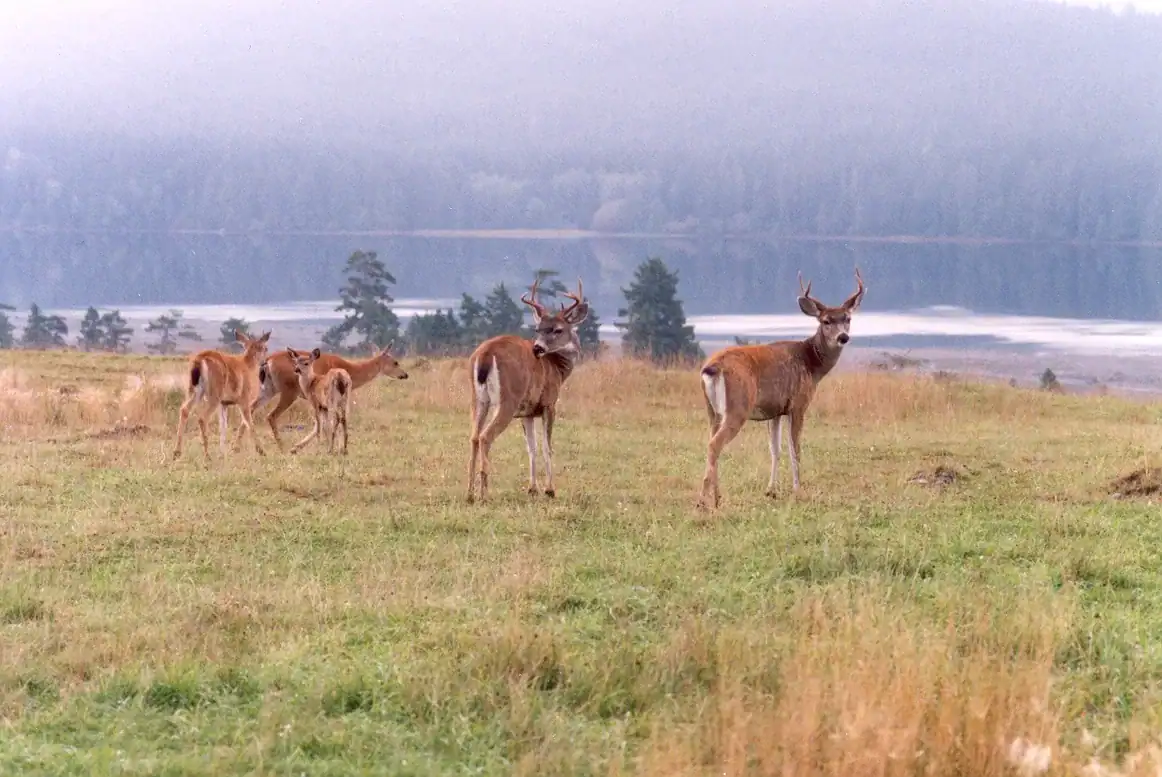
Development of productive wildlife habitats is one of the objectives of the reclamation program at the Island Copper Mine. It is clear from the numbers of animals that have made the mine site their home that this objective has been achieved, not only for deer, but for a variety of other animals as well.
These wetlands also enhance the biodiversity on the property. I hope that this brief presentation has provide you with a picture of the revegetation strategy that has been employed at the Island Copper Mine. I would be pleased to answer any questions that you might have about the revegetation program and I will call upon one of my co-authors, Brian Welchman to answer any questions about the mine that I can’t answer.

However, 32 years later, this trench is still grass and legume covered. It should be covered with trees.
Monoculture vs Diversity
Grass seeding can create low-diversity cover that does not by itself provide the structural or species diversity needed for long-term mine recovery.
Soil Biology First
Without restoring soil biology, even well-seeded sites regress to bare ground within a few growing seasons.
Bioengineering as the Baseline
Native species and bioengineering techniques establish the conditions needed for long-term self-sustaining recovery.
Need a Site-Specific Recommendation?
We can help interpret the conditions on your slope, streambank, shoreline, or disturbed site and recommend the right combination of soil bioengineering methods.
Island Copper plantsite: a dated archive progression
These David Polster archive frames show a reclaimed mine plantsite moving from sparse cover toward a more continuous vegetated slope. This is a historical field progression, not a fixed-camera survey or a universal timeline.
The archive frame shows the plantsite with open ground and limited cover.
The related Island Copper section below explains the role of seeded cover and pioneering alder. These archive frames are dated 2002, 2004, and July 26, 2005; conditions and timing vary by site.