The Role of Seeding in Reclamation of Disturbed Sites
David Polster · Conference presentation
Seeds Alone Fall Short
Seeding without addressing soil biology, substrate roughness, and erosion filters yields temporary cover, not sustained reclamation.
Native over Introduced
Native seed mixes aligned with local succession trajectories outperform introduced grasses over a 10-year monitoring horizon.
Supporting Conditions
Bioengineering structures combined with rough substrate dramatically improve seeding success by creating conditions seeds need.
Reader Edition and Source PDF
The edited presentation summary is available online, with the complete slide/PDF source linked below.
Citation: Polster, D. The Role of Seeding in Reclamation of Disturbed Sites. Polster Environmental Services Ltd. [Conference Presentation]
David Polster
Polster Environmental Services Ltd.
This resource is a presentation examining the role of agronomic seeding in reclamation and why natural successional processes offer a superior alternative. The following text presents the key findings from each section of the presentation.
Upper Elk Valley: A Long-Term Case Study
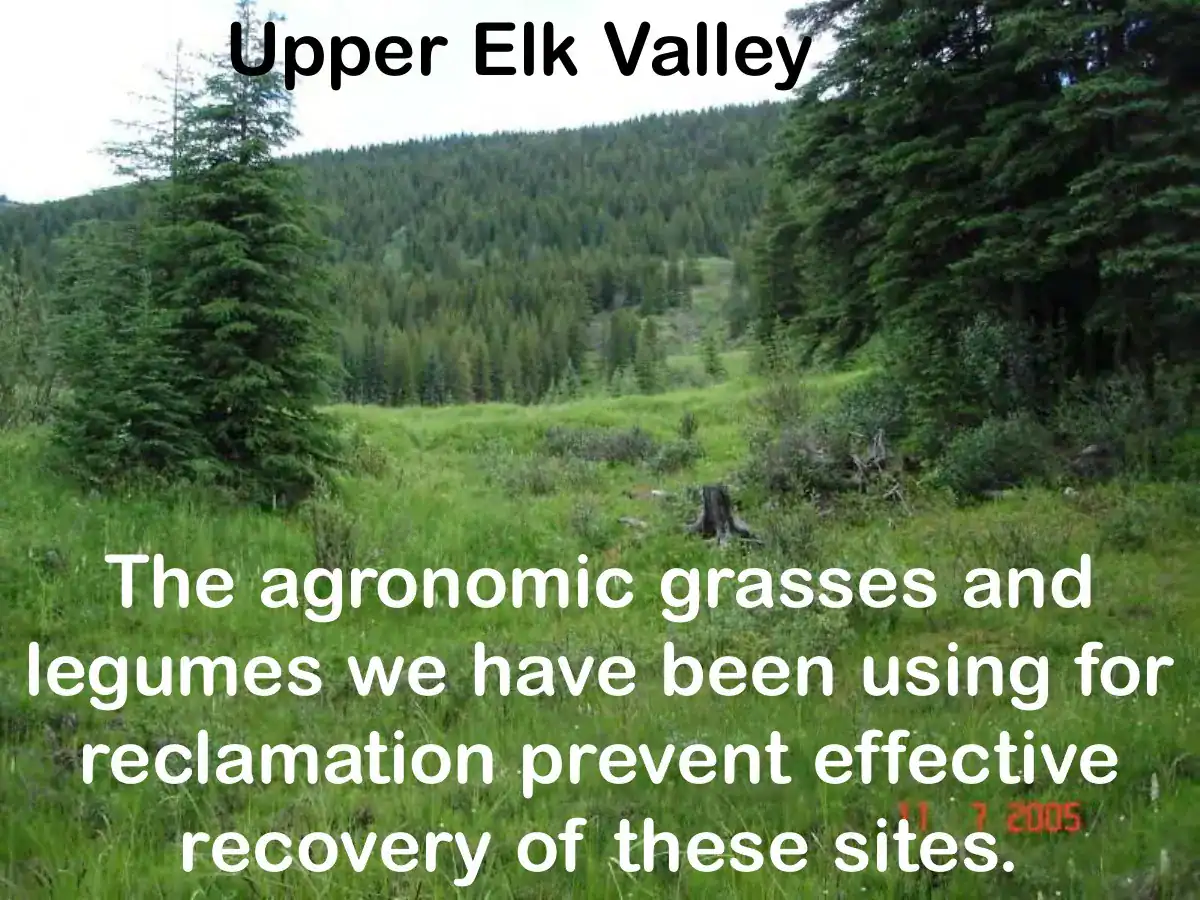
Helicopter seeding of an exploration trench in the Upper Elk Valley in the fall of 1977 was photographed in 2009. The agronomic grasses and legumes used for reclamation prevent effective recovery of these sites.
Ecologically based strategies seek to re-establish natural successional trajectories on lands used for mining. Over 500,000 Red Alder trees were planted at the Island Copper Mine. Establishment of pioneering species such as alder on waste rock dumps is illustrated by a 12-year-old stand and a 25-year-old stand that had developed into an Alder/Salmonberry/conifer community.
However, the dense cover of seeded grasses and legumes out-competes the alder unless the alder can form a closed canopy. A drop in the number of alder trees over the years has been observed even as the total cover has gone up. This demonstrates that seeded agronomic species create a barrier to the development of the desired native plant communities.
Erosion Control vs. Long-Term Recovery
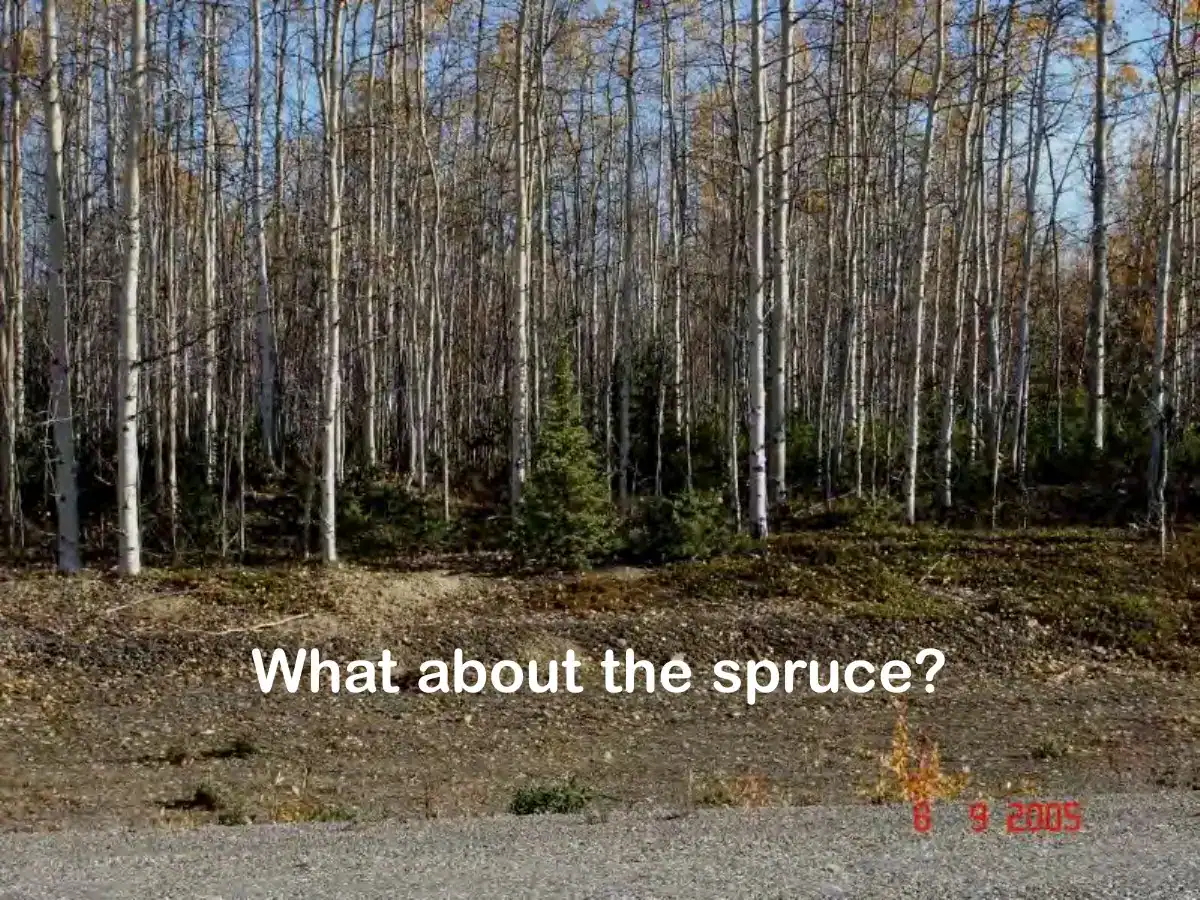
Seeding slopes for erosion control can produce dense cover that limits woody species establishment. Slow encroachment of native species is observed over decades. Dense stands of seeded grasses and legumes (as seen at the Giant Mine Site, Baker Creek Reach 4) create conditions where even a poor spruce struggles to survive in competition with the seeded species.
NWT Well Site Studies: 30-Year Observations
Thirty-year-old NWT well sites seeded with Creeping Red Fescue show that the seeded species persist for decades, preventing natural forest recovery. By contrast, an 11-year-old forest recovery occurring naturally right next to a seeded well site shows the contrast between natural forest recovery and the adjacent seeded site. A seeded Selwyn exploration site was the only place invasive species were found. The observation was associated with the seeded agronomic cover and its early-successional conditions.
Successional Stagnation
Seeded agronomic grasses and legumes create successionally stagnant conditions. Wildlife collisions are a major problem when we maintain enticing food for wildlife near roads. Fresh grass in the spring brings deer to the roadside, creating a hazard for deer and motorists. Planting tasty forage crops along highways attracts animals with fatal results.
Yukon Example: Natural Successional Processes
A Yukon example shows how natural successional processes can inform vegetation management. Cleared roadsides go through an initial successional stage, then pioneering invaders provide moose food, which blocks sightlines and hides signs. Brush cutting causes re-growth of the cut species through suckering of pioneering plants. This brings management back to the beginning repeatedly.
Understanding plant energy reserves is key: cutting when root reserves are high results in increased growth. Rapidly growing aspen and balsam poplar and a variety of rapidly growing pioneers establish on cleared roadsides. The solution is to look to the forest to move beyond this early successional cycle. Open aspen forest provides limited cover and forage for moose.
Selective removal of understory stems speeds the opening up of the forest. Pruning branches opens sightlines without opening the site to early successional species. With branches pruned, there is no need to touch the site for decades. Understanding vegetation successional patterns allows cost effective management.
Treatments Under Power Lines
Cutting pioneering woody species under power lines results in rapid re-growth of these species. The solution is to select species with slower growth rates, such as pine and spruce, rather than pioneering species. Dense early seral vegetation blocks sightlines; a bit of selective pruning opens sightlines and the effect persists for years (documented May 21 2008 through May 10 2013).
BC Hydro Heber River Dam Removal
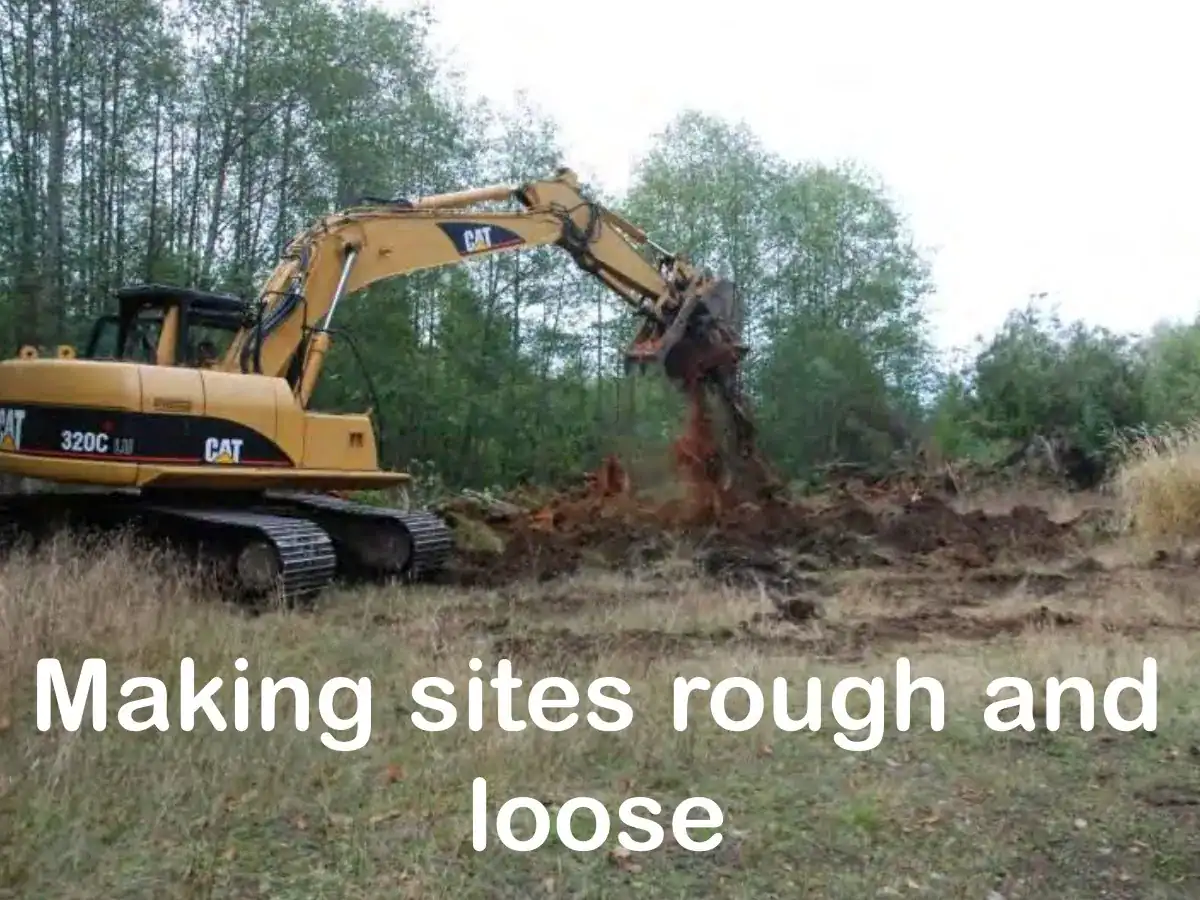
BC Hydro removed the Heber River Dam and was faced with the need to restore the disturbed sites, including a 3 km penstock that was also removed. Sites were made rough and loose and covered with woody debris. By November 13, 2012 the project sites were ready for winter. Monitoring transects established July 16, 2013 found an average of 5,410 alder seedlings per hectare, including seedlings between the rocks of the rip-rap.
Mount Tuam Road Restoration
The Mount Tuam Road restoration addressed compaction and erosion issues from unauthorized access by making sites rough and loose. A carpet of new seedlings was found by June 28, 2012. Douglas-fir, Oceanspray, and Red Alder pioneering plants were documented establishing naturally between October 2011 and August 2013.
Conclusion
Pioneering plants are ready to work for us. The lesson from decades of case studies is clear: agronomic seeding creates successionally stagnant conditions that prevent natural recovery. Making sites rough and loose without agronomic seeding allows pioneering species to establish, build soils, and continue through natural succession.
From the Presentation
Selected slides from David Polster’s talk on why conventional grass-and-legume seeding falls short on reclamation sites and what natural-process recovery looks like instead.