
Live Pole Blanket, UBC Slopes Piping Failure
UBC Campus slopes, Vancouver · Brush mattress + wattle fencing
Piping Failure Treatment
Brush mattress and wattle fencing applied to an active piping failure on steep university campus slopes.
Urban Campus Context
High-visibility restoration on UBC slopes in Vancouver, adjacent to active campus infrastructure.
Combined Technique Approach
Live pole blanket and wattle fence used together to address both surface erosion and subsurface water movement.
The Challenge
Piping is an internal erosion process in which water moving through the soil subsurface excavates tunnels or pipes through the soil mass, eventually causing surface collapse. Piping failures differ from surface-erosion failures in an important way: the instability originates below ground, driven by subsurface water movement. Surface revegetation alone is insufficient, the water management problem must be addressed.
The UBC slope failure presented:
A destabilized slope face requiring structural intervention
Active seepage moisture, which, if unmanaged, would continue to undermine any surface treatment
A need for rapid vegetation cover to prevent further surface erosion while the structural work took hold
Approach
Brush mattress was applied as the initial structural and hydrological treatment. A brush mattress consists of layered branches of living dormant willow and cottonwood material woven or laid flat across the slope surface and covered with a thin layer of soil. The technique achieves several objectives simultaneously: it provides immediate surface protection against rainfall impact and further erosion; the moisture available in the saturated slope environment actively supports establishment of the layered cuttings; and once rooted, the dense subsurface root mass created by the brush mattress begins to intercept and use the seepage moisture that was driving the piping.
Wattle fences were installed across the slope to re-establish micro-terracing, creating a series of small horizontal berms that interrupt slope runoff, accumulate fine sediment and organic matter, and provide structural support for the brush mattress installation above.
The combination of moisture-intercepting brush mattress material and structural wattle terracing is well suited to piping-failure terrain where seepage is both the problem and, strategically deployed, part of the solution.
Results
The ample moisture available at the piping failure site produced excellent growth in the installed brush mattress material. This is consistent with the general principle that moist, seepage-affected slopes, which are often the most difficult to treat with conventional dry revegetation methods, respond particularly well to soil bioengineering techniques that use living plant material able to exploit available moisture.
The wattle fence structure re-established slope form while vegetation establishment proceeded, and the brush mattress drained and managed slope moisture as the installed willows and cottonwoods rooted and began transpiring.
The UBC slopes project illustrates a key advantage of soil bioengineering on seepage-affected terrain: living plant materials actively manage the water that is driving instability, rather than simply sitting on top of a continuing problem.
Soil bioengineering for piping and seepage failures, addressing water where it causes the problem. Request a Site Assessment →
UBC Slopes: Turning Seepage Into Establishment
The UBC deck is a compact lesson in treating a seepage-driven piping failure: first read the water problem, then rebuild slope form with wattles, cover the face with living brush material, and let the available moisture drive establishment instead of continuing to undermine the slope.

Before treatment: piping had exposed a steep, unstable, moisture-driven failure face.
The problem was not just bare soil. Piping is internal erosion: subsurface water carries soil away until the slope collapses from within. A surface-only treatment would have left the cause of failure in place.
A live pole blanket or brush mattress spreads dormant willow and cottonwood material across the slope. It protects the surface immediately, but its bigger job is hydrological: roots and stems begin using the seepage moisture that was driving the failure.
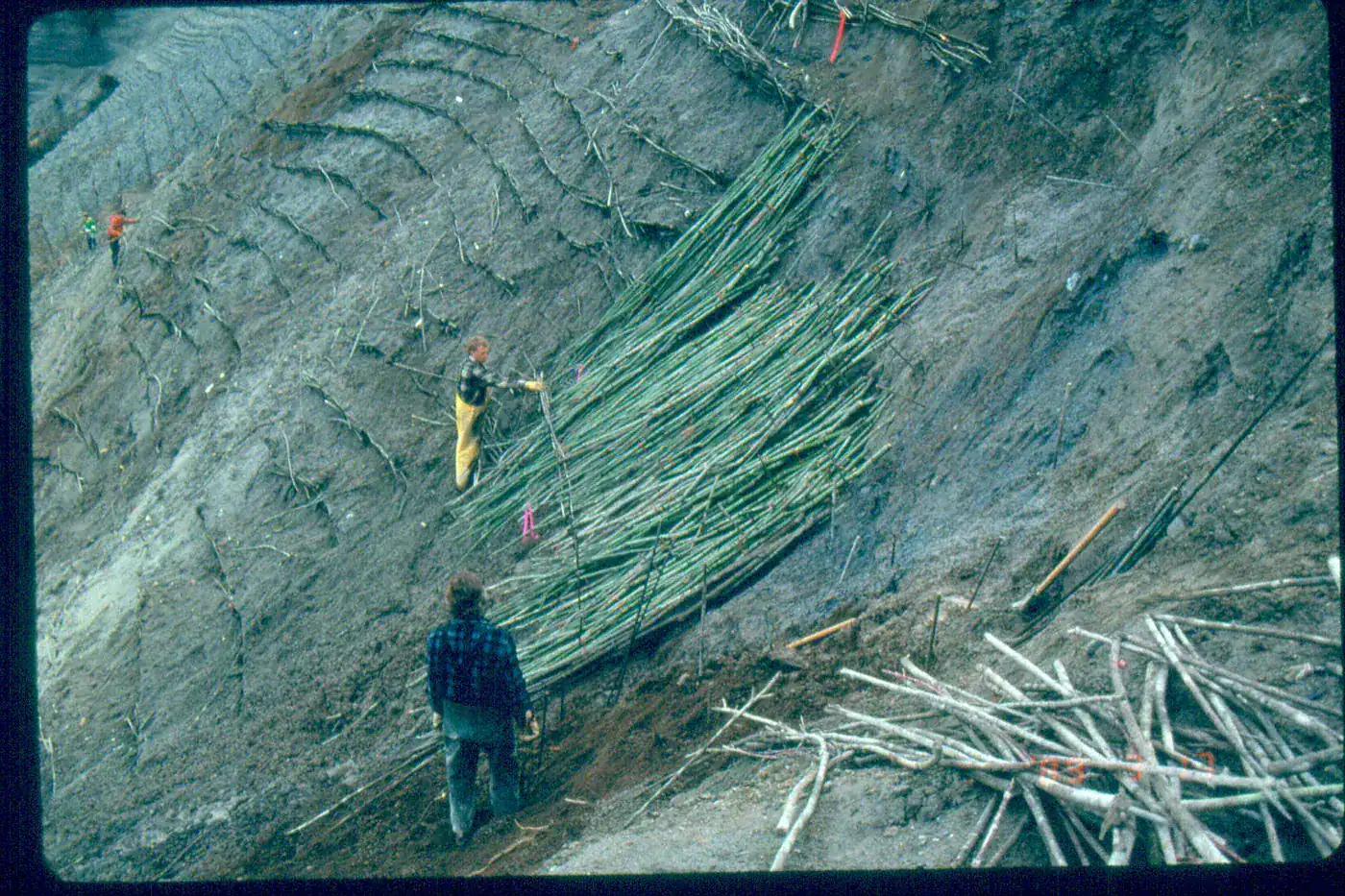
The brush mattress placed living cuttings across the wet failure surface.

Wattle fences re-established slope form and created small stable terraces.
The wattles break the slope into small benches. That reduces runoff energy, catches fine material, and gives the brush mattress a supported surface to root into instead of sliding off the face.
This is the central lesson from UBC: the seepage that caused the piping failure became the water source for the living treatment. The system works because it redirects the problem into plant growth and transpiration.

The brush mattress drained and used the moisture coming through the slope.
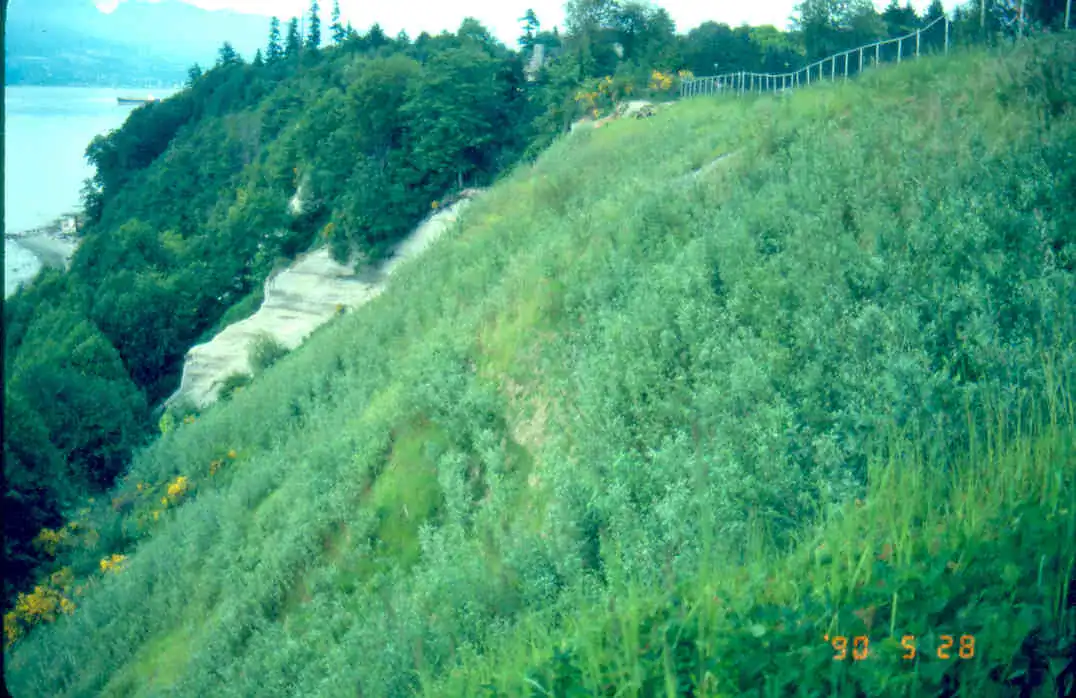
After treatment, ample moisture drove excellent vegetative growth.
The strong growth is not cosmetic. It shows the treatment had found and occupied the moisture pathway. As roots develop, the slope gains both surface cover and a living drainage network.
References
- Source deck: David Polster, Live Pole Blanket - UBC Slopes Piping Failure field sequence.
- Wattle Fencing
- Modified Brush Layers
- Live Pole Drains
Learn more
UBC Point Grey: living material on a failing sea-cliff slope
Live pole blankets put dense woody material in contact with the slope so it could root, reduce exposed soil and begin building living cover.
The photographs document the same project area from different viewpoints; they are not a fixed-camera pair.
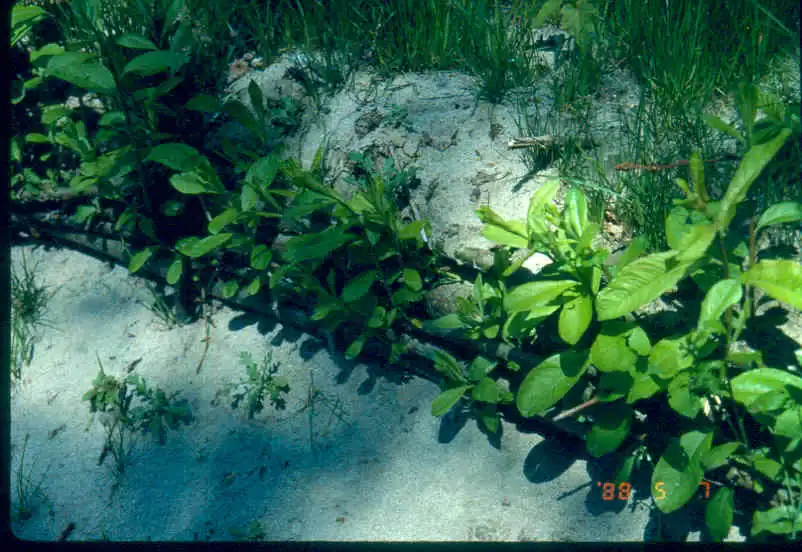
Initial Planting, May 1988
The UBC test slope shortly after the winter 1987/88 installation, May 7, 1988. The first spring flush of growth confirms the willow and cottonwood cuttings have taken root. This was one of the earliest documented soil bioengineering trials on the BC coast, establishing a baseline that would inform decades of practice across the province and into Yukon and the Northwest Territories.
Two Years After Planting
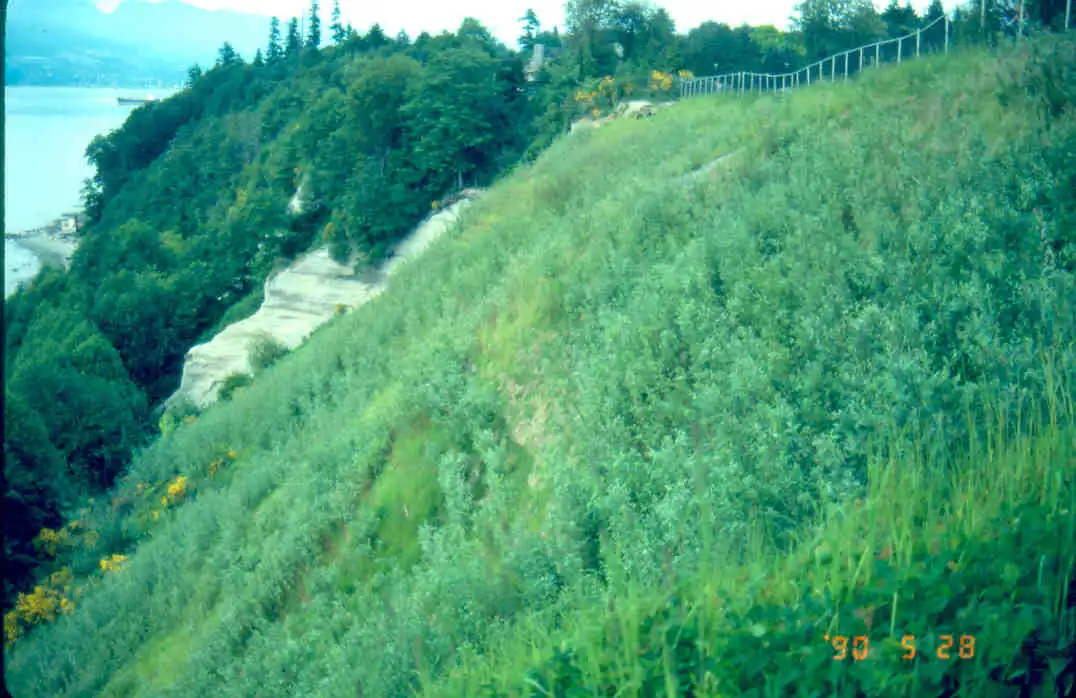
The UBC slope in May 1990, two years after installation. The woody species have developed substantial root systems beginning to bind slope material. Above-ground biomass provides canopy interception that significantly reduces effective rainfall hitting the soil surface. The slope is visibly transforming from bare mineral soil to a developing shrub community.

Eight Years On, Full Vegetation Cover
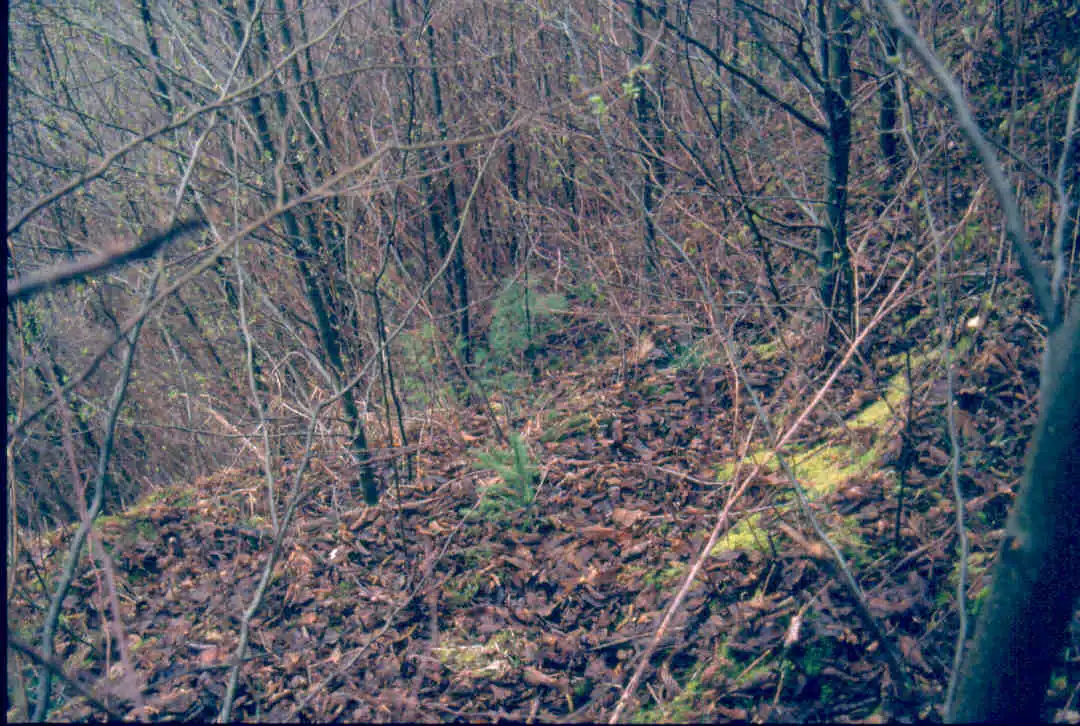
By 1996, eight years after planting, the bioengineered slope is fully vegetated. Willow and cottonwood have grown into multi-stemmed shrubs and small trees. Root density at this stage provides significant mechanical reinforcement of the shallow soil layer, the root mats are now pulling slope material together rather than allowing it to creep and slump. What was once an active erosion problem is now a functioning habitat.
Seventeen Years, Mature Forest
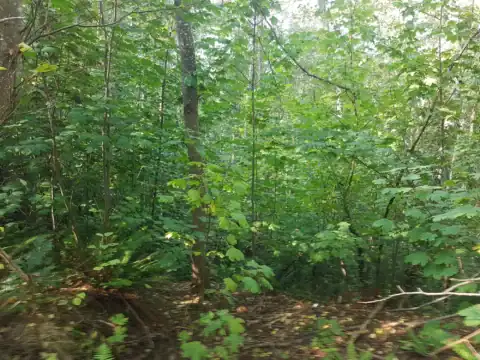
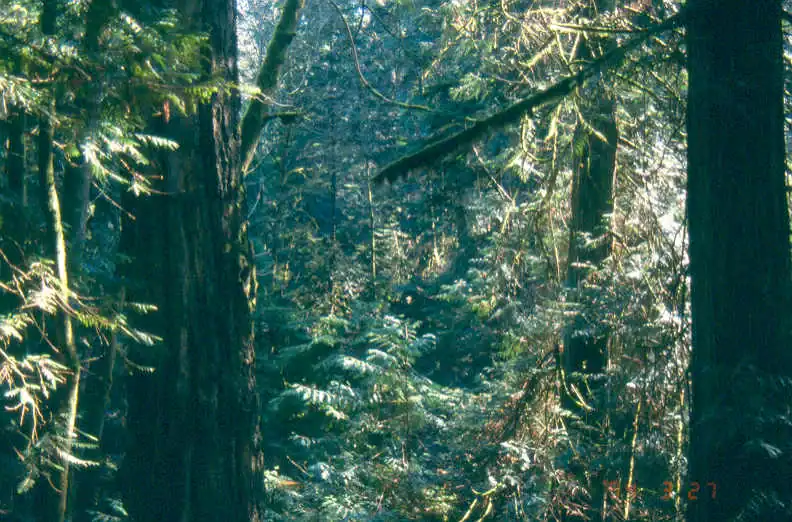
August 2005: seventeen years after the initial installation, a mature closed-canopy forest stands on what was once a bare, eroding slope. This long-term photographic record at UBC is among the strongest documentary evidence for the permanence of soil bioengineering on Pacific Coast slopes. The slope has not required any maintenance intervention in the intervening years.

UBC Slopes Documentation


Related Methods and Resources
Facing a Similar Challenge?
We can assess piping, slope moisture, and live material access to determine whether a pole blanket belongs in the stabilization plan.