
Brenda Mine: Biodiversity Enhancement
Interior British Columbia · 2012–2016 · Rough and Loose + Live Staking
Rough and Loose Method
Excavator-only technique used for post-mining revegetation without soil import on a challenging arid Interior BC mine site.
Interior BC Mine Site
2012–2016 project at high elevation in the Interior plateau, where site conditions required locally matched native species.
Biodiversity Over Grass Cover
Restoration target was diverse native plant communities, not the simplified grass cover typical of conventional reclamation.
Project Overview
Location: Interior British Columbia (mine site)
Timeline: 2012–2016 (documented in a multi-year photographic series)
Techniques: Rough and loose surface treatment, live staking, brush pile habitat, nest box installation, fencing
Challenge: Vast areas of successionally stagnant grass and legume cover providing low ecological value and preventing forest recovery
The Problem: Conventional Reclamation Creates Biological Deserts
Traditional mine reclamation has produced a legacy problem across British Columbia and the wider Canadian mining industry. Seeding disturbed mine surfaces with agronomic grasses and legumes, the standard approach for decades, delivers quick green cover and satisfies short-term revegetation targets. But it does not deliver ecological recovery.
The grasses and legumes establish as dense, competitive monocultures that crowd out native pioneering species. Sparse, slow vegetation growth on unstable dump slopes limits site productivity. The long, smooth dump slopes remain prone to erosion. And the no-shooting zones around mine sites, combined with the grass and legume food sources, have increased pressure from deer, elk, and moose, which browse any emerging shrub cover and eliminate the nesting habitat that songbirds require.
The result is what David Polster called a biological desert: sites that appear green but function as ecological wastelands. Low diversity. Limited resilience. No successional advancement. No path toward the self-sustaining native forest that would eventually establish on an undisturbed site.
The Diagnosis: What Limits Diversity on Mine Sites?
David Polster's analysis of mine reclamation failures identified several compounding problems:
Successionally stagnant grass and legume stands. Dense agronomic cover can inhibit the transition to shrub cover or forest through competition and the soil conditions it creates.
Smooth, compacted surfaces. Uniform, flat, heavily tracked surfaces offer no topographic heterogeneity. No moisture gradient. No sheltered microsites. No variation in aspect. The result is a single, monotonous set of conditions that supports a single, monotonous community.
Little ecological structure. The untreated surface has no brush piles, snags, cavity trees, or vertical complexity. Structure drives diversity. Without structure, the diversity cannot follow.
Excess herbivory. Ungulates attracted to the grass-legume food source can browse woody shrubs that establish on the site, preventing the transition from grass to shrub to young forest.
The Solution: Rough and Loose Surface Treatment
The core intervention at this project was rough and loose surface treatment, the technique David Polster developed as the foundation of his approach to mine reclamation on drastically disturbed sites.
Instead of leaving mine surfaces smooth and compacted, rough and loose treatment uses an excavator to break up the surface into an irregular, hummocky topography with mounds, hollows, exposed substrate in multiple orientations, and redistributed woody debris. The result is topographic heterogeneity: a diversity of surface conditions that supports a diversity of plant communities.
For the Brenda Mine program, the 2011 biodiversity plan proposed a target of roughly 10% patch coverage, with strategic rough-and-loose areas intended to create edge habitat and stepping-stones at lower treatment cost than one large block. Treat that as a project-specific planning target, not a universal percentage or guaranteed saving.
The heterogeneous surface addresses the core problems simultaneously:
- Moisture diversity. Hollows capture and retain water; mounds drain freely; north-facing pocket slopes stay cool and moist while south-facing slopes warm and dry. A single rough and loose treatment creates a half-dozen distinct moisture regimes.
- Seed capture. Irregular surfaces catch windblown and waterborne seeds that slide off smooth, compacted surfaces.
- Safe sites. The sheltered hollows and lee slopes behind mounds create microsites where seedlings can establish without being immediately suppressed by competing grasses.
- Access for live staking. The loose substrate that rough and loose treatment creates makes it easy to install live stakes even on waste rock sites where compacted, stony ground would otherwise prevent installation.
Treatments applied across the mine in different locations and over a series of years creates both spatial heterogeneity (different conditions across the site) and temporal heterogeneity (different successional stages developing at different times). Both are essential for ecological diversity.
Brenda Mine: a dated field progression
Move through the Brenda Mine record from live-staking installation to established woody growth.
These photographs come from the same documented project record, but the viewpoints vary. This is a dated field progression, not a registered fixed-camera before-and-after comparison.
 June 5, 2012
Live staking installed into rough and loose mounds at Brenda Mine
From Stagnant Cover to a Living System
The field record shows the full treatment sequence: low-value grass cover, exposed waste rock, rough and loose preparation, live stake installation, and the return of woody cover and wildlife.

Earlier reclamation condition: sparse grass cover with little ecological value.

Bare waste rock slopes before the biodiversity enhancement treatment.
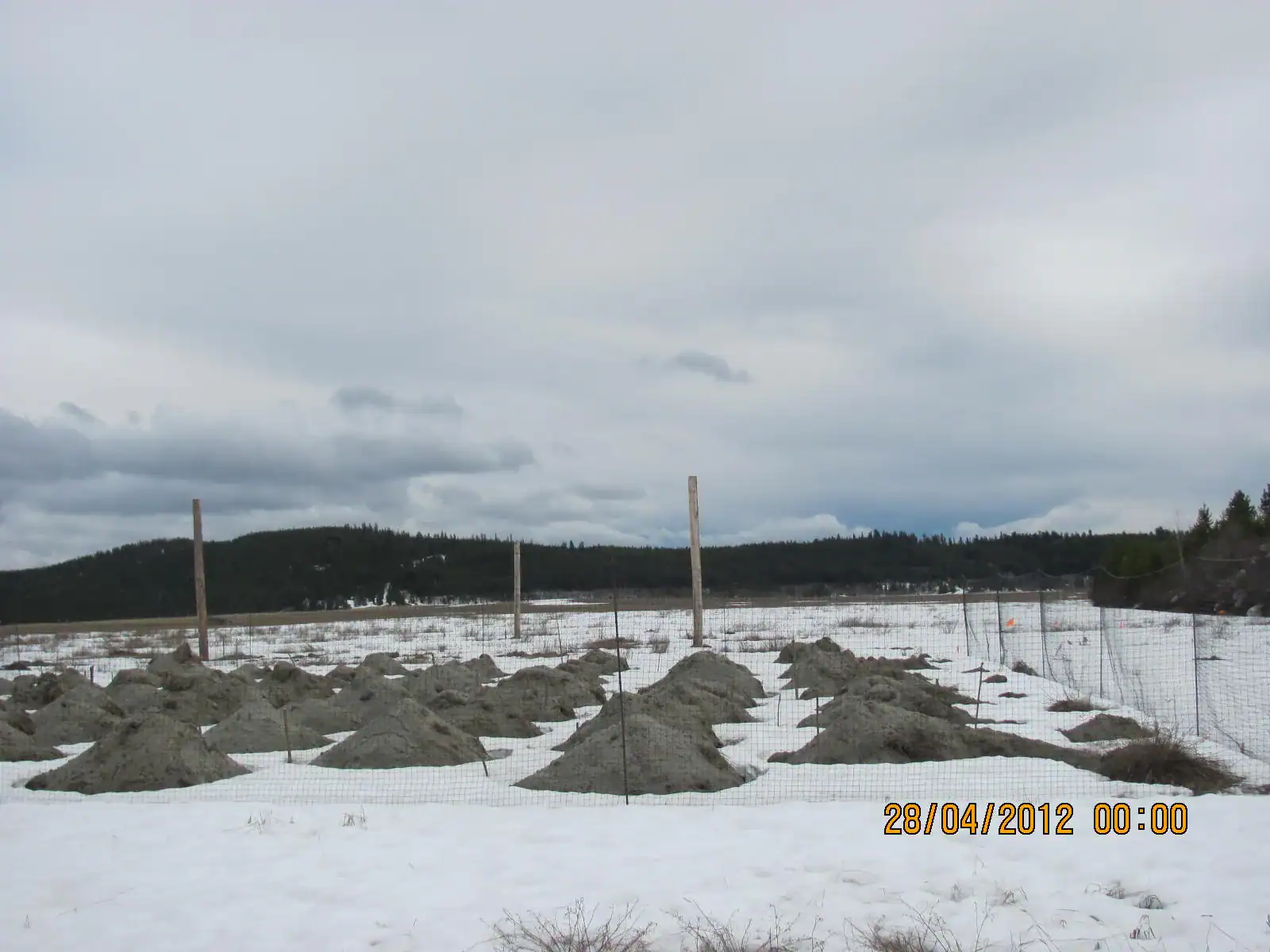
Rough and loose preparation creating a heterogeneous seedbed.
Live stakes installed directly into the loosened waste rock.

First-season shrubs filling treated mounds and hollows.
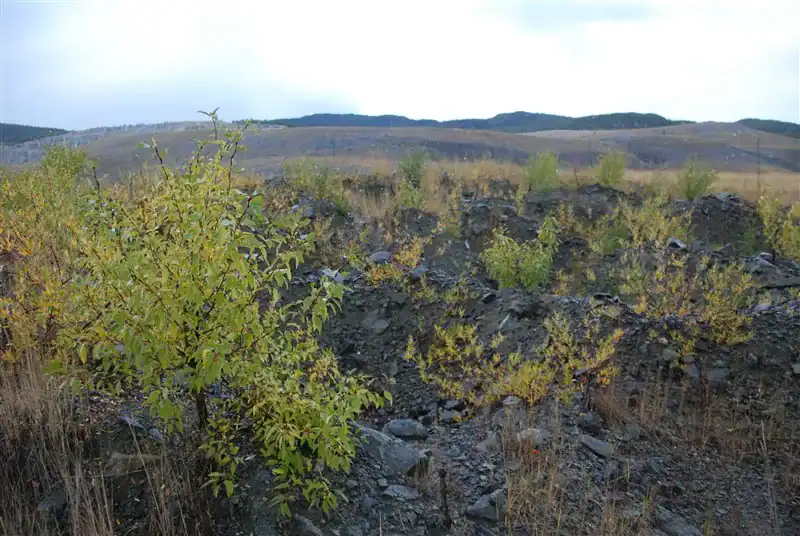
Native shrub establishment on treated waste rock.

Wildlife using the restored vegetation as habitat returns.
Live Staking with Pioneering Species
After surface preparation, live cuttings were installed across the treated areas. The Brenda presentation discusses alder separately for its nitrogen-fixing role; alder establishment should not be described as live staking from stem cuttings.
The choice of alder was deliberate. The symbiotic relationship between alder and Frankia alni, a nitrogen-fixing actinobacterium, means that alder does not just establish vegetation, it builds soil. In the nitrogen-poor conditions typical of mine waste rock, alder's nitrogen fixation creates soil conditions that foster the establishment of later successional species. Installing alder on a mine waste rock site sets in motion a successional trajectory: alder establishes, fixes nitrogen, contributes organic matter, modifies soil conditions, and enables the species that follow.
On waste rock sites, once compaction is reduced by the rough and loose treatment, good growth is obtained from cuttings planted deeply in the loose substrate. The combination of cuttings planted deep and small transplant plugs placed on the surface creates a system of niche complementarity, with different species occupying different positions in the substrate, increasing overall diversity.
Additional Habitat Enhancements
Beyond the surface treatment and live staking, several low-cost interventions added ecological structure to the site:
Brush piles from the rough and loose excavation work were retained and distributed across the site rather than burned or removed. Brush piles provide immediate cover and nesting habitat for small mammals and birds, adding habitat complexity that a bare slope cannot offer.
Fencing was installed to address the excess herbivory problem. Without a fence, the emerging shrub cover from the live staking program would simply be browsed back by the inflated ungulate population. Fencing is a prerequisite for woody vegetation establishment on high-herbivory mine sites.
Nest boxes were installed to bridge the gap between a young revegetated site without cavity trees and an older forest with abundant nesting cavities. Standard songbird boxes and Mountain Bluebird boxes were placed across the site. The bluebird boxes were particularly significant: Mountain Bluebirds are among the most charismatic and visually striking birds in BC's interior, and their presence on a recovering mine site generates a completely different public perception than a barren slope or a weedy grass-legume stand.
David noted the value directly: "The value of a photo like this [Mountain Bluebirds] in the local paper compared to a photo of the Mount Polley Tailings disaster cannot be calculated." David connected ecological recovery with the mine's public standing and argued that both benefit from sound ecological practice.
Bat boxes and a Kestrel box were added to further diversify the fauna using the site. Each box type addresses a different ecological niche and attracts a different suite of species to the recovering area.
Results: A Time-Lapse of Recovery (2012–2016)
The project was documented in a detailed photographic record spanning four growing seasons. The progression is striking.
June 5, 2012: Cuttings installed; Mountain Bluebirds observed at the nest boxes.
August 9, 2012: First growing season. Cuttings are starting to grow among irregular mounds, hollows, and scattered woody debris. The first green growth is emerging from the live stakes.
May 13, 2013: Second spring. Woody growth from the live stakes is well established. The site is beginning to show the patchy, heterogeneous pattern of vegetation that rough and loose treatment produces, with established shrubs in some areas and exposed substrate in others.
May 18, 2015: Third year. Substantial woody growth is visible across the treated areas. The heterogeneous topography is now partially obscured by vegetation but the diversity of the plant community reflects the diversity of the surface it established on.
September 20, 2016: Four growing seasons after installation. Dense woody vegetation has established across the treated areas. On the treated waste rock, the loosened surface supported established woody growth. Pioneering species have built soil and the site is visibly on a trajectory toward a diverse native shrub community.
The conclusion from the four-year record: making mine sites lumpy fosters diversity and resilience. The rough and loose surface treatment, combined with live staking of pioneer species, fencing, and structural habitat additions, transformed stagnant, impoverished reclamation into an actively recovering native ecosystem.

Recovery across the wider mine site.

Before treatment: exposed, compacted mine material.
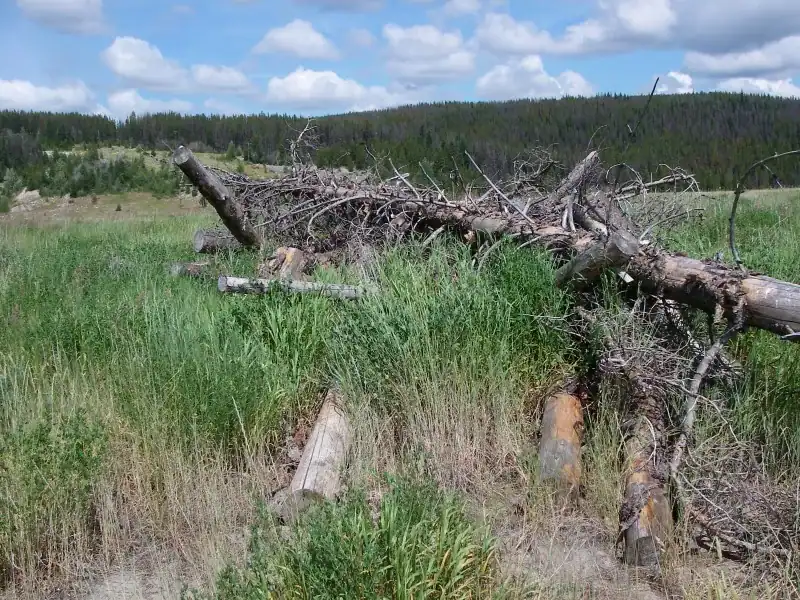
Transition: native vegetation establishing unevenly across the site.

Recovery: woody cover established on the reclaimed slope.
Why This Matters for Mine Operators
The Brenda Mine approach demonstrates several things of practical importance to mine operators and environmental managers:
Cost reduction, not cost addition. Rough and loose treatment on 10% of a mine site does not require additional work on the entire site. It replaces smooth grading on those areas. On waste rock areas, eliminating the seeding requirement further reduces costs.
Wildlife observations. Nest boxes, wildlife-tree poles, brush piles, and monitoring records documented how birds and mammals used the developing habitat.
Woody cover. Willow and alder added a woody structural layer that the earlier grass cover did not provide. The project record does not assign a carbon value to that change.
Monitoring. The project record followed plant establishment, wildlife use, and additional work to consider; vegetation cover was not the only observation.
Related Methods and Resources
Facing a Similar Challenge?
We can assess compacted mine surfaces, drainage, and locally adapted plant material to plan a staged recovery strategy.
Brenda Mine: rough substrate and young vegetation
These three David Polster field photographs document the rocky treatment context at Brenda Mine on May 18, 2015, with rough ground, live plants, and the wider mine landscape visible together.
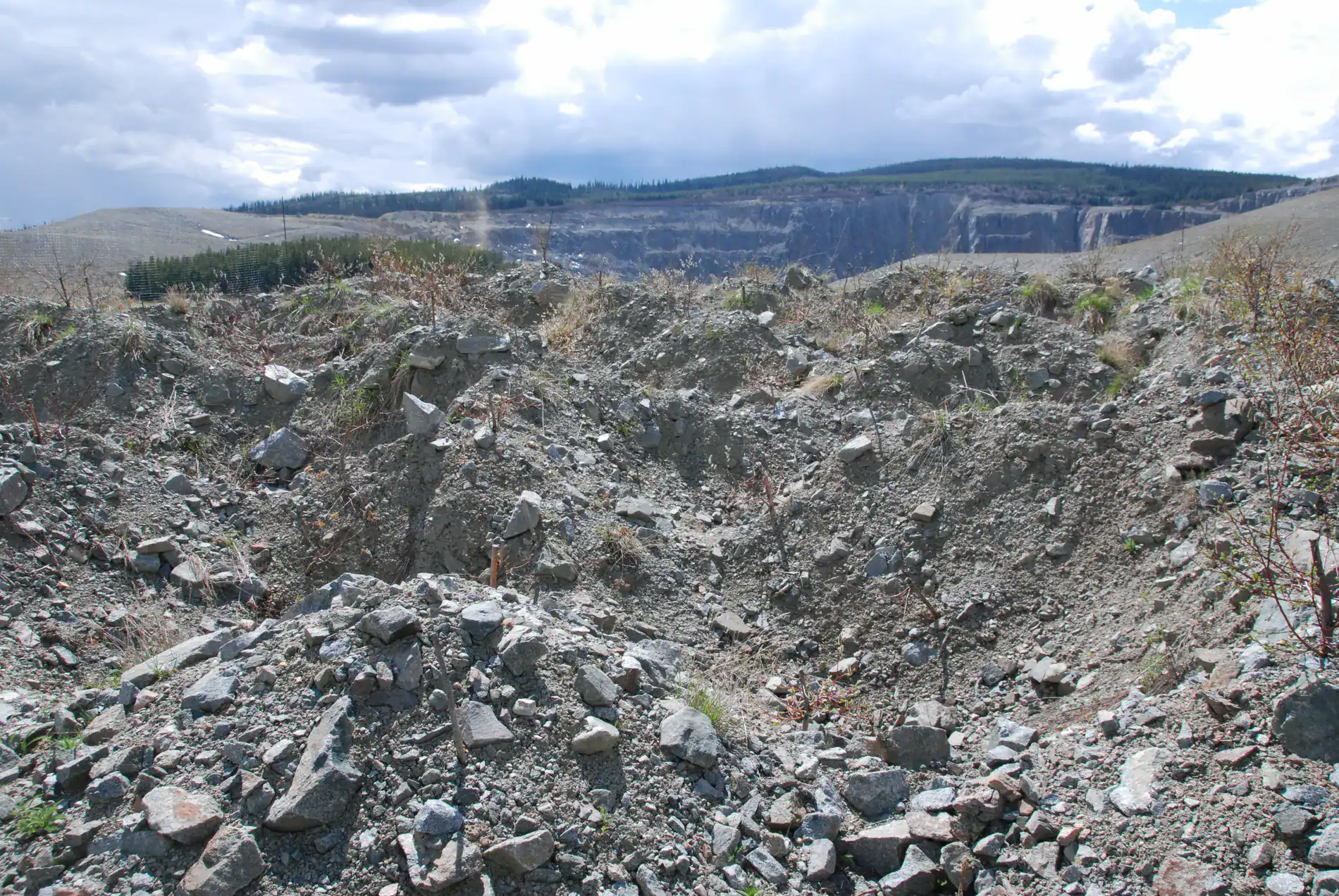


This is a dated field record, not a fixed-camera before and after measurement. The existing Brenda Mine progression remains the primary sequence for following vegetation change over time.