
Erosion Control Products on Moisture-Sensitive Slopes
A field example from David Polster | Vancouver Island Highway Project, Nanaimo Parkway
On a moisture-sensitive highway slope above a salmon stream, conventional erosion-control products were tried one after another and kept failing. David Polster's slide sequence documents the product failures, subsequent installation of wattle fences and live pole drains, and later vegetation on the slope.
What changed when the treatment changed
The record contrasts failed surface products with the later living treatment that addressed water movement and slope instability.
A treatment progression from the same project, not a matched or surveyed camera position.
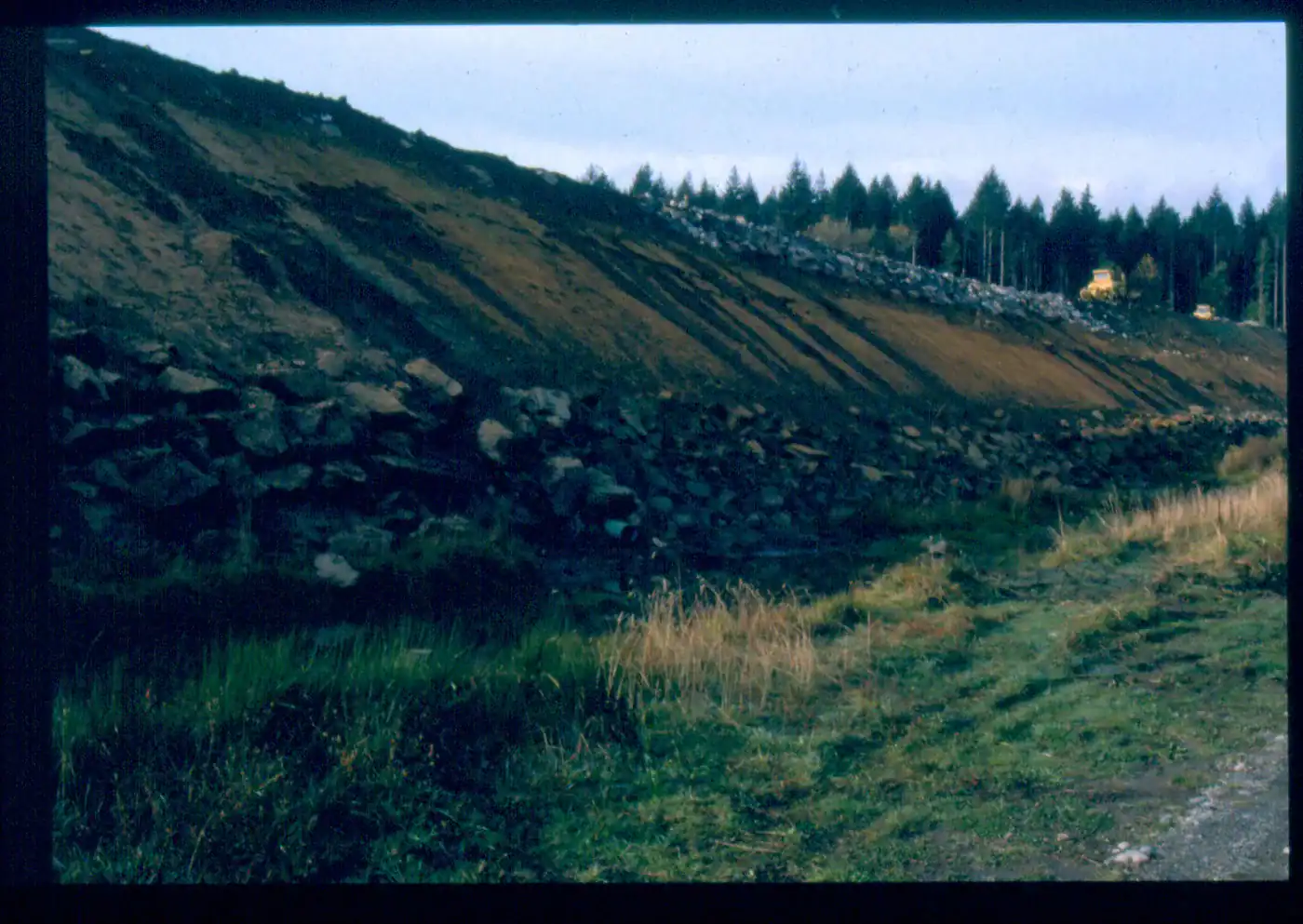
This slope on the Vancouver Island Highway Project just at the south end of the Nanaimo Parkway was treated initially with a soil binding spray (“Soil Guard”).

When that failed, the project engineer said that he could solve the erosion (there is a salmon stream below that was being impacted by the erosion). He covered the whole slope with coco-fibre matting.
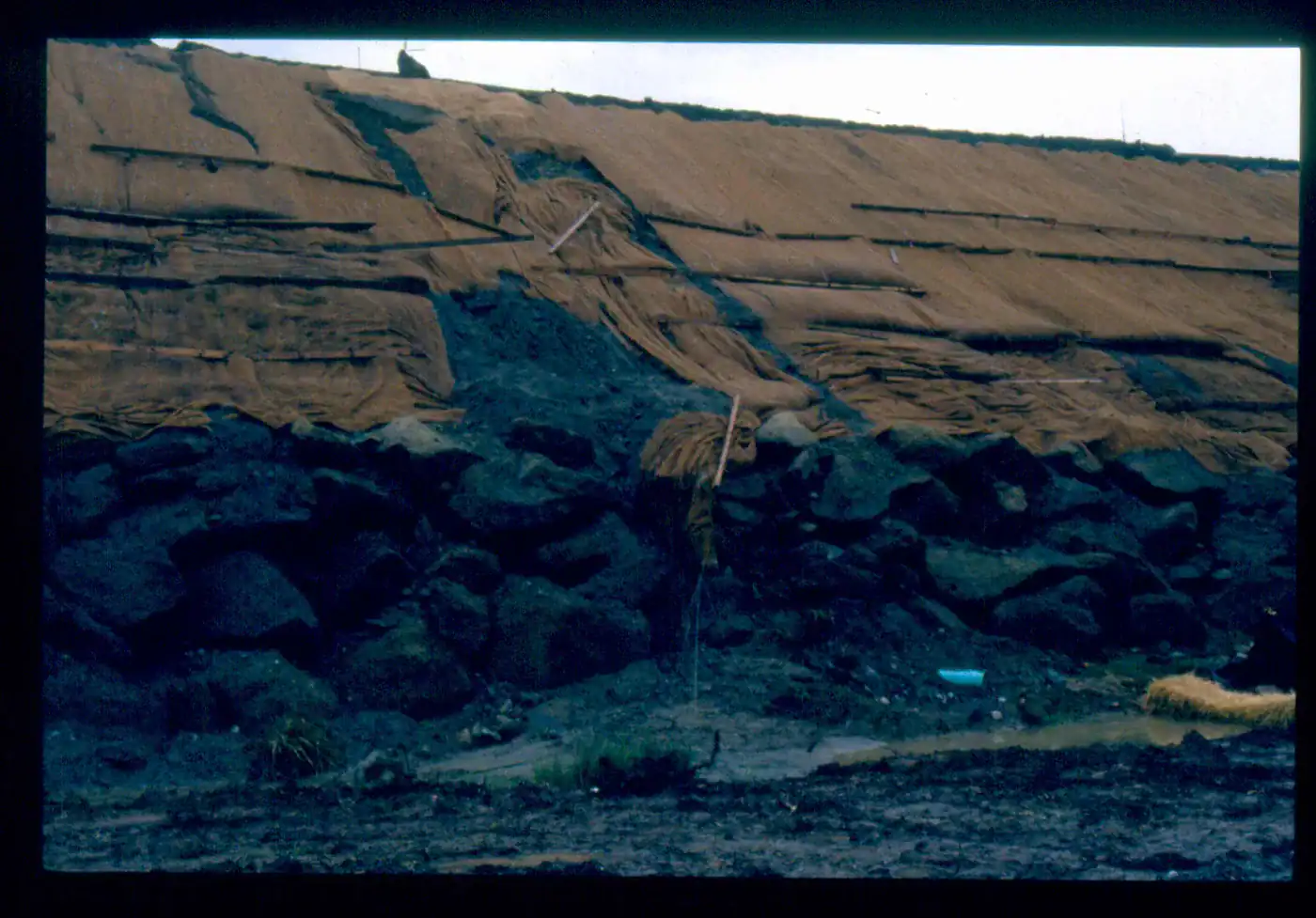
Of course this didn’t work any better.
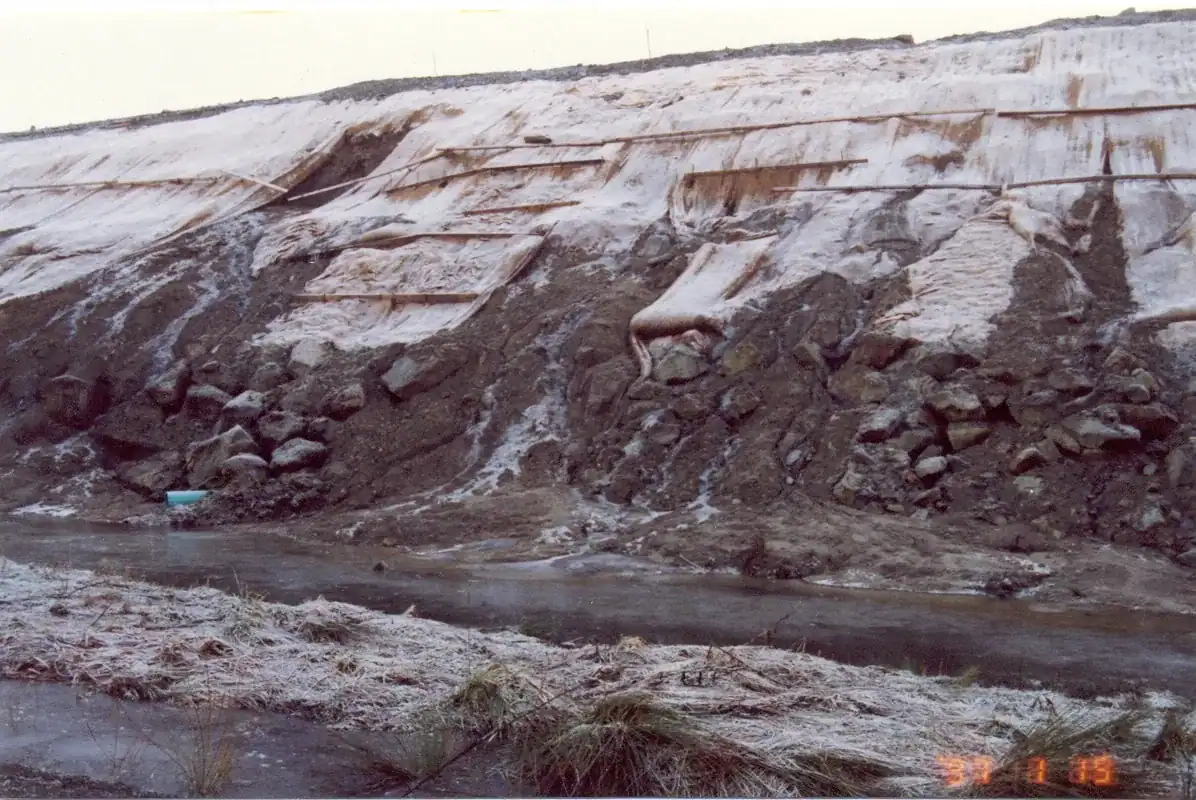
Eventually I brought in an engineer from Thurber who asked the project engineer what his solution now was and the project engineer replied that he would fill the holes with “overs” - rocks that go ‘over’ the grizzly when you are screening gravel so there are often lots of this material around on a highway project where a lot of screened gravel is used for the subgrade of the highway. The Thurber engineer said the proposed solution would not work and there would be “marbles in your mud at the bottom of the slope”.

So eventually I was asked to direct the crew that would solve the problems using soil bioengineering.

The soil bioengineering solutions consisted of wattle fences and live pole drains.
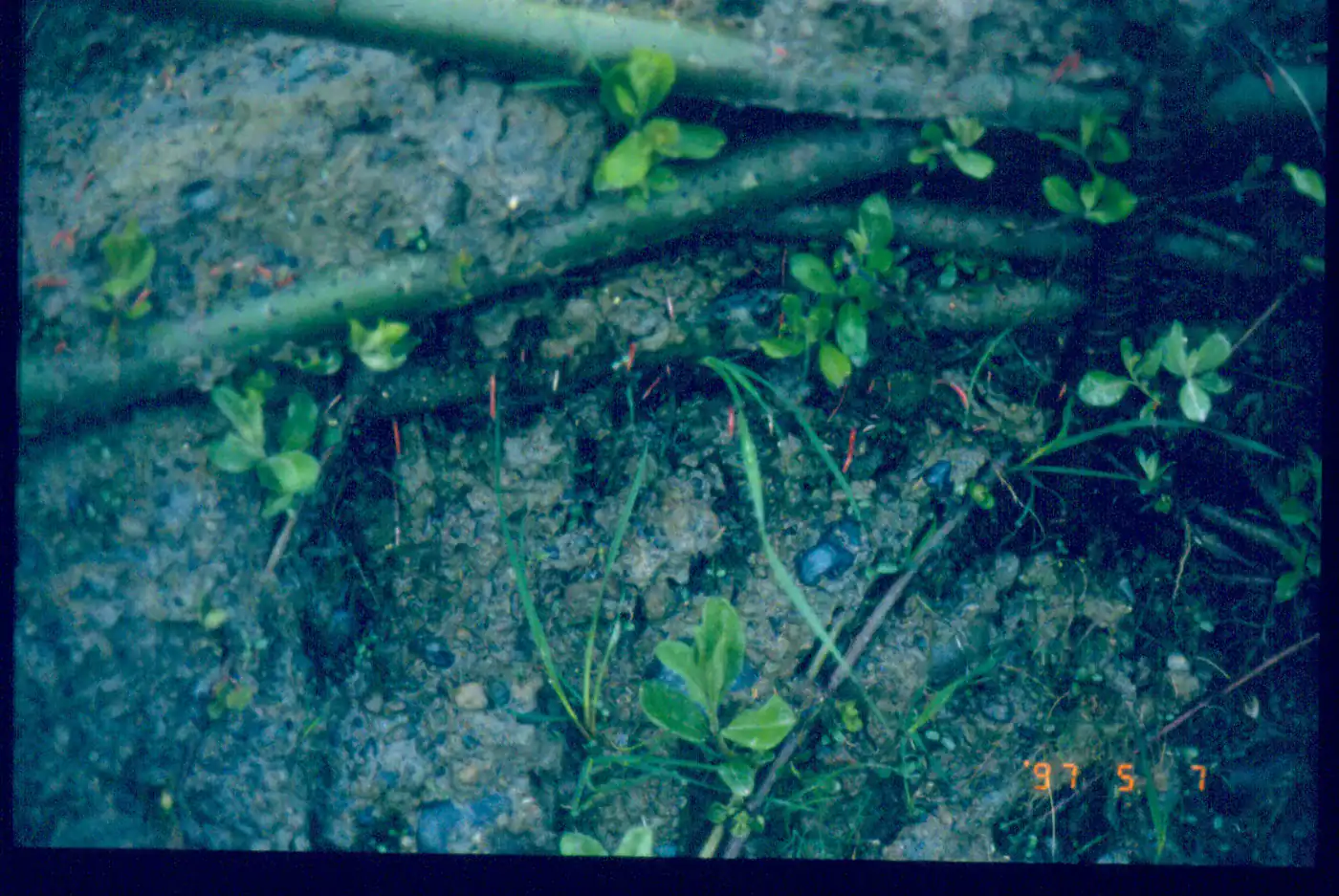
These grew really well.
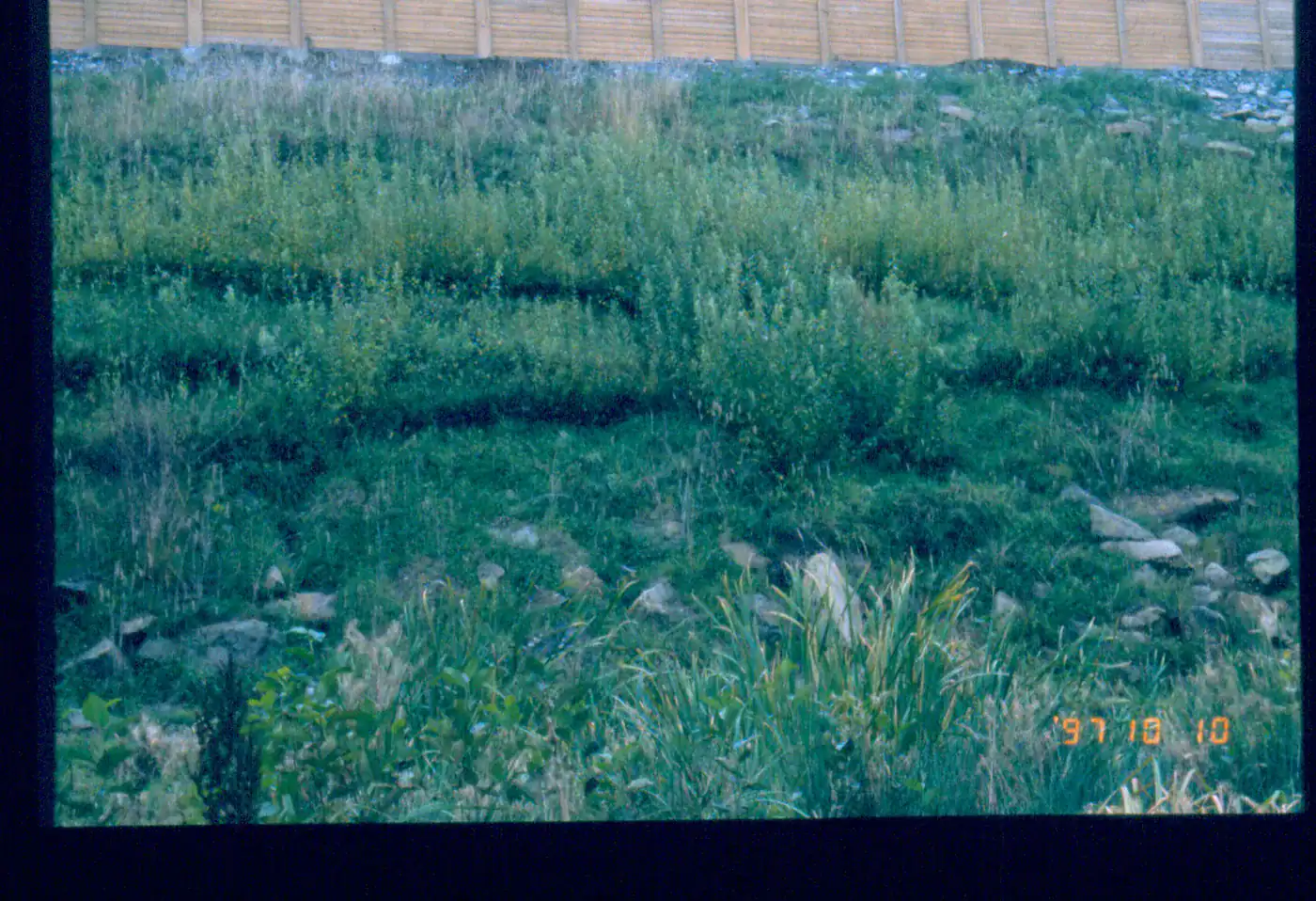
And by the end of the summer, the slope was fixed.

Over the years the use of pioneering species to fix the slope started the successional processes that have provided a healthy vegetation cover on the slope to this day.
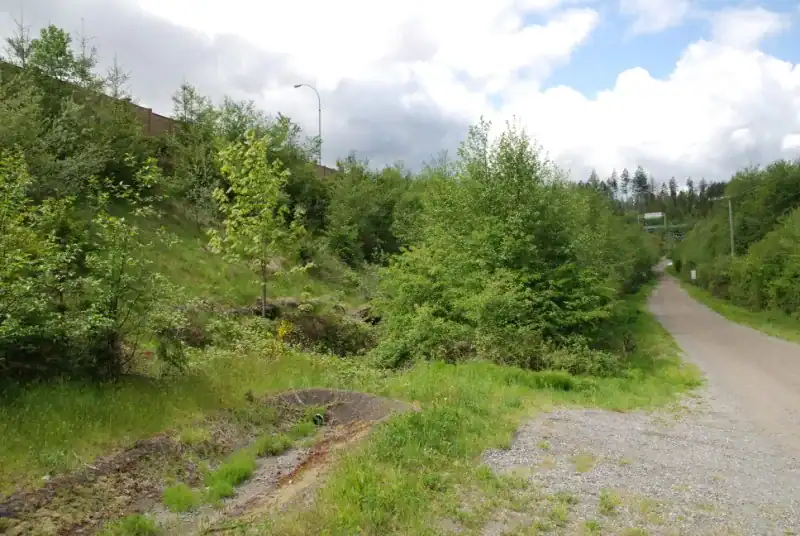
Conifers are moving in naturally.

These can be seen in the winter when there are no leaves on the willows and alder.
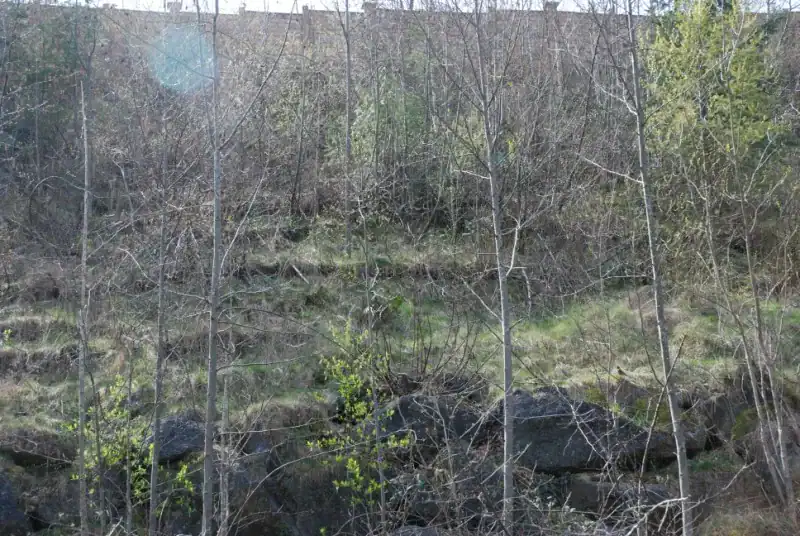
Although the original bioengineering wattle fences can still be seen on the slope.
What Solved the Slope
The useful lesson from this sequence is not that one commercial erosion-control product failed. It is that moisture-sensitive slopes need to let water move out while holding soil in place long enough for living roots to take over.
On this Vancouver Island Highway slope, the successful treatment combined:
- wattle fences to hold wet soil and interrupt surface movement;
- live pole drains to move seepage out of the slope without leaving loose, saturated material behind;
- pioneering woody species that established quickly and started the natural succession process;
- long-term monitoring that showed conifers moving in naturally after the slope stabilized.
Related Methods
- Wattle fencing - living barriers for slope and bank support.
- Live pole drains - live fascine drains for wet, unstable ground.
- Live staking - dormant cuttings that root into disturbed slopes and streambanks.
- Rough and loose treatment - surface preparation that helps compacted sites hold water and seed.
Need Help With a Moisture-Sensitive Slope?
PES can assess whether a slope needs drainage, live staking, wattle fencing, rough-and-loose treatment, or a combined soil bioengineering approach.