
Living Structural Systems in Soil Bioengineering
An overview of the more structural side of soil bioengineering, including wattle fences, live reinforced earth walls, live smiles, and related living systems for difficult slope and channel problems.
Structure That Grows
Living structural systems combine immediate engineering function with long-term biological function as plants establish and roots strengthen.
Technique Layering
Live palisades, reinforced earth walls, and brush mattresses work together to address multiple slope failure modes simultaneously.
Field-Proven Performance
Historical PES records show why living structural systems are judged over time: they can provide an immediate physical function while living material establishes, but performance depends on slope geometry, water, soil, species, construction, and maintenance. The RPP sequence below is one field record, not a universal comparison with hard armour.
Soil bioengineering includes both simple revegetation techniques and structural living systems. The distinction matters because each responds to different site forces and construction constraints.
What a Living Structural System Is
A living structural system is a soil bioengineering treatment that provides an immediate physical function while also rooting, growing, and improving with time.
Examples from the legacy PES material include:
live reinforced earth walls
live smiles
live palisades
combinations of drains, terraces, and live staking on unstable slopes
These are not just planted slopes. They are engineered assemblies built from living material.
Why This Matters
People sometimes hear "bioengineering" and assume a soft, low-strength treatment. The PES legacy says otherwise. Many of these systems were developed precisely for sites where:
slopes were too steep or unstable for simple planting
water movement was actively eroding the site
repeated hard fixes were expensive or visually damaging
long-term improvement mattered as much as immediate resistance
The living part is the advantage, not the weakness. Once established, the root systems deepen, the structural matrix densifies, and the treatment often performs better over time rather than worse.
Wattle Fences
Wattle fences are one of the clearest examples of living structure. They create a series of small retaining steps across an over-steepened slope. The terraces reduce erosion immediately, while the willow cuttings root and create long-term cohesion across the face.
They are especially strong where moisture is available and the slope is globally stable but surface erosion and shallow instability are active.
Live Reinforced Earth Walls
The highway presentation material is especially useful here. It shows that live reinforced earth walls are not just landscape treatments. They are substantial structural systems that combine soil, reinforcement, and living plant material into a retaining assembly that can root into the slope and improve with time.
That makes them relevant where a conventional retaining solution would be expensive, visually harsh, or ecologically dead.
It also helps that the public slide set shows more than one mode of evidence: conceptual diagrams, early-condition structural examples, and later growth. That combination makes the system easier to understand than a plain text description ever could.
Live Smiles
The old methods material also references live smiles, a more specialized system for flowing mud and difficult unstable slope conditions. Even without promoting every legacy technique as a standalone service page, it is useful to surface the term publicly because it shows the depth of the PES toolkit and the site-diagnosis logic behind it.
The broader lesson is that the method library includes treatments for very different failure mechanisms, not a single generic slope recipe.
Why Structural Living Systems Fit the PES Philosophy
These systems express the central PES worldview:
solve the mechanical problem
restore the biological process
choose pioneers that belong on the site
let the treatment strengthen as the ecosystem develops
This is why the methods can be both practical and ecological at the same time.
Where Clients Encounter These Systems
Structural living systems are most relevant for:
over-steepened slopes
unstable road cuts
streambanks needing both resistance and revegetation
infrastructure corridors where appearance and ecology both matter
reclamation sites where long-term recovery cannot depend on short-lived surface treatments
The Bowker Creek and highway examples matter here because they show these systems in exactly the kinds of constrained public settings where conventional practice often defaults to hard armouring or repeated cosmetic repairs.
How This Resource Supports the Rebuild
Living structural systems go beyond planting cuttings or seeding disturbed ground. They use living materials to build systems that perform real engineering work under defined site forces and construction constraints.
Takeaway
Some of the most effective PES solutions are living structural systems that solve stability problems now and keep getting stronger as they grow.
Living Structures: From Installed Lines to Rooted Systems
Living structural systems are easiest to understand when the same treatment is shown at different moments: as a built structure, as an early growing system, and finally as a slope or channel edge where vegetation has taken over much of the engineering work.
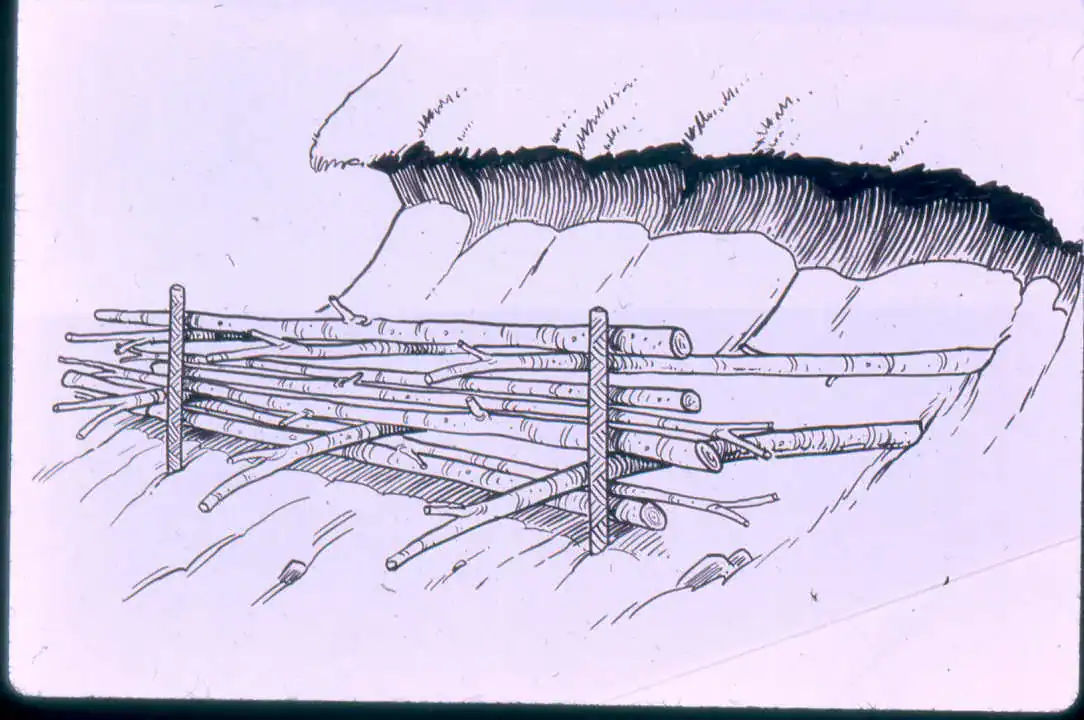
A wattle fence diagram from the highway bioengineering deck.
A living structural system starts with a physical job. In this diagram, posts and woven live material create a small retaining face. The structure holds soil immediately, while the planted cuttings are positioned to root into the same assembly.
At Bowker Creek, the living structure is doing more than decorating the bank. It breaks the channel edge into planted steps, slows small failures, and gives the willow a protected place to grow beside fluctuating flows.
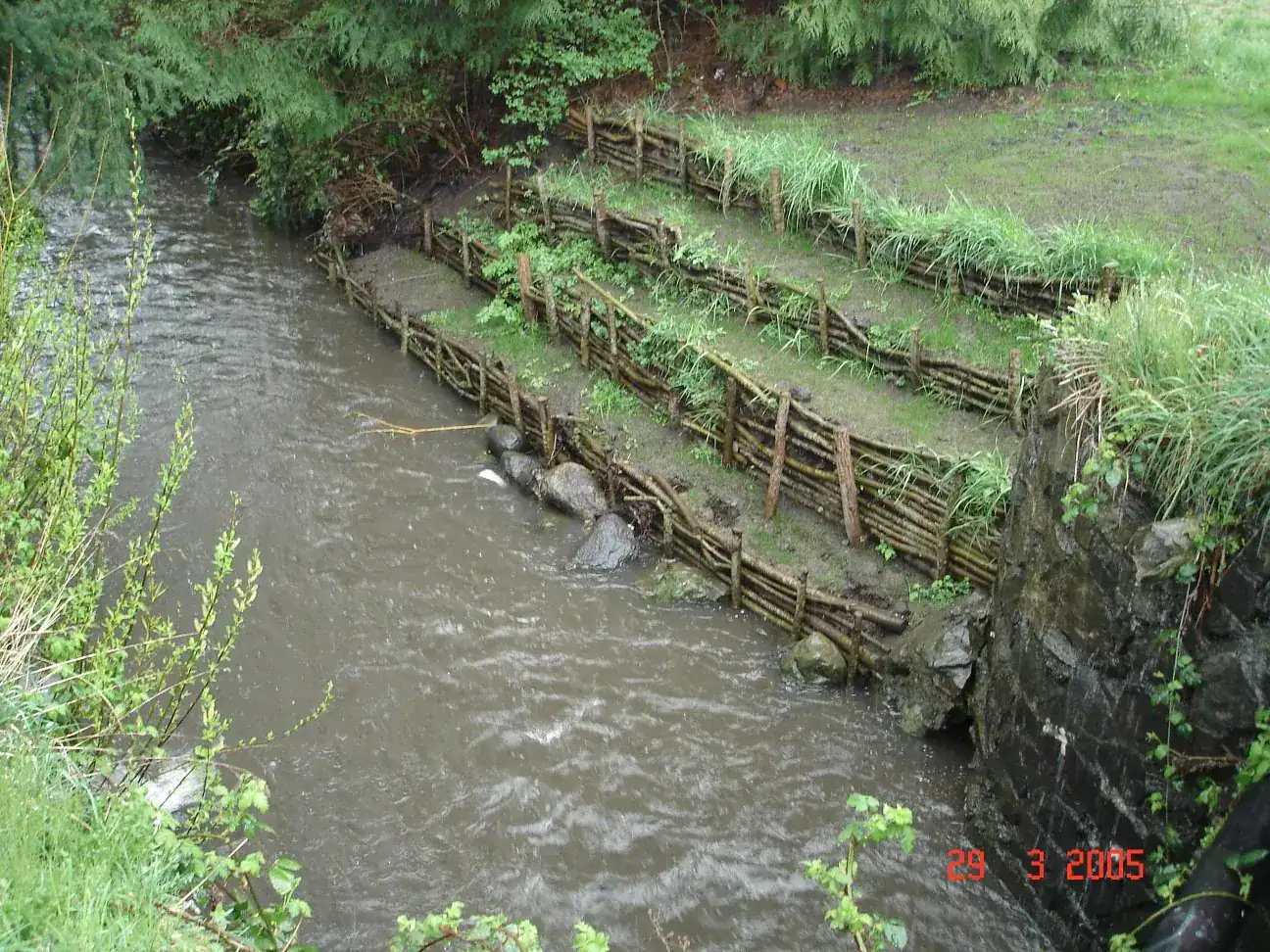
Wattle fences supporting the Bowker Creek channel edge.
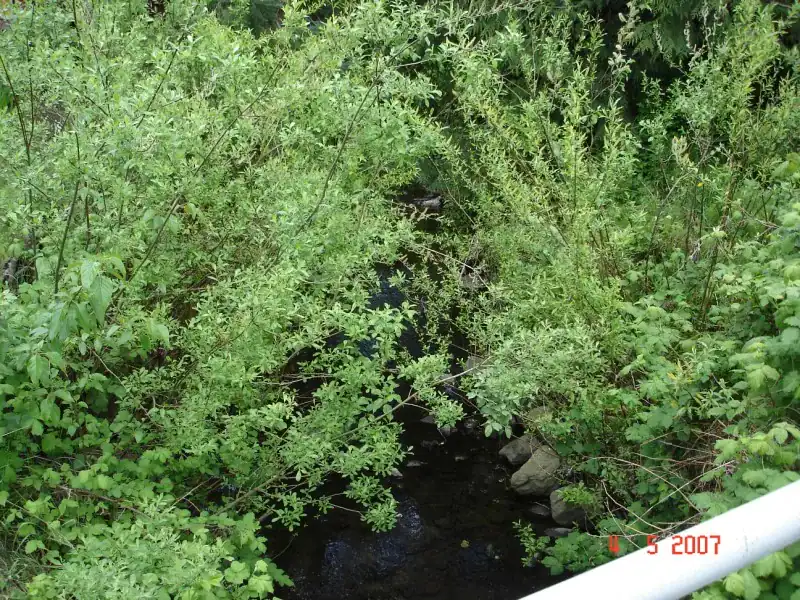
The same structural idea becoming harder to see as vegetation takes over.
The best sign of success is that the structure becomes less obvious. Once vegetation is established, roots and stems share more of the work, and the installation reads less like construction and more like a recovering stream edge.
Live reinforced earth walls carry the same logic into a larger structural form. Soil, reinforcement, and live cuttings are assembled as a retaining system that can root into the slope instead of remaining inert.
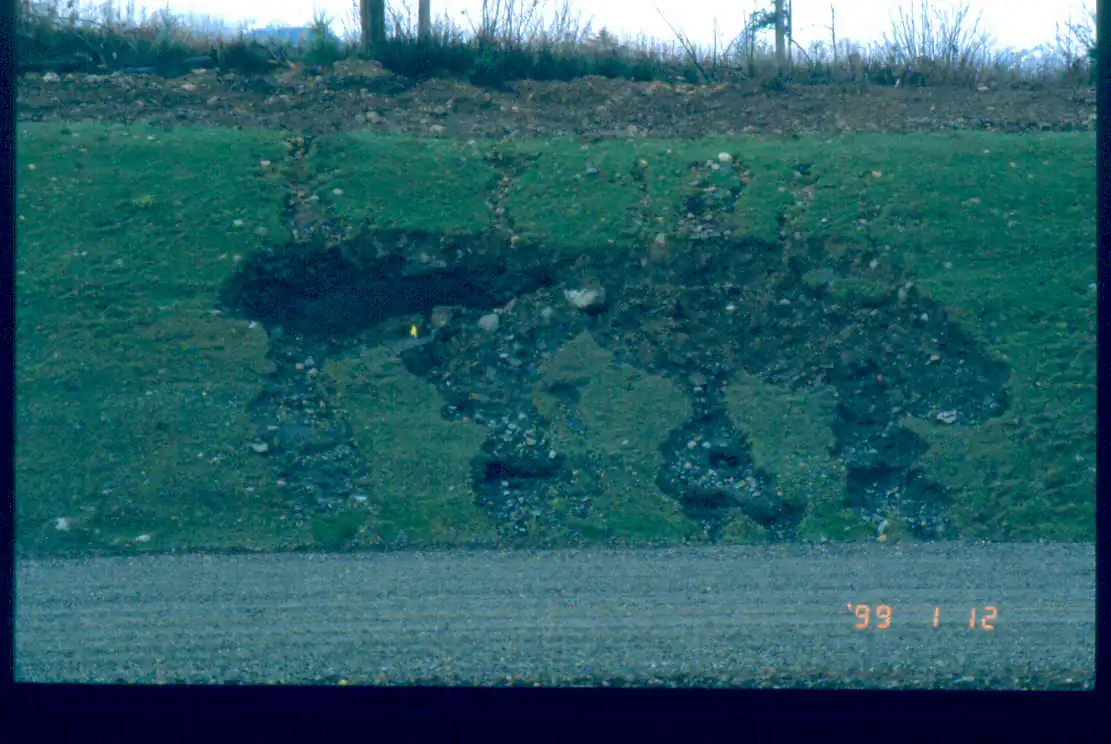
A live reinforced earth wall beginning to green up.
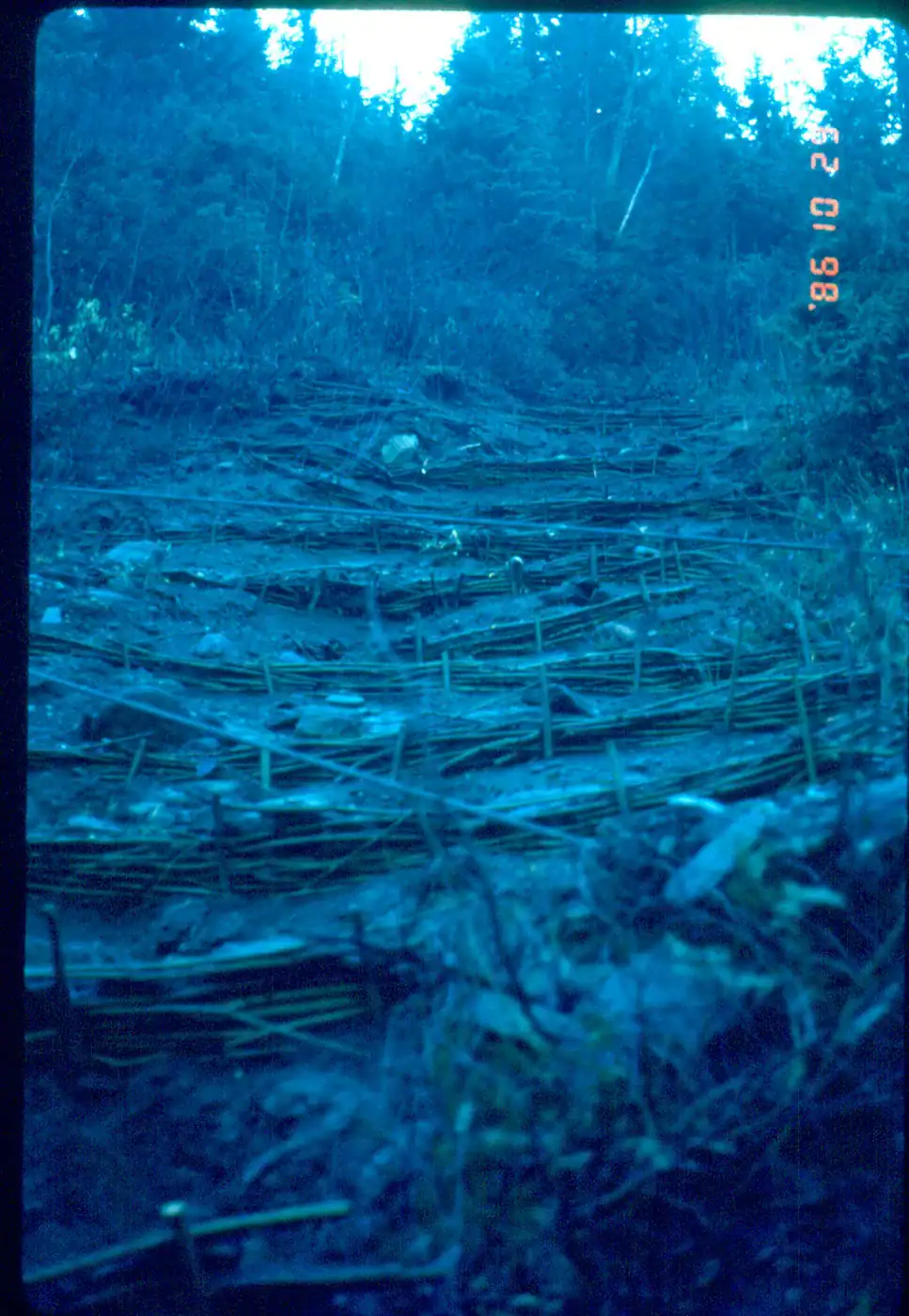
Early wattle fence installation on a steep till slope, 1986.
The RPP time sequence shows why these treatments should be judged over time. At installation, the living material is still mostly structure and intent: a set of lines across a steep till slope, built to catch soil and create rooting sites.
By the next growing season, the mechanical intervention is already becoming biological. The terraces hold finer material and moisture, and the slope begins to support a denser plant community than the raw face could hold.
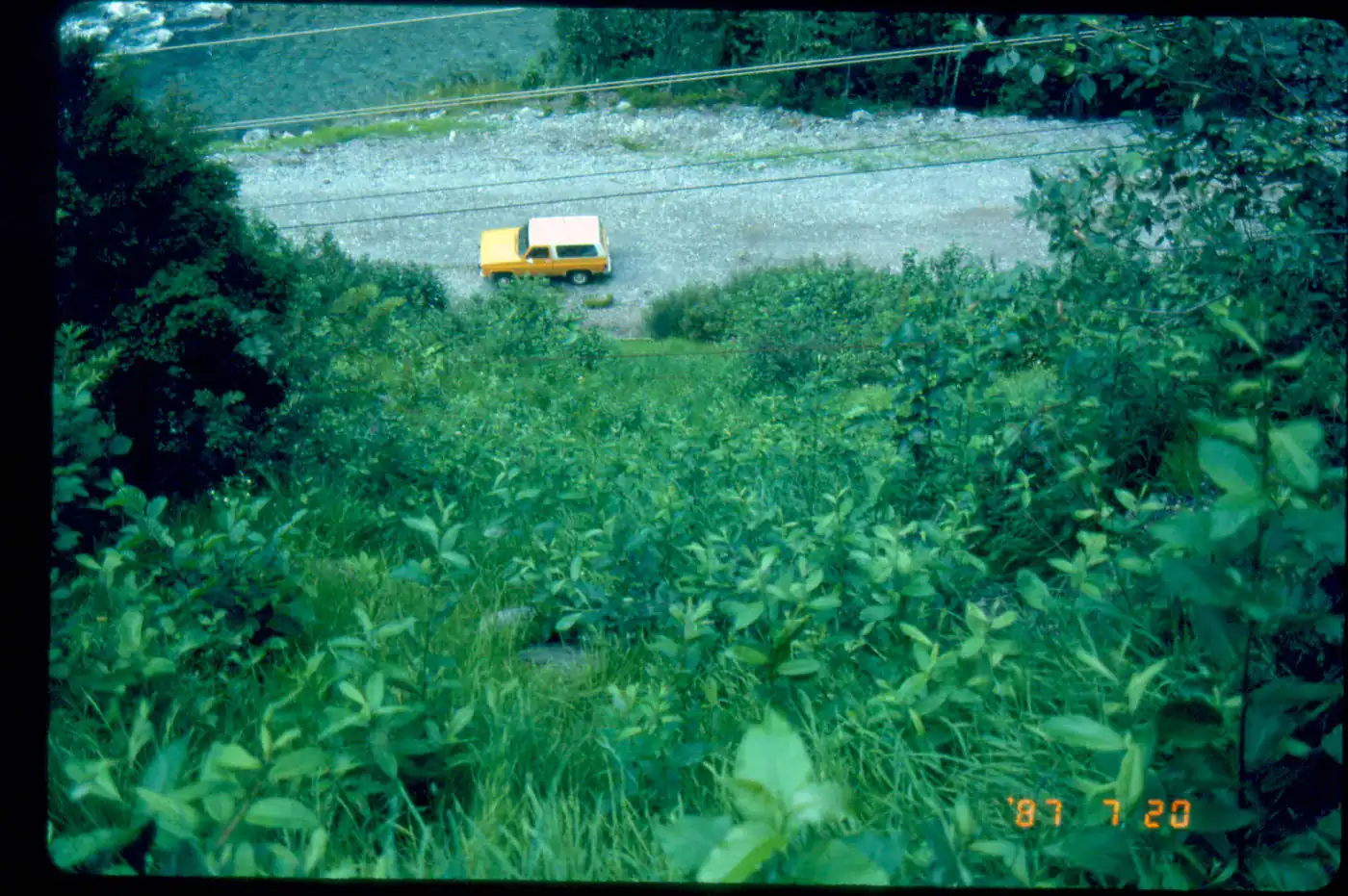
First strong vegetation response after wattle fence installation.
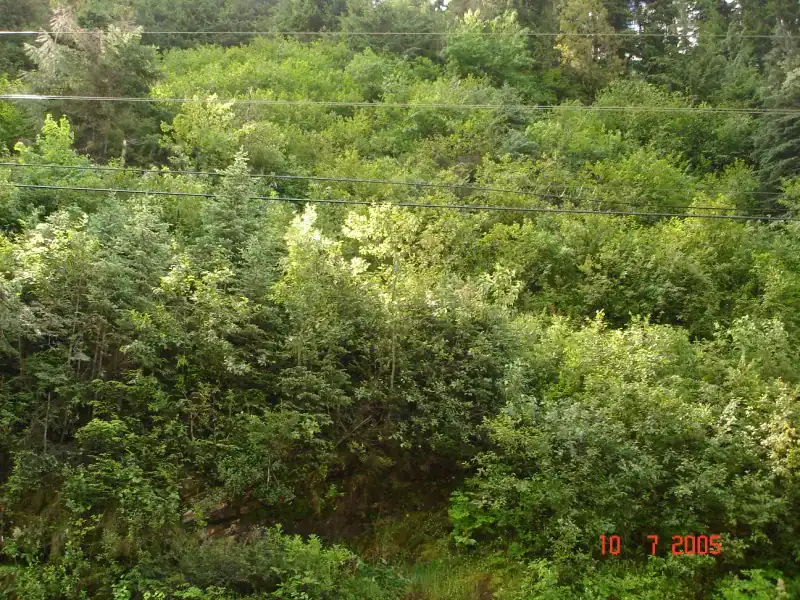
Nearly two decades later, vegetation dominates the treated slope.
Long-term views matter because living structures are designed to improve. By 2005, the treatment is no longer mainly a set of installed fences; it is a vegetated slope surface with rooted material doing the stabilizing work.
The 2009 view is the point of the page in one image: a living structural system solves the immediate erosion problem, then hands more and more of the work to plant growth, roots, litter, and successional recovery.
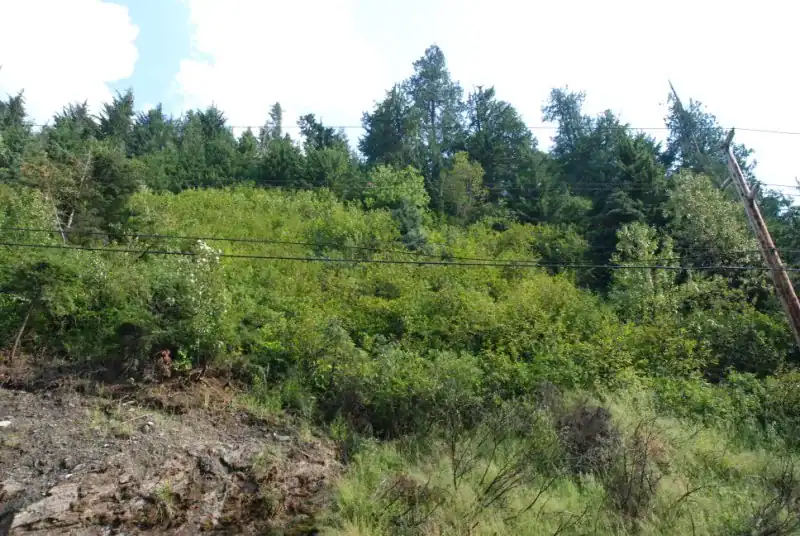
The recovered slope edge in 2009.
RPP wattle fences: read the slope record over time
This compact view follows the existing David Polster RPP field record from installation through early growth and later vegetation. Use the control to move through the dated views.
The treatment begins as installed lines across a steep till slope, built to catch soil and create rooting sites.
This is a same-slope historical progression assembled from dated field views. It is not a fixed-camera survey pair or a claim about every wattle-fence site.
References
- Source decks: David Polster, Highway Bioengineering and RPP Early Wattle Fences.
- Wattle Fencing
- Live Smiles
- Brush Layers for Slope and Bank Repair
Learn more
Need a Site-Specific Recommendation?
We can help interpret the conditions on your slope, streambank, shoreline, or disturbed site and recommend the right combination of soil bioengineering methods.