Live Gravel Bar Staking, Klondike River, Yukon
Germaine Creek, Klondike River, Yukon · Placer mining reclamation · 2004–2018
Placer Mining Reclamation
Live gravel bar staking used to recover bare stream gravels following historical placer gold mining disturbance in the Yukon.
Klondike River Watershed
Site on Germaine Creek, a tributary of the Klondike River in Canada's Yukon Territory.
14-Year Monitoring Record
One of the longest monitoring sequences in the archive, documented continuously from 2004 to 2018.
The Challenge
Placer mining at Germaine Creek had removed the natural riparian vegetation from gravel bars along the Klondike River. Without rooted plant communities on the bars, the system lost:
The sediment-trapping function of emergent and shrub vegetation
The channel-forming influence of root mass and woody debris accumulation
The ecological functions of riparian habitat, shade, organic matter input, bank stability
Bare gravel bars are highly mobile: high flows rework them each spring, preventing any natural succession from getting established. Conventional revegetation on bare gravel bars often fails because seeded material cannot establish before spring freshets rework the substrate.
Approach
The cuttings need suitable moisture and temperature to root. A fall installation must also survive winter and spring break-up; it should not be assumed to root through frozen conditions.
Cuttings were collected at Germaine Creek in fall 2004, soaked, and installed. The technique turns the spring freshet from a threat into a tool: sprouting cuttings intercept small woody debris carried by the river, which in turn creates slack water that traps suspended sediment behind the growing plants.
Results
The documented progression at Germaine Creek is one of the most thoroughly monitored examples of live gravel bar staking in Polster Environmental's portfolio:
- Spring 2005 (break-up and May): Cuttings had survived the winter and were actively sprouting
- June 2005: Active growth; plants establishing across the staked area
- September 2005–2006: Significant sediment accumulation documented; sand deposition of 30 cm or more in some areas
- August 2007: Additional sediment deposition and woody debris accumulation building the bar surface
- July 2008: Continued development of the riparian plant community
- August 2014: Mature shrub stand established on built-up bar surface; channel morphology evolved with deepened thalweg
- June 2018: Fourteen years after installation, a well-developed riparian community occupies the formerly bare gravel bar
The deepening of the thalweg (the main channel thread) alongside bar building is a particularly important result: as the bar builds vertically through sediment accumulation, the river concentrates its flow into a deeper, narrower channel, the natural form of a functional alluvial river.
Live gravel bar staking, turning the river's own processes toward restoration. Request a Site Assessment →
Klondike River: Rebuilding Placer-Mined Gravel Bars
The Klondike River deck documents live gravel bar staking under northern placer-mining conditions: bare mined bars at Germaine Creek, deep willow placement in fall 2004, first-season emergence, sediment capture, and riparian recovery across the treated bar complex.

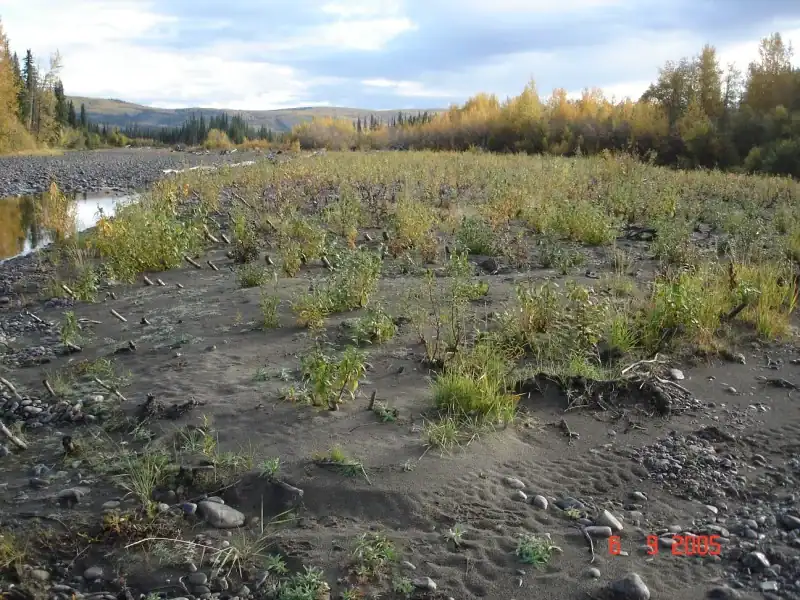
Before treatment: bare unstable gravel bars at Germaine Creek.
Placer mining left broad, unvegetated gravel surfaces along the Klondike River. With no rooted stems to catch debris or fine sediment, the bar surface stayed mobile and natural recovery had little traction.
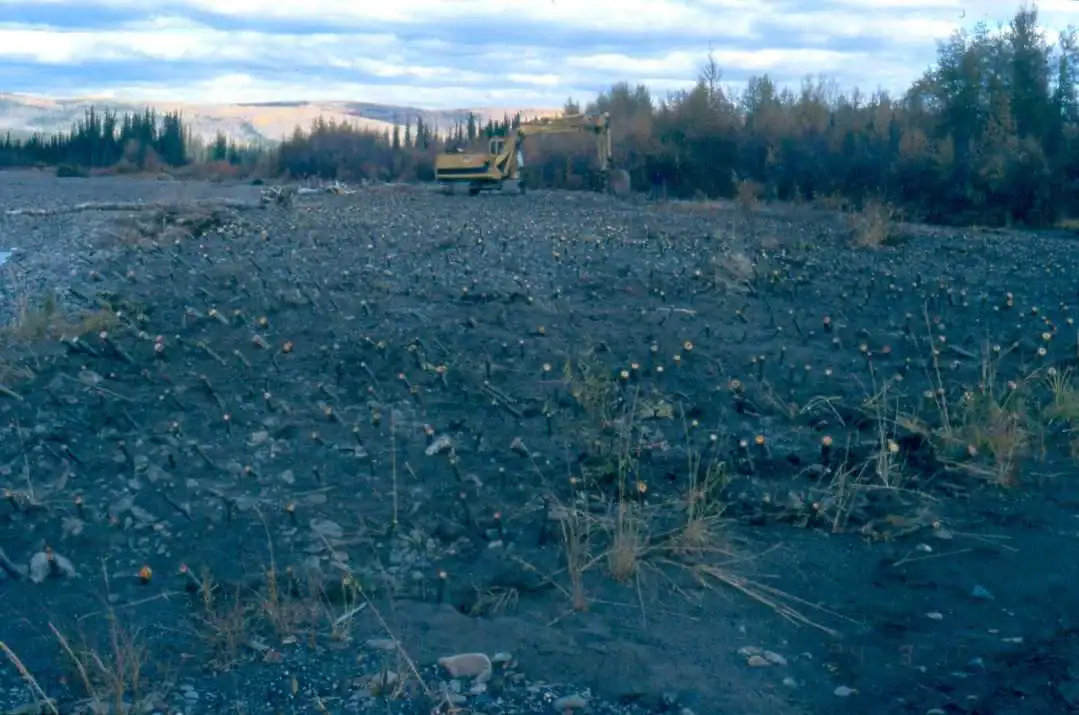
On coarse gravel bars, ordinary hand staking often cannot reach dependable moisture. Excavator-assisted placement lets large cuttings get deep enough to root below the dry surface layer.
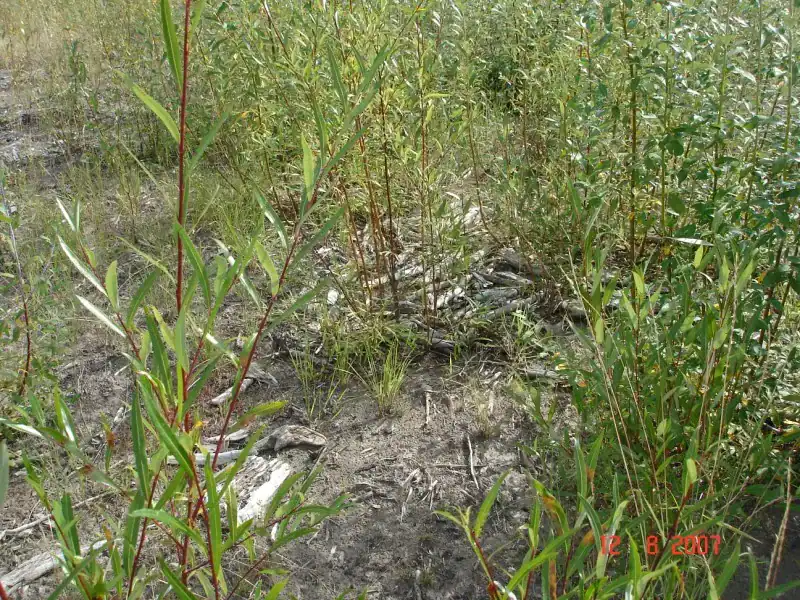
Excavator-assisted installation placed willow cuttings into coarse bar material.
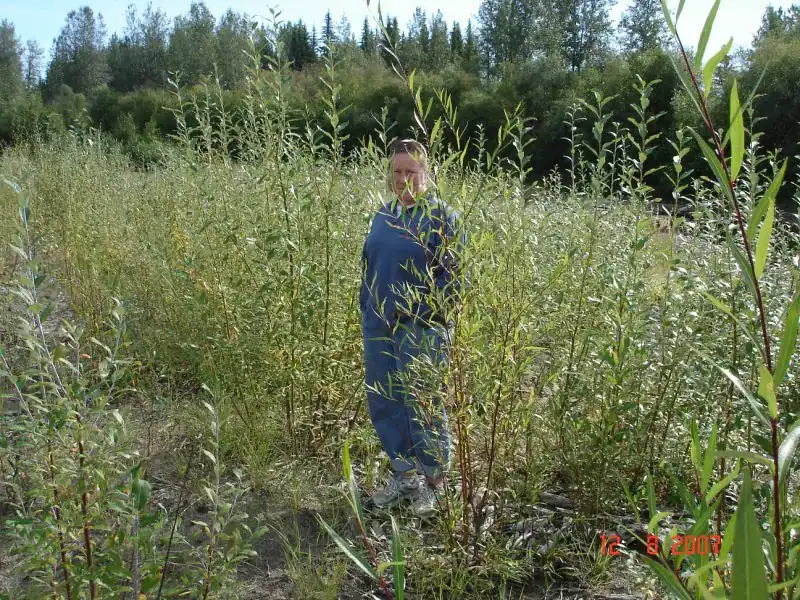
Cutting placement detail shows burial depth and clump pattern.
The placement pattern matters. Cuttings are buried deeply and grouped so the first shoots create roughness. That roughness is what catches debris and starts the slack-water sediment traps.
The Klondike project is useful because it was not a single demonstration clump. It shows the technique applied across a bar complex where channel form, sediment movement, and riparian recovery all had to respond together.

The treatment covered a broad gravel-bar surface along the Klondike River.

First-season shoot emergence showed the cuttings had taken.
Once shoots emerge through the gravel, the treatment starts working with the river. The new stems catch small debris and force tiny changes in water velocity around each clump.
By the second growing season, the clumps were no longer just surviving. They were changing the bar surface: slowing water, holding fine sediment, and creating better substrate for additional plants.
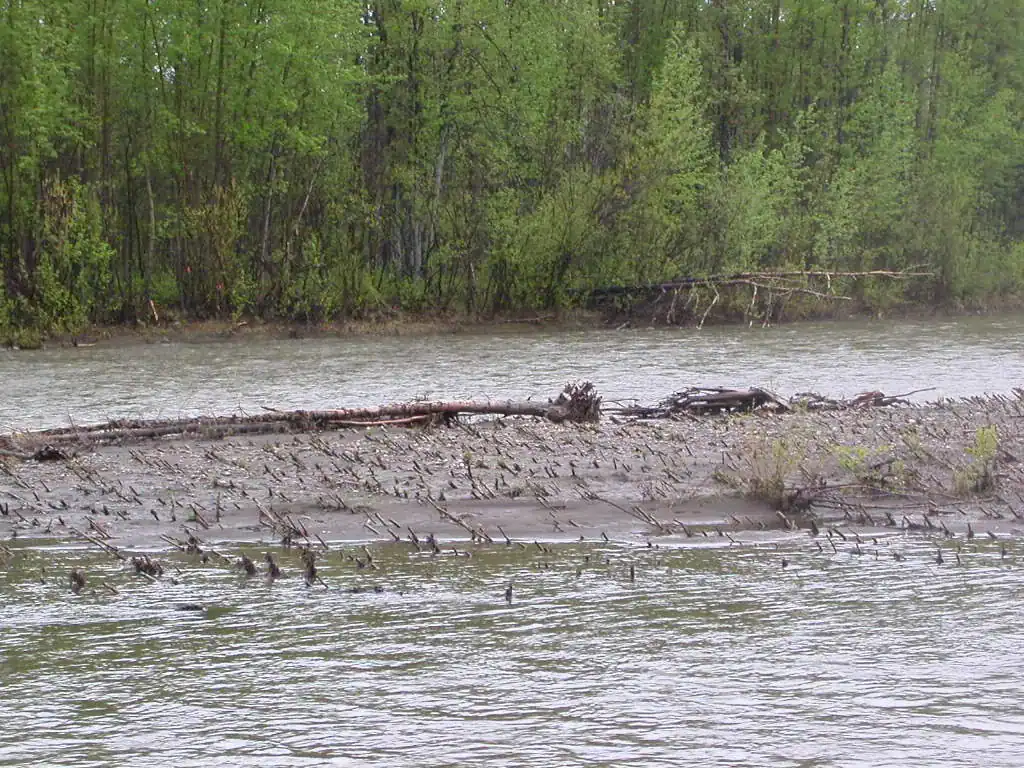
Second-year monitoring showed established willow clumps trapping sediment.
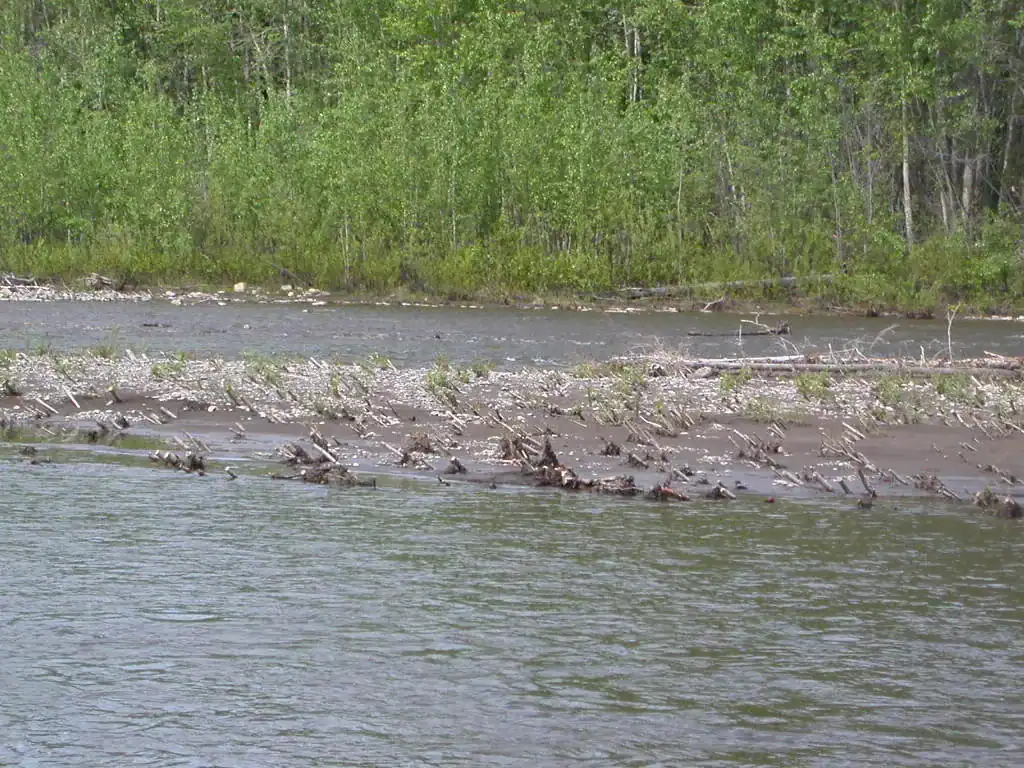
Willow clumps began creating sediment catchment basins across the bar.
This is the same self-reinforcing mechanism seen at San Juan: plants trap debris, debris traps sediment, sediment feeds more roots, and roots make the new bar surface harder to remove.
The long-term result is a functioning riparian surface rather than a bare placer-mined bar. The river still moves, but the treated bar now has living roughness, roots, organic matter, and habitat structure.
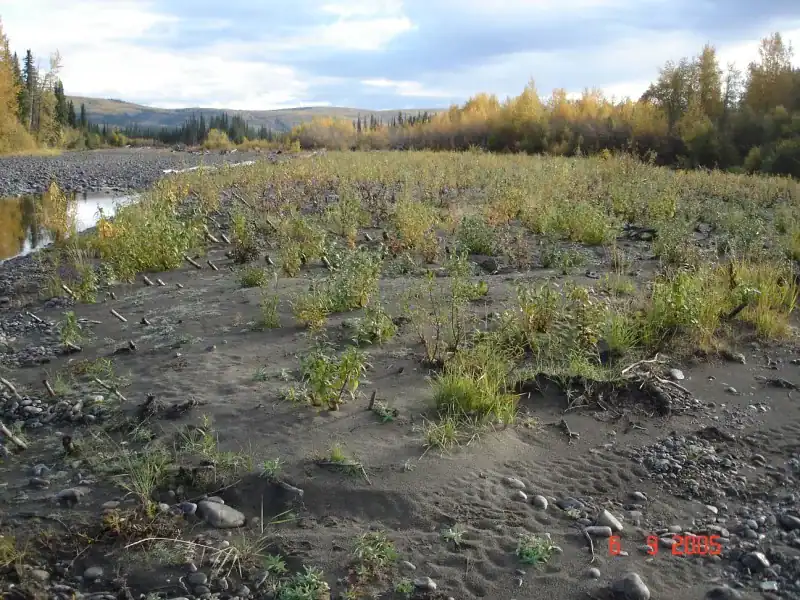
Riparian vegetation recovery spread across the treated gravel-bar complex.
References
- Source deck: David Polster, Live Gravel Bar Staking - Klondike River, 2004-2018 field sequence.
- Live Gravel Bar Staking method
- San Juan River live gravel bar staking case study
- Soil Bioengineering Techniques for Riparian Restoration
Learn more
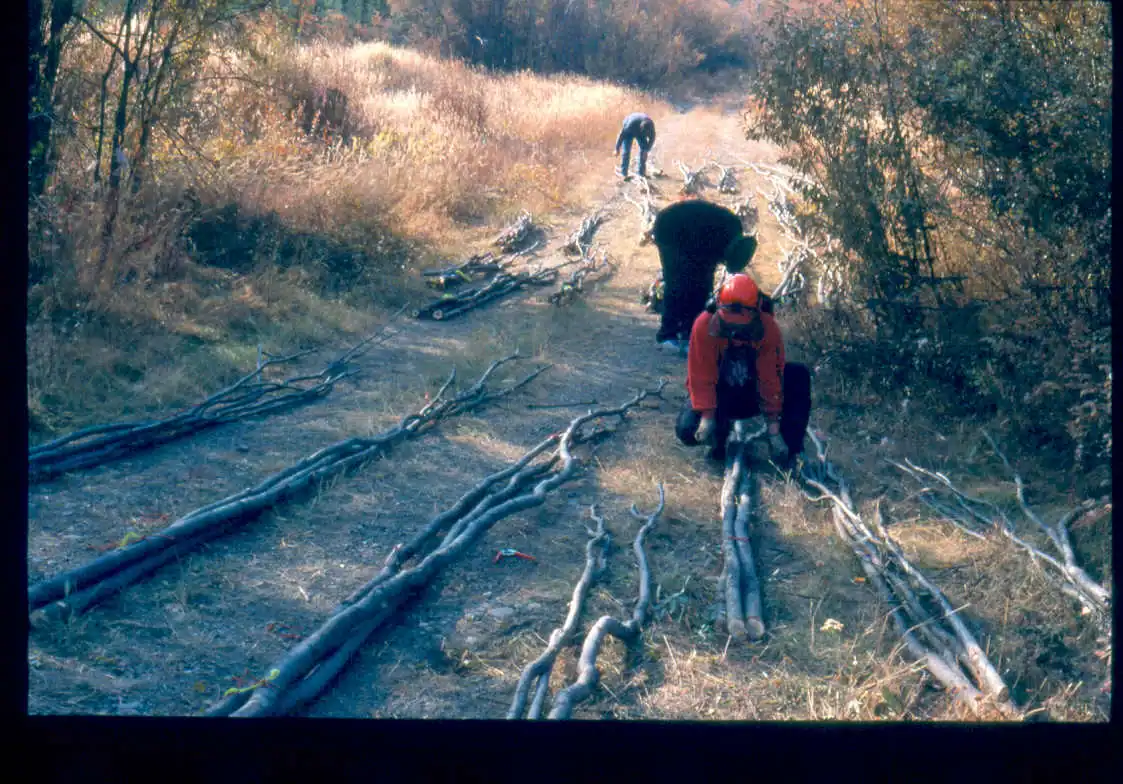
Collecting Cuttings, Fall 2004
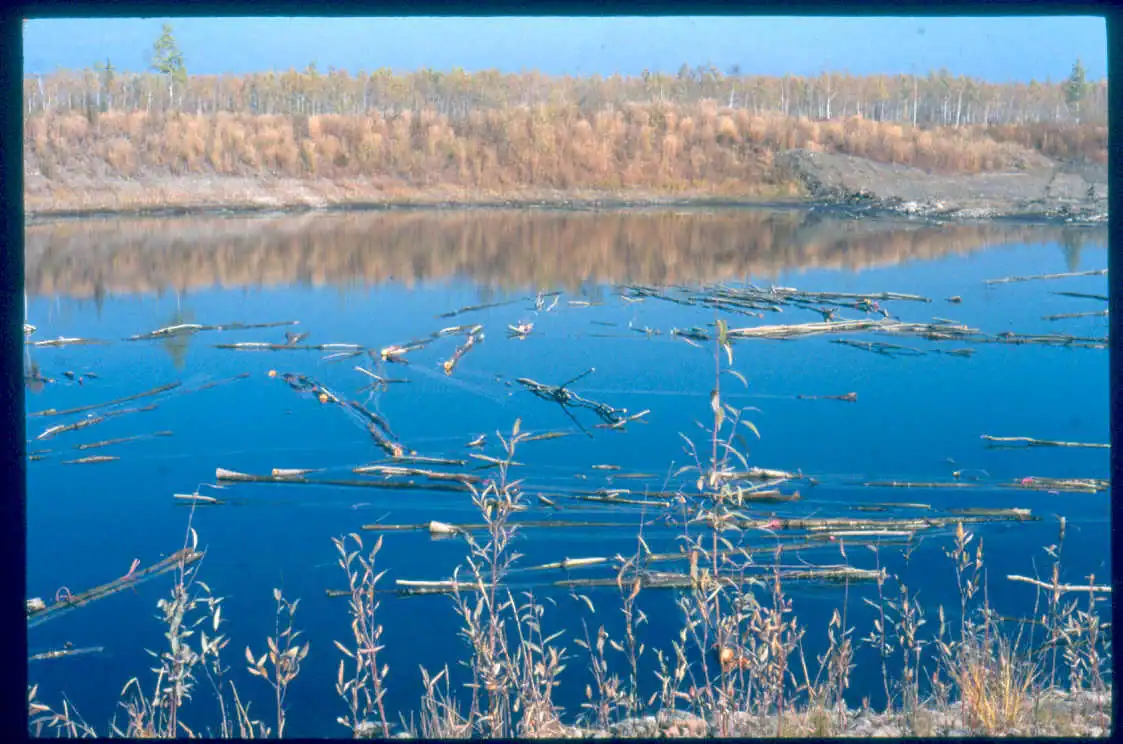
Collecting cuttings at Germaine Creek in the Yukon, fall 2004. Live gravel bar staking requires dormant cuttings, harvested after leaf drop and before hard freeze, from locally adapted riparian species. Balsam poplar and feltleaf willow are the primary species used in Yukon installations. Cuttings are taken from vigorous stems on adjacent healthy streambanks, bundled, and kept moist until installation.
Installation on the Gravel Bar
Installing live stakes on the Germaine Creek gravel bar, fall 2004. Stakes are driven with a planting bar through the gravel surface and down to the water table below. On active gravel bars, getting stakes to moisture depth is the critical challenge, the planting bar must penetrate 40–80 cm of coarse gravel to reach the saturated zone where rooting will occur.

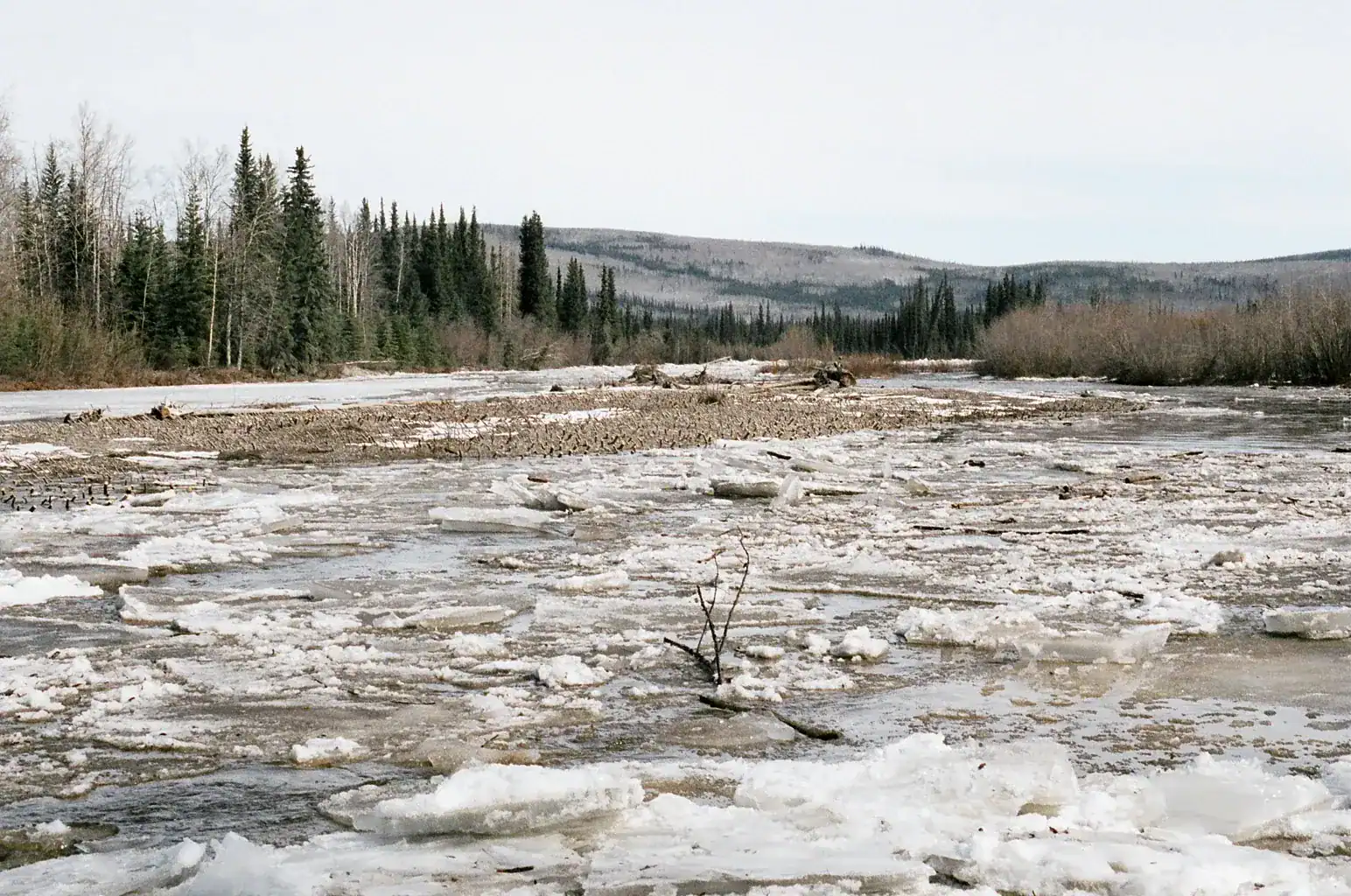
Break-Up 2005, The Test
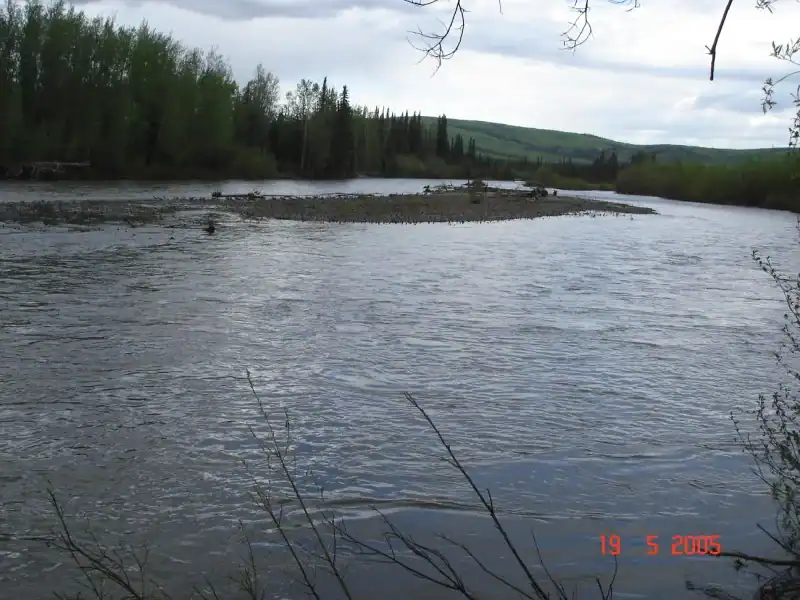
Spring break-up on the Klondike River at Germaine Creek, 2005. The spring freshet is the critical test for newly installed cuttings, high-velocity flow and ice scour remove inadequately rooted stakes and reveal which positions on the bar are viable. Some loss is expected at the most exposed leading-edge positions, but stakes in sheltered positions and those with well-developed root systems survive intact.
June 2005, Survival Confirmed
The June 2005 field photographs show new leaves on the installed cuttings. Later checks follow their survival through the growing season.


August 2006, Established
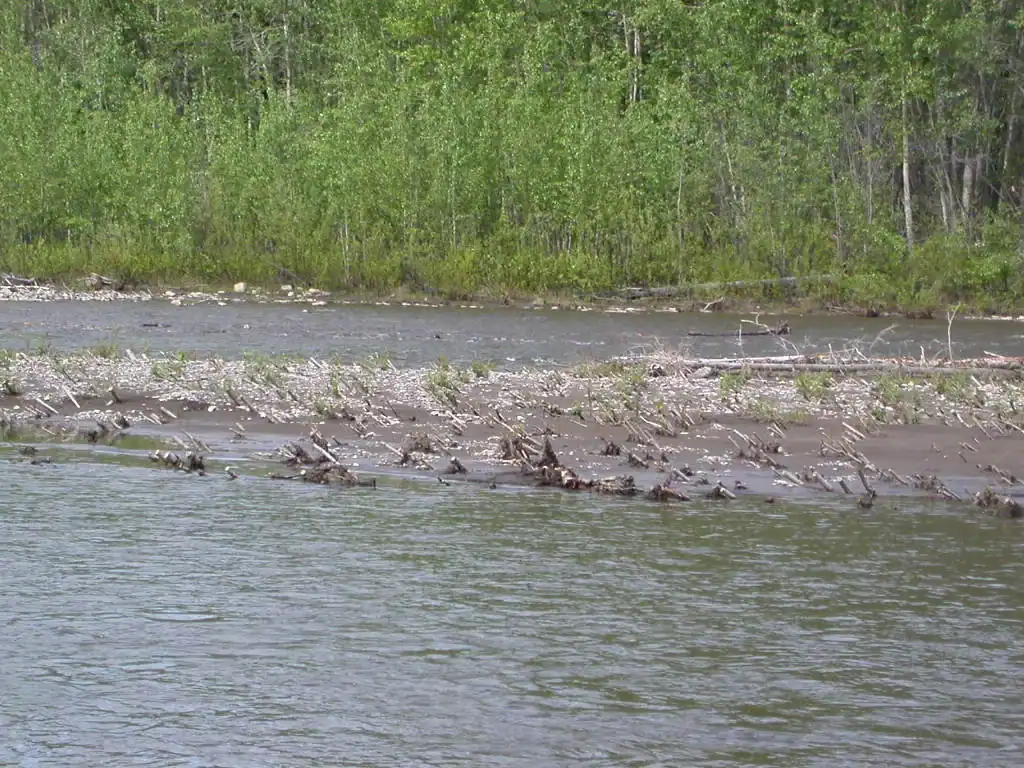
August 2006, two years after installation. The surviving stakes have become established shrubs on what was a bare gravel bar. Root systems are now extensive enough to bind bar sediments and begin converting ephemeral gravel into stable vegetated bank. This transformation, from unstable active bar to vegetated floodplain, is the long-term goal of gravel bar staking on subarctic rivers.
Germaine Creek: a gravel bar becomes a willow island
Live stakes introduced willow to bare gravel. Through later floods and ice, stems and roots trapped sediment and helped the bar develop into a vegetated island.
A same-project time sequence photographed from different positions, not a surveyed before-and-after viewpoint.
Germaine Creek Field Documentation
Related Methods and Resources
Facing a Similar Challenge?
We can evaluate bar dynamics, scour, and willow availability to determine where live gravel-bar staking can establish resilient roughness.