Cowichan Bay Shoreline Repair
Cowichan Bay, Vancouver Island · Intertidal substrate + riparian vegetation
Intertidal Shoreline Repair
Living systems adapted to tidal fluctuation and saltwater exposure on a Vancouver Island coastal shoreline.
Riparian Edge Establishment
Native riparian species installed above the tidal zone to stabilize and armour the eroding upper bank.
Ecological Gradient Restored
Treatment rebuilt the natural transition from intertidal substrate to established terrestrial riparian vegetation.
The Challenge
The Cowichan Bay shoreline, on the east coast of Vancouver Island, had been significantly altered by decades of industrial activity. Vegetation clearing, hard armour installation, and disruption of intertidal sediment dynamics had left the shoreline in poor ecological condition. The source presentation identifies restoration work by the Cowichan Community Land Trust. At the time of assessment, the shoreline:
Lacked appropriate substrate for forage fish spawning in the intertidal zone
Was actively eroding due to loss of natural shoreline structure
Had no functional riparian vegetation to provide shade, organic matter input, or bank stability
Showed the characteristic damage of hard armour: wave deflection causing erosion at unprotected edges
Forage fish, including surf smelt and Pacific sand lance, depend on specific intertidal substrate conditions for spawning. Their loss from degraded shorelines has cascading effects up the food chain to salmon, marine birds, and marine mammals.
Approach
The restoration approach addressed both the intertidal and terrestrial components of the shoreline system.
In the intertidal zone, appropriately sized substrate was added with the aim of improving forage-fish habitat. The documented sequence shows the substrate work and developing shoreline form.
On the terrestrial shoreline margin, riparian vegetation was established using living plant materials suited to the coastal environment. Establishing woody riparian vegetation above the intertidal zone is essential for long-term shoreline stability, root systems bind the bank, above-ground structure dissipates wave energy, and the vegetation community provides ongoing organic matter input to both the terrestrial and aquatic zones.
Results
The field sequence shows a developing scalloped beach form and vegetation along the terrestrial margin.
The project demonstrates that decades of industrial degradation to a coastal shoreline can be reversed through targeted bioengineering interventions, but that recovery requires addressing both the physical substrate and the living components of the system, not just adding armour to resist erosion.
Key lessons from Cowichan Bay:
- Shoreline restoration requires working at two elevations simultaneously. Intertidal substrate conditions drive forage fish recovery; terrestrial riparian vegetation drives bank stability and ecological function. Treating only one will not produce a complete result.
- At Cowichan Bay, the treatment combined changes to shore protection with substrate and riparian work. The appropriate balance of rock and living treatment depends on the shoreline and expected waves.
- The intertidal work was intended to improve spawning substrate for forage fish. Monitor habitat conditions and fish use alongside shoreline change.
Shoreline bioengineering, working with natural coastal processes rather than against them. Request a Site Assessment →
Documented Shoreline Recovery
Archive slides from the Cowichan Bay shoreline presentation show the progression from a damaged industrial edge to restored substrate, scalloped beach form, and re-establishing riparian vegetation.
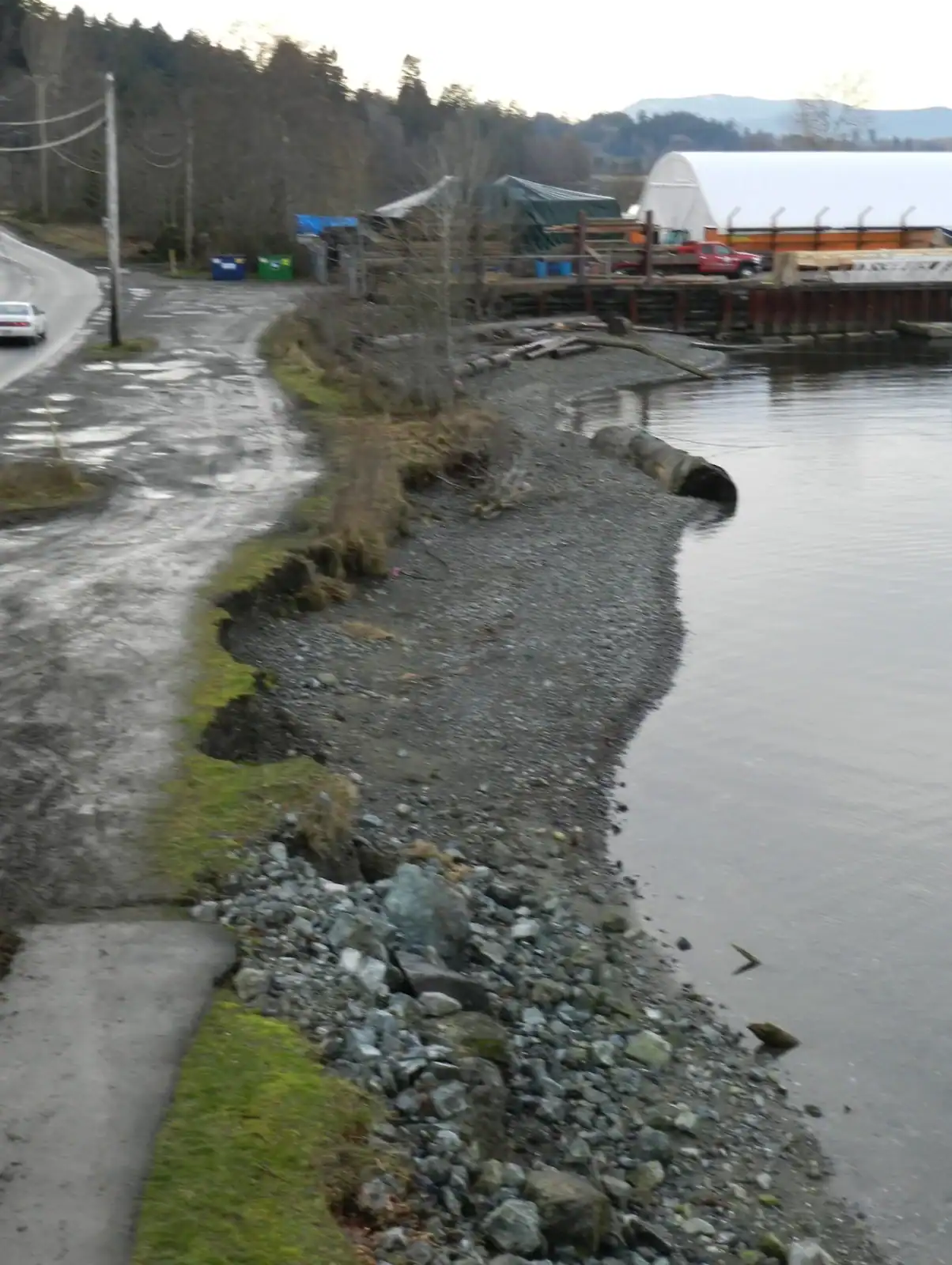
Before restoration: erosion and hard-edged shoreline damage along Cowichan Bay.

Scalloped shoreline form developing after substrate restoration and reshaping.

Riparian vegetation returning to the terrestrial margin of the restored shoreline.
Cowichan Bay: from hard edge to living shoreline
Move through the documented repair from industrial shoreline damage to substrate work, a softer beach form, and a repaired gravel edge.
These photographs come from the same Cowichan Bay project record, but viewpoints vary and the sequence is not a registered fixed-camera comparison. Captions follow the existing Cowichan gallery and David Polster source deck.
 Before repair
Cowichan Bay shoreline damaged by years of industrial activity before restoration
Cowichan Bay: Repairing the Beach Process
The Cowichan Bay repair combined intertidal substrate work with riparian planting above the beach. Both zones need to be considered when planning a shoreline treatment.
Years of industrial use had left a hard, simplified shoreline edge.
Industrial use had simplified the shoreline: fill, hard edges, disturbed sediment movement and little vegetation between land and intertidal habitat.
Forage fish such as surf smelt and Pacific sand lance need the right upper-intertidal sediment texture. Armour and coarse, static edges break that habitat. The repair had to rebuild beach process, not just hold a line on a map.
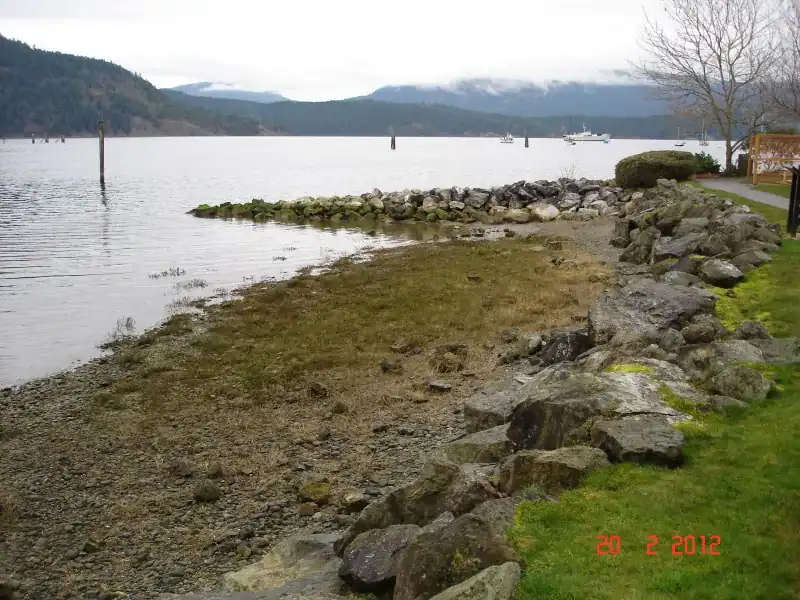
Hard armour had removed the beach conditions forage fish need.
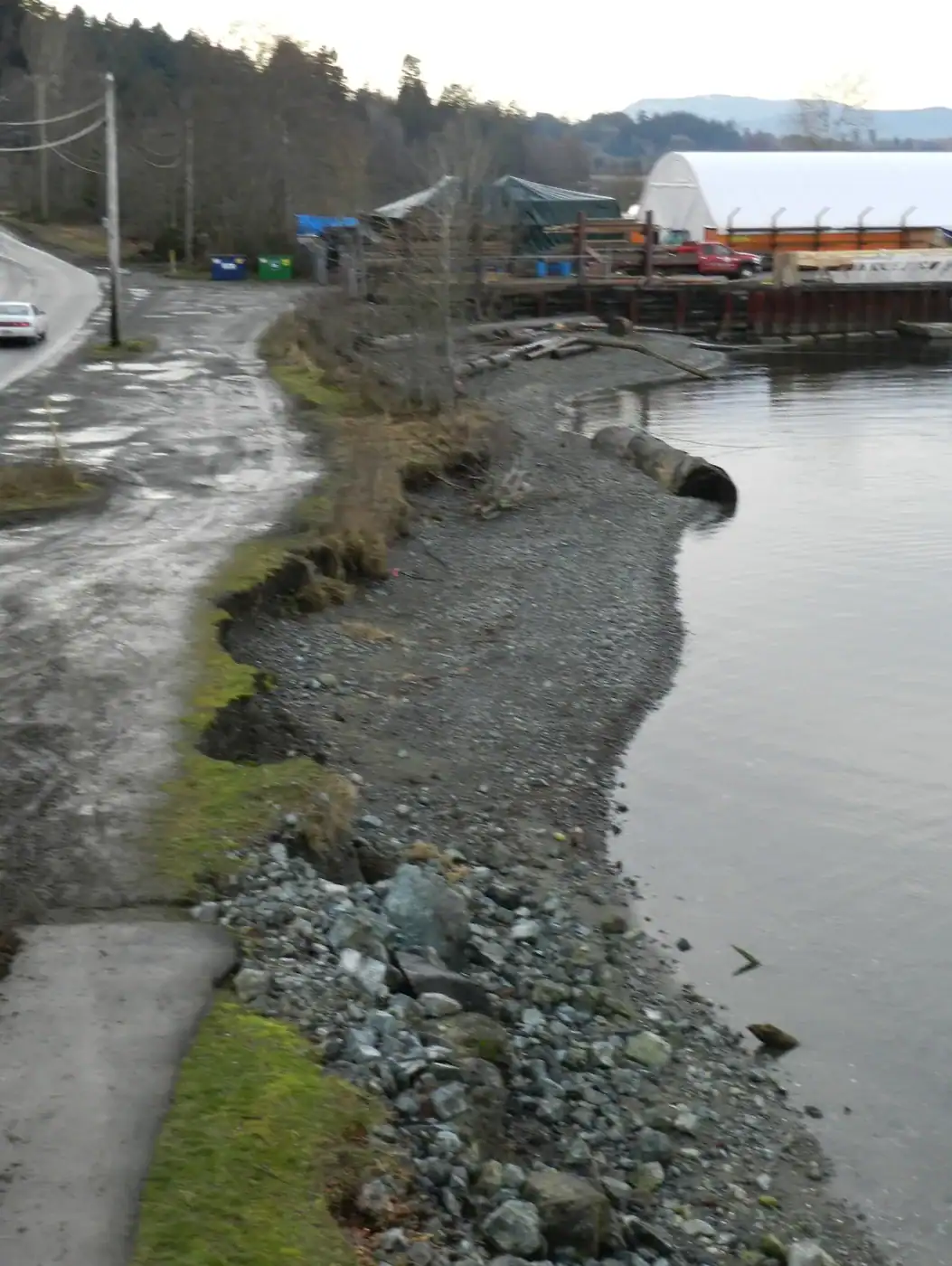
Historic treatments were still producing edge erosion.
The old treatments were not neutral. They concentrated wave energy, encouraged erosion at their margins, and left a narrow, unstable edge. That is why nature-based shoreline work focuses on energy dissipation and sediment movement, not just resistance.
The first repair step was physical: add appropriately sized substrate in the intertidal zone and place beach logs where they could help shape the upper beach. Those materials give waves something to work with, instead of reflecting energy off a hard edge.

Restoration began by rebuilding physical beach structure.
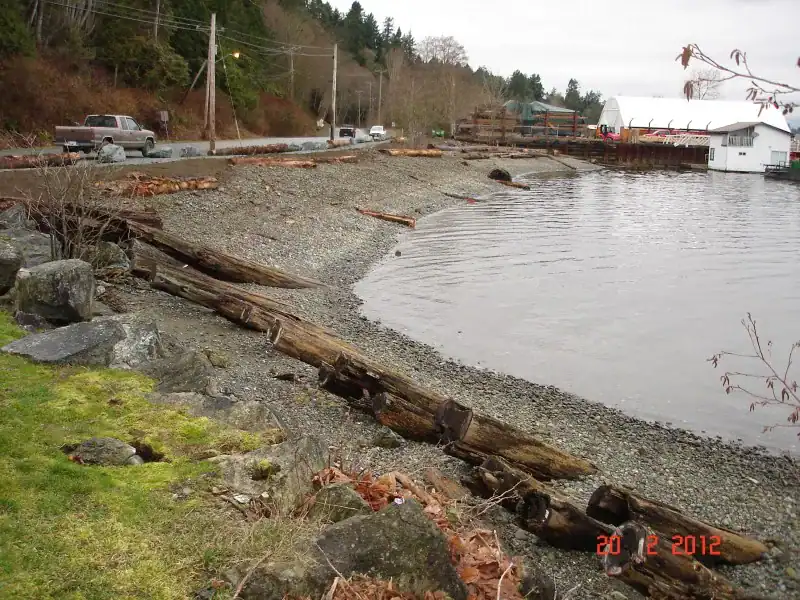
The repaired beach surface was built for forage fish and wave sorting.
Substrate size matters. Too coarse, too compacted, or too armoured and spawning habitat fails. The restored beach surface gives natural wave action material it can sort into the scalloped forms seen on functioning gravel shorelines.
The scalloped edge is a good sign. It shows that the beach is no longer behaving like a fixed wall; it is beginning to absorb and redistribute energy through small, repeatable forms that protect habitat and reduce erosion pressure.
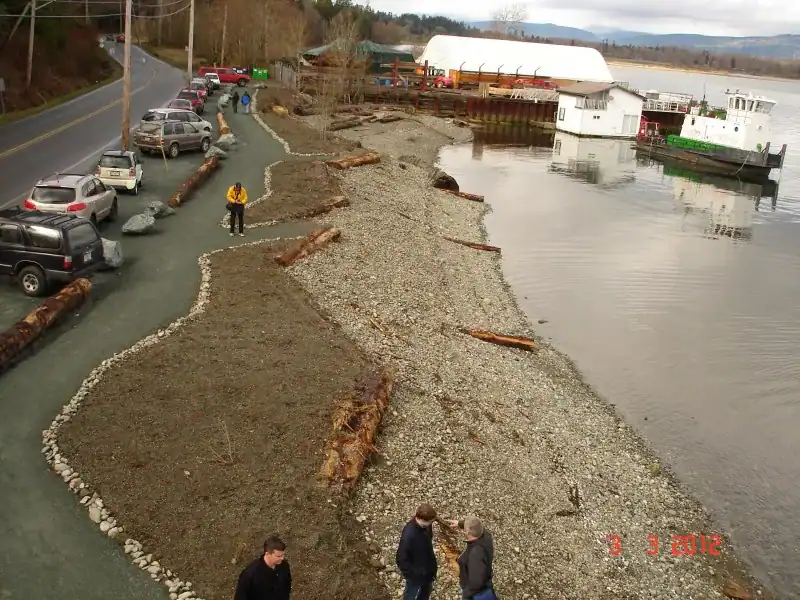
A scalloped shoreline form began to develop.

Riparian vegetation was added above the intertidal work.
The landward edge matters as much as the beach. Riparian vegetation roots the bank, shades the upper shore, contributes organic matter, and rebuilds the land-water connection that hard armour cuts off.
The project combined changes to the beach substrate and landward vegetation. PES considers both shoreline processes and planting conditions when assessing a comparable site.

The result is a softer, more functional shoreline edge.
References
- Pacific Salmon Foundation Marine Science Program, What is Green Shores?
- Resilient Coasts for Salmon, Nature-based Solutions for the Shoreline
- Pacific Salmon Foundation, Forage Fish Spawning Habitat
- Source deck: David Polster, Cowichan Bay Shoreline Repair. Shoreline erosion photograph: Kerrie Talbot.
Learn more
Related Methods and Resources
Facing a Similar Challenge?
We can evaluate wave exposure, toe erosion, and riparian conditions to pair bank protection with living vegetation.