Live Shade
Live shade uses living pole tripods to provide overhead cover on newly constructed fish channels and small streams while suitable cuttings establish a rooted riparian canopy.
Reduces Surface Temperature
Live shade provides overhead cover on small streams or constructed fish channels while suitable cuttings establish.
Temporary Living Structure
Installed frames can root and grow, allowing the shade structure to become part of a living system where conditions support establishment.
Heat and Desiccation Sites
Use where a small channel lacks overhead cover and bank conditions allow the living poles to root.
Live shade can provide overhead cover on small streams and off-channel fish habitat while suitable cuttings establish a rooted riparian canopy. As the plants survive and grow, they may add shade and riparian function over time.
What Live Shade Is
Live shade is a specialty soil bioengineering technique used where a small stream or newly constructed fish channel needs overhead cover while long-term riparian establishment is planned.
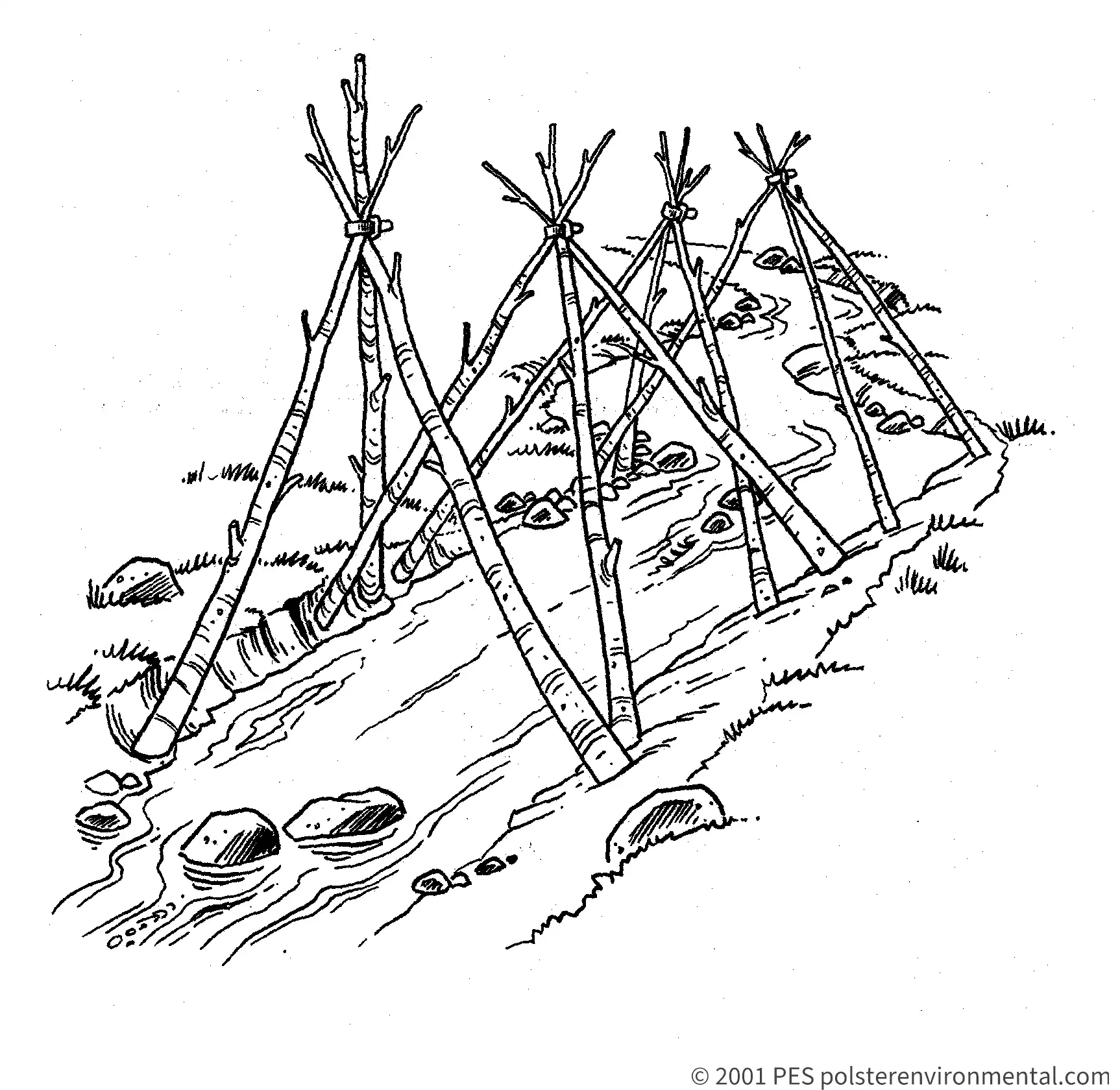
The system is typically built from paired live poles arranged as an A-frame or tripod structure spanning the channel. The feet of the poles are driven into the banks and the poles are lashed together at the apex above the water. Because the poles are living cuttings, they do not just create a structural frame. They root into the bank and leaf out, turning the initial structure into a functioning riparian canopy.
This makes live shade different from simply placing a log bridge, shade cloth, or dead woody structure over the water. The structure starts by providing physical cover, then transitions into a living plant system that contributes shade, root reinforcement, organic matter, and riparian habitat.
When to Use Live Shade
Live shade is most useful where a stream or side channel has been newly built or heavily disturbed and lacks the overhead cover needed to protect fish habitat.
Typical applications include:
newly constructed off-channel fish habitat
small urban or rural stream restoration projects
channels widened by previous disturbance and left fully exposed to sun
reaches where juvenile fish need immediate thermal refuge
sites where adjacent banks can support rooted willow or cottonwood cuttings
It is particularly valuable when the project cannot wait years for ordinary riparian planting to grow tall enough to cast useful shade.
The Problem It Solves
Small streams and side channels are highly sensitive to direct sun exposure. When a channel is newly excavated or restored in an open area, three problems show up immediately:
high summer water temperatures
limited overhead cover for fish
little structural complexity along the new channel
Conventional planting helps, but it may take several growing seasons before young riparian plants cast meaningful shade over the water. In the meantime, the restored channel can remain too warm and too exposed.
Live shade closes that gap. It creates an instant overhead framework and then turns that framework into living vegetation.
How the Technique Works
The installation sequence is conceptually simple:
1. Select long, vigorous live poles suited to the site, most often willow or cottonwood.
2. Drive or set the poles into both channel banks so they bridge the stream in repeated pairs.
3. Lash or tie the upper ends together to form stable A-frames or tripod assemblies.
4. Space the structures to create a repeating canopy line along the reach that needs cover.
5. Supplement with live staking or other riparian planting on the banks so the surrounding vegetation develops along with the overhead structures.
Because the poles are living cuttings, they root into the banks and begin producing shoots and leaves. The result is a structure that starts as a built shade device and becomes a living riparian treatment.
Best Site Conditions
Live shade works best where:
the channel is small enough to span with living poles
banks are accessible for installation
there is enough soil moisture for poles to root successfully
the restoration objective includes both fish habitat and riparian establishment
It is usually paired with other treatments rather than used alone. Where the banks are unstable, combine live shade with live bank protection. Where the banks simply need vegetation establishment, pair it with live staking.
For general method selection, see Choosing the Right Technique.
Why It Matters Ecologically
The value of live shade is not only temperature control.
As the poles establish and leaf out, the treatment also helps:
reconnect the channel to a developing riparian plant community
add organic matter and litter inputs to the stream corridor
create overhead refuge for juvenile fish
visually naturalize newly built channels that would otherwise look engineered and bare
stabilize the upper bank zone through root establishment
Like many PES techniques, it combines a physical structure with living material. The installed structure provides an initial physical function; ecological benefits depend on establishment and deepen only where the cuttings survive and grow.
Limits and Cautions
Live shade is a specialized method, not a universal one.
It is not the right fit where:
the channel is too wide for practical spanning
the banks are too dry for live poles to establish
high flows are likely to tear out poorly anchored structures
the main problem is bank erosion rather than shade deficit
In those cases, another technique or a combined treatment will perform better.
Live shade: four years of canopy development
Move through David Polster's dated field record from installation to a dense living canopy over the creek.
Source: David Polster's live shade field record and related soil-bioengineering teaching material. The dated frames are an archival record, not a current PES client-project claim or a fixed-camera survey comparison.
Live shade and live bank protection installed September 29, 1999.
The dates come from the existing dated field record. The viewpoints vary, so this is a dated progression rather than a fixed-camera survey comparison.
From David Polster’s Course: Live Shade in the Field
Drawn from David Polster's bioengineering course, this section uses his photographs and words on live shade, a simple technique that cools a stream by growing a canopy of cuttings over it, shown here developing from 2000 to 2003.
Live shade is a neat little technique that can reduce the cost of riparian vegetation immensely. The First Nations crew that built these initially dubbed them “fish teepees”.
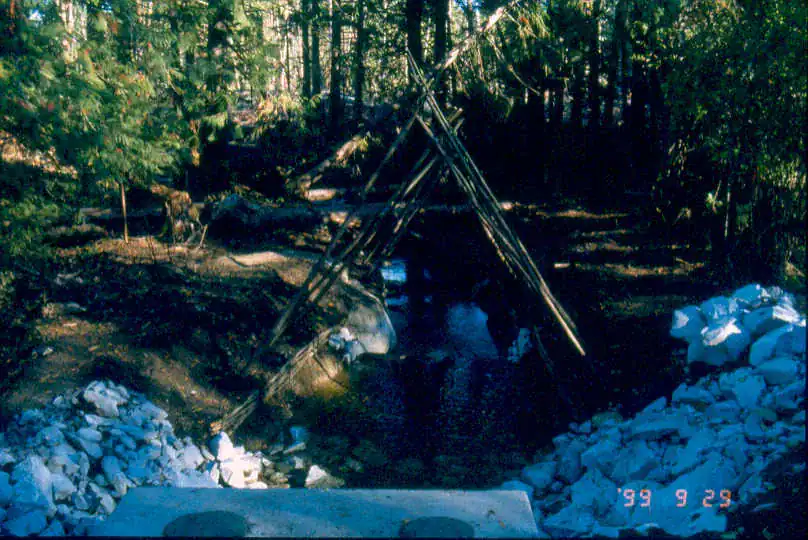
Here are the newly installed structures , in September 1999. The poles making up the live shade are sunk into the stream banks so that the butt ends reach the water table.
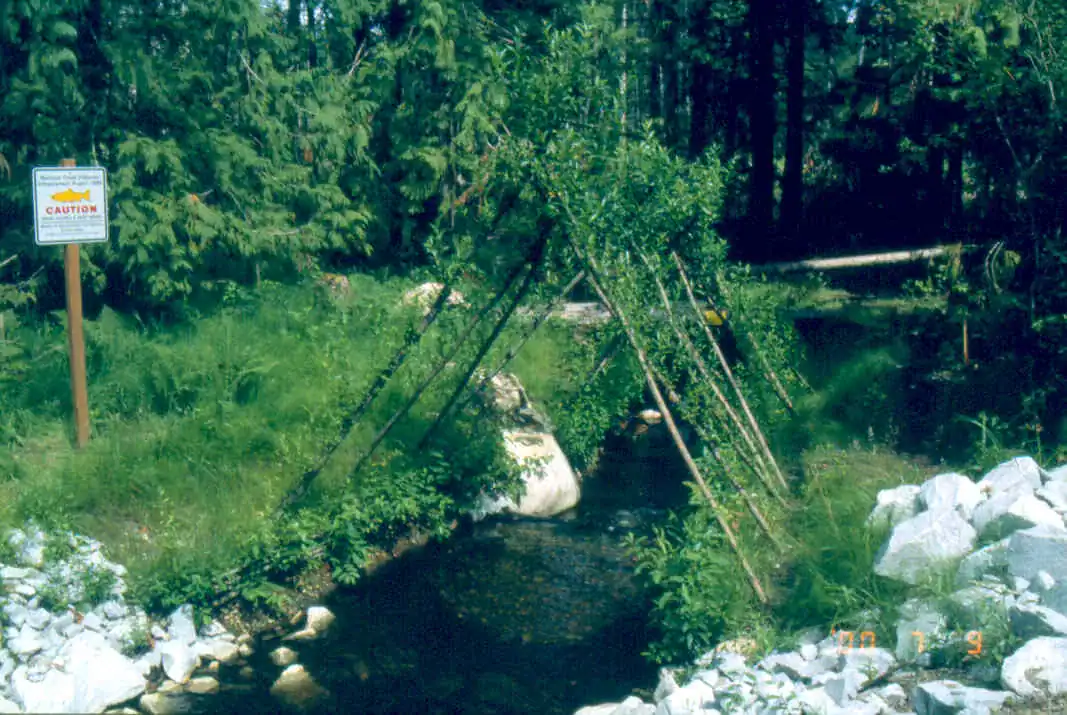
This allows the cuttings to grow rapidly, providing a canopy of vegetation quickly.
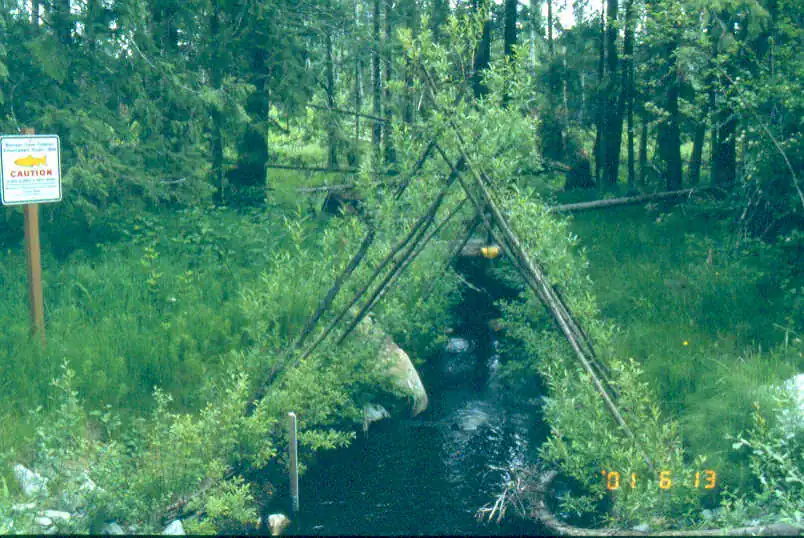
Within a few years the stream is well covered.
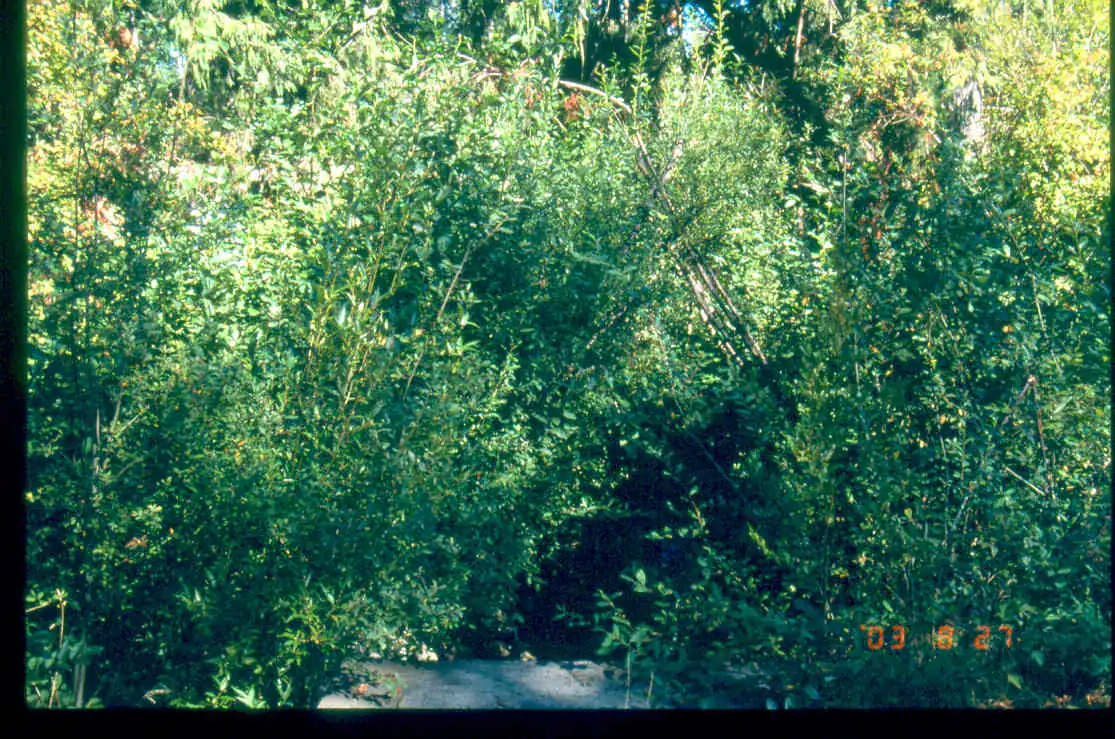
And by last summer it was a jungle.
Related Methods and Next Steps
Is This the Right Technique for Your Site?
We assess water temperature, channel width, bank stability, solar exposure, and willow availability to design living shade that fits the reach.
Sources and further reading
These references provide wider technical context. Method selection and design remain site-specific.