
Live Silt Fences and Sediment-Trapping Systems
Rows of living willow cuttings can slow low-energy water, trap fine sediment, and support riparian cover in ditches, swales, and small channels where moisture and flows are suitable.
Living Erosion Barrier
Rows of live cuttings create a permeable fence that can filter sediment while suitable cuttings establish roots and contribute to a longer-term living structure.
Sediment Trapping Function
Slows sheet flow and traps fine sediment on disturbed slopes, building organic matter and soil structure over time.
Temporary to Permanent
Rows of live cuttings can slow water and trap sediment as suitable plants establish; whether the living fence persists and becomes self-sustaining depends on moisture, species, flows, and maintenance.
Site Fit and Mechanism
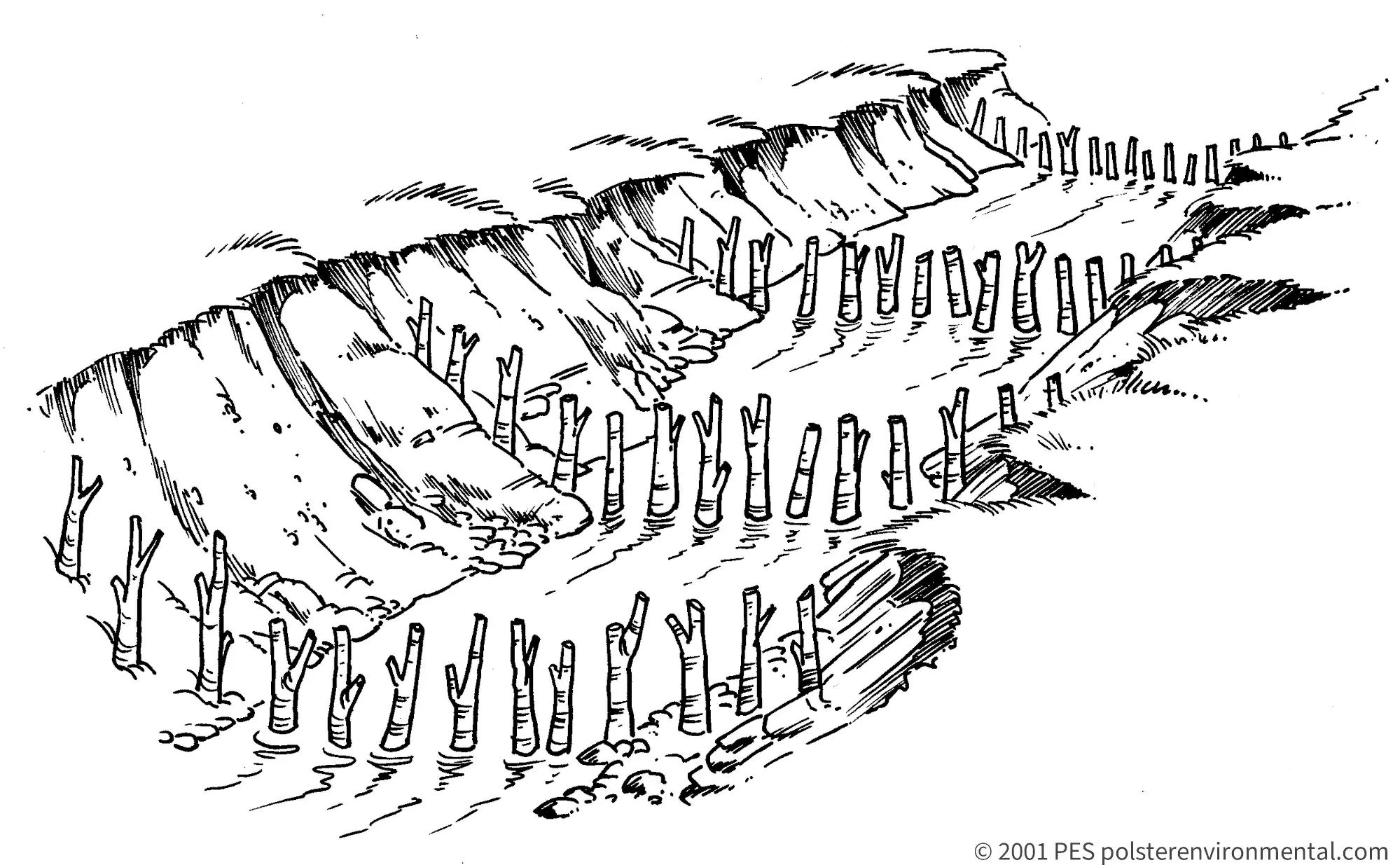
Live silt fences are calibrated to low-gradient channels,small seasonal streams, roadside ditches, swales, and drainage paths at the toes of slides or gullied slopes. They are not suited to high-velocity flows: fast-moving water requires live bank protection or live gully breaks. The distinguishing site condition is one where water is moving slowly enough that a row of cutting stems can slow it further, causing suspended fines to drop out of solution.
The mechanism can operate in stages. Driven cuttings may reduce water velocity across their span and encourage sediment deposition behind the row. Floating woody debris may be intercepted by the stems and accumulate against the row, creating a secondary porous barrier. The amount and timing of deposition depend on flows, sediment supply, debris, and maintenance, so bed-level change should be checked in the field.
As suitable cuttings establish, water may pass between growing stems rather than over bare substrate, creating conditions that can resemble natural deciduous shrub wetlands and spring seeps. A brushy, dense structure may be the intended long-term condition, but species survival and sediment response remain site-specific. Willow, balsam poplar, and red-osier dogwood can continue to grow when stems are partially buried, although deposition can also bury, scour, or overload a treatment.
One of the quieter strengths of soil bioengineering is that living systems can do more than hold a slope. They can also slow water, trap sediment, and help rebuild edge conditions that have been stripped or simplified by disturbance. Live silt fences belong in that category.
What They Are For
Live silt fences intercept fine sediment moving through disturbed channels, ditches, and sheet-flow areas. The rows of driven willow cuttings create a permeable barrier that slows flow, traps fines, and gradually builds up the deposited material into a growing substrate for the willow itself.
intercept moving fines
slow near-surface flows
create conditions for deposition
reintroduce living material into disturbed sediment pathways
That makes them especially relevant where water and sediment movement are shaping the problem together.
Why They Matter Ecologically
A standard temporary silt fence is often just a short-lived construction control. A living system has a different long-term value. Once established, the planted component continues adding root mass, roughness, and structure to the site.
In other words, the treatment can move from temporary control toward lasting recovery support.
Relationship to Other Riparian Methods
This method sits near:
the broader riparian restoration logic summarized in Soil Bioengineering for Riparian Restoration
Living stems and roots add roughness and help disperse low-energy flow as the treatment establishes.
Where They Fit Best
Live sediment-trapping systems are most useful where:
fines are moving repeatedly through a disturbed pathway
channel or edge conditions are degraded but still recoverable with living treatment
the site needs roughness and vegetation structure, not just temporary control fabric
Takeaway
Both temporary and living sediment controls need inspection. For a live silt fence, check sediment loading, bypass flow and plant survival as the installed stems develop.
How Live Silt Fences Work: Willow Rows in Channels
Live silt fences are rows of willow cuttings driven into the bed of slow-moving streams, ditches, or sheet-flow areas. The cuttings trap fine sediment behind them while rooting and growing into a dense willow coppice, creating a living wetland that continues to filter sediment and provide riparian habitat long after the initial installation.
Live Silt Fences: A Five-Year Field Sequence
This CCLT course sequence follows the same live silt fence from installation to establishment. It shows sediment, woody debris and rooted stems developing together into wetland structure.
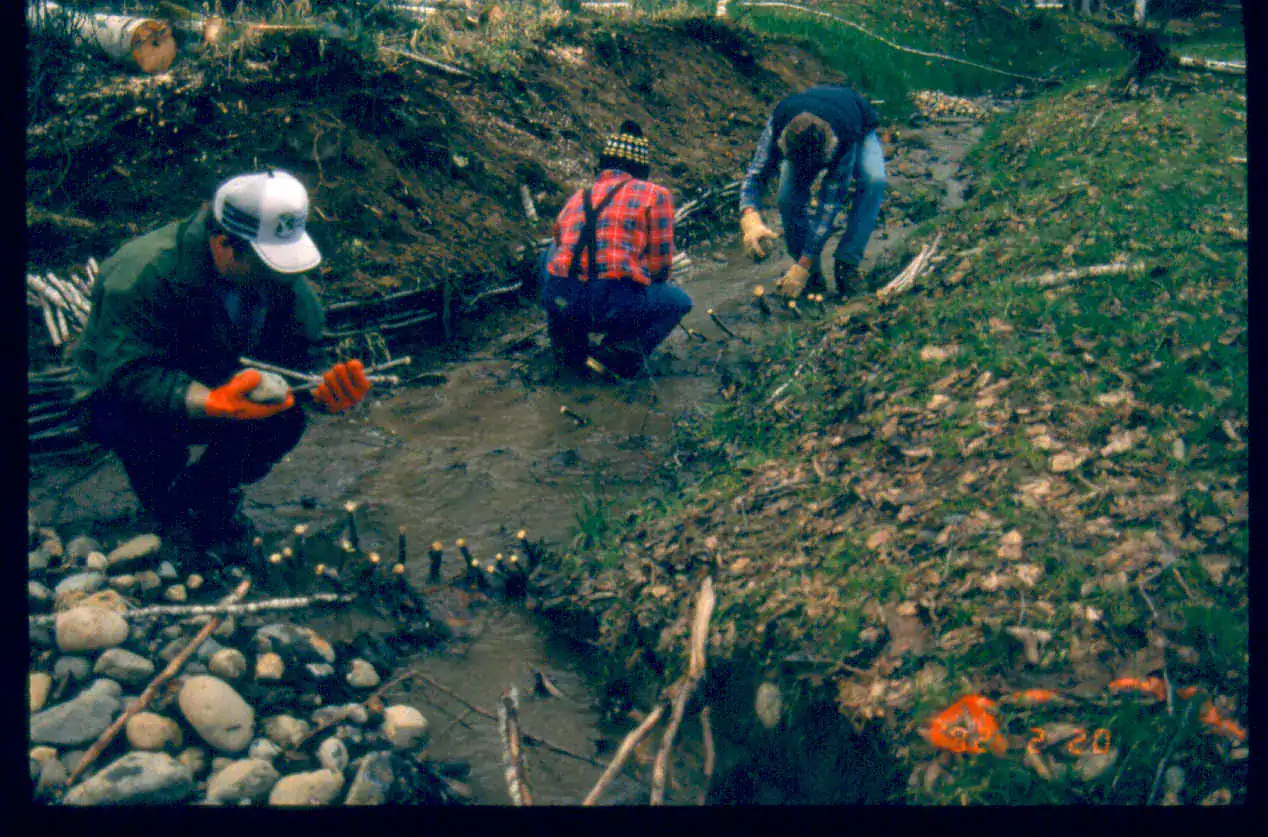
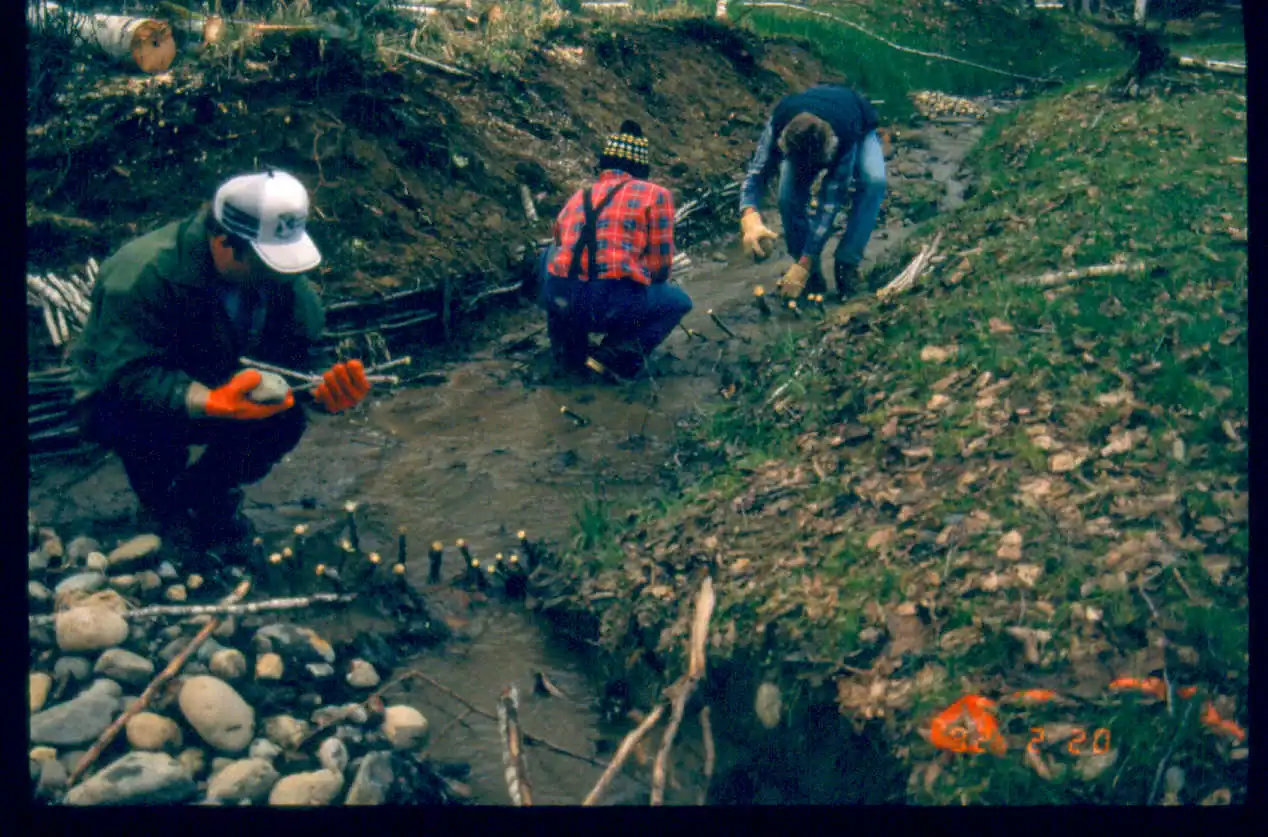
February 20, 1992: willow cuttings are driven across the low-energy channel.
The first value is hydraulic roughness. The rows slow the water before the plants have had time to root.
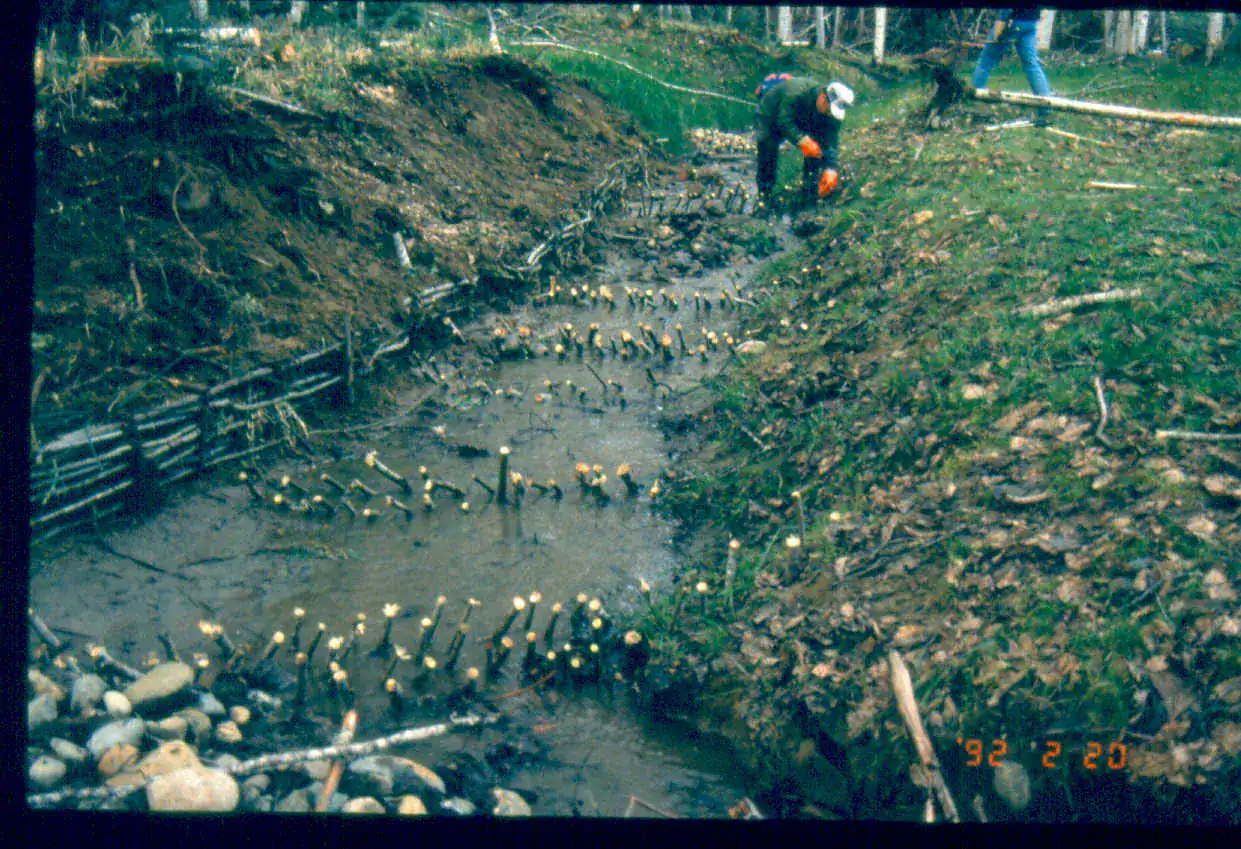
Multiple rows increase roughness, spread flow, and begin trapping fine sediment.
The structure is permeable, so it does not need to act like a hard dam. It works by slowing water enough for fines and debris to settle.
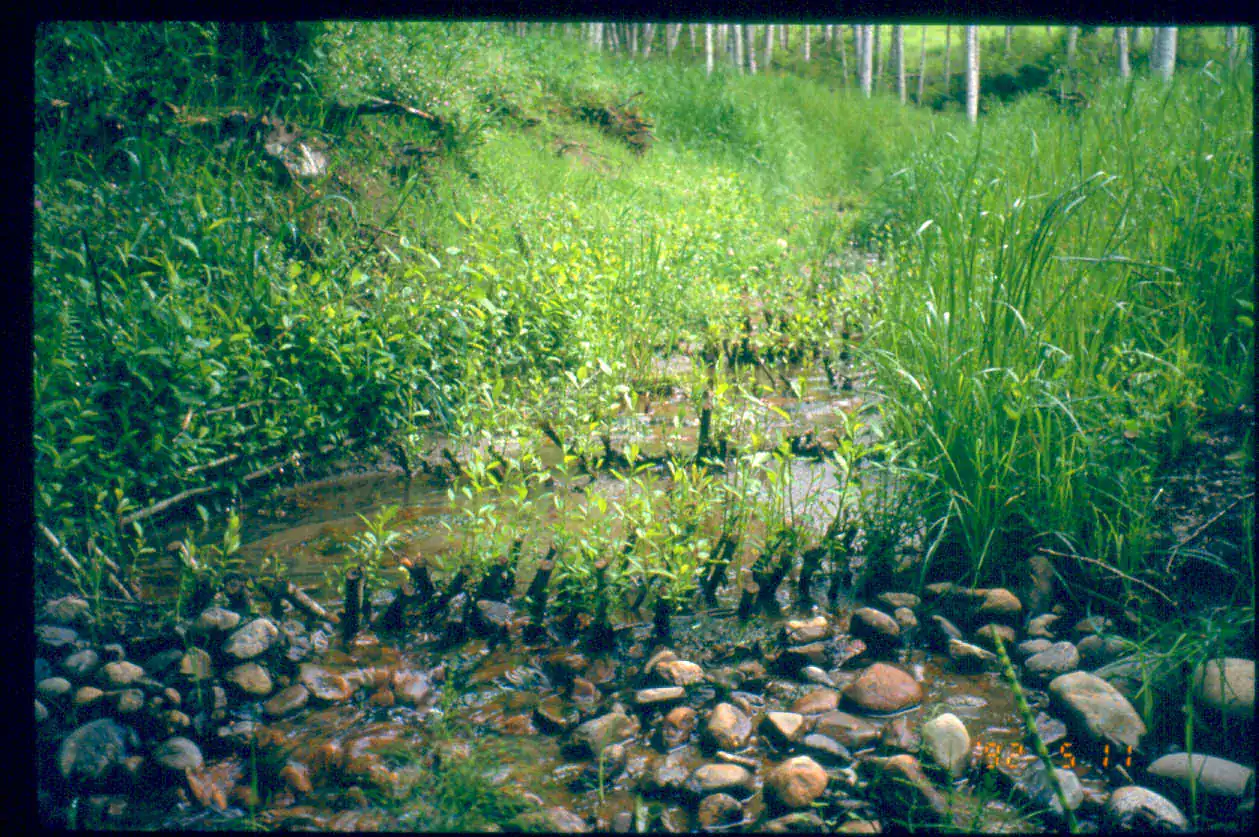
May 11, 1992: first-season growth is already adding living roughness.
Once shoots emerge, the installation starts shifting from a temporary sediment-control measure toward a living wetland edge.
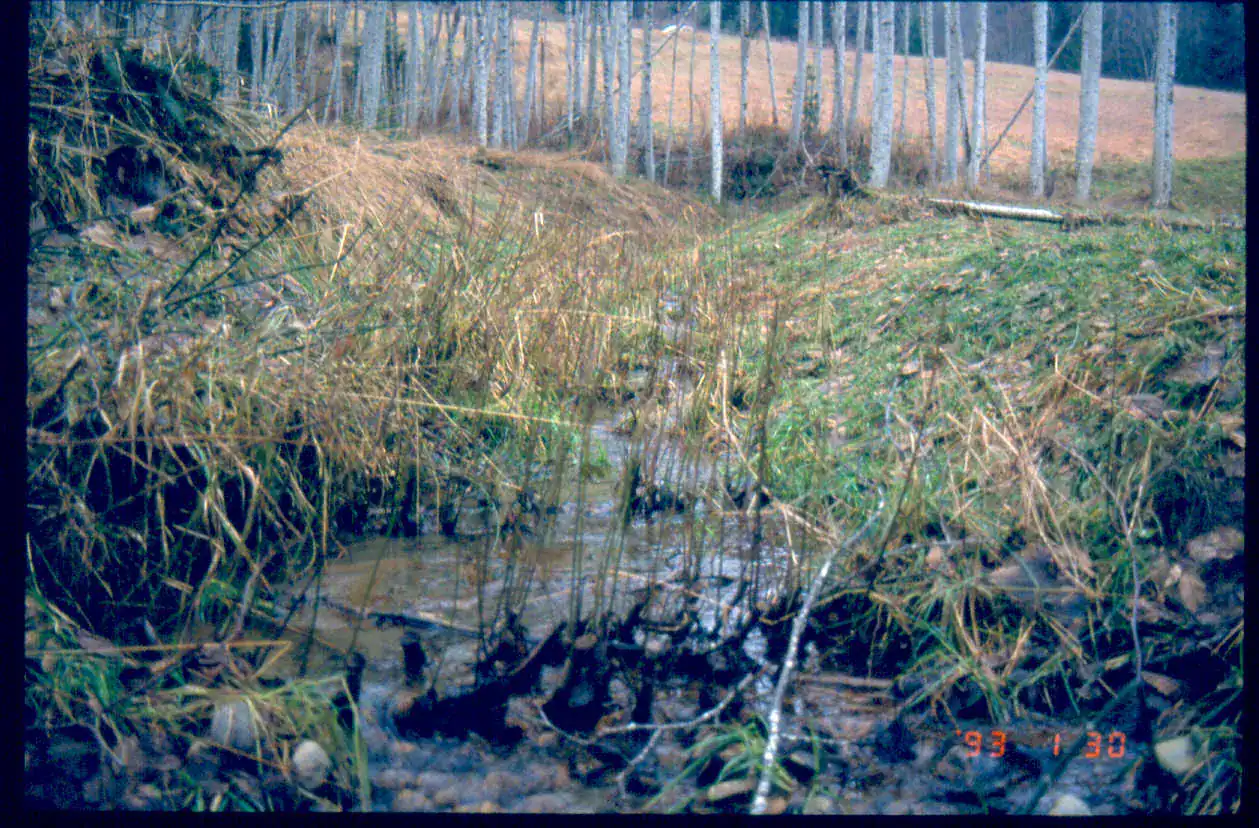
January 30, 1993: stems and deposited material define the new channel roughness.
Sediment deposition is useful here because the live stems tolerate burial and keep growing through the accumulated material.

April 9, 1997: the treatment has become a dense willow coppice.
By this stage the original rows are less visible because the vegetation has taken over more of the filtering and stabilizing work.
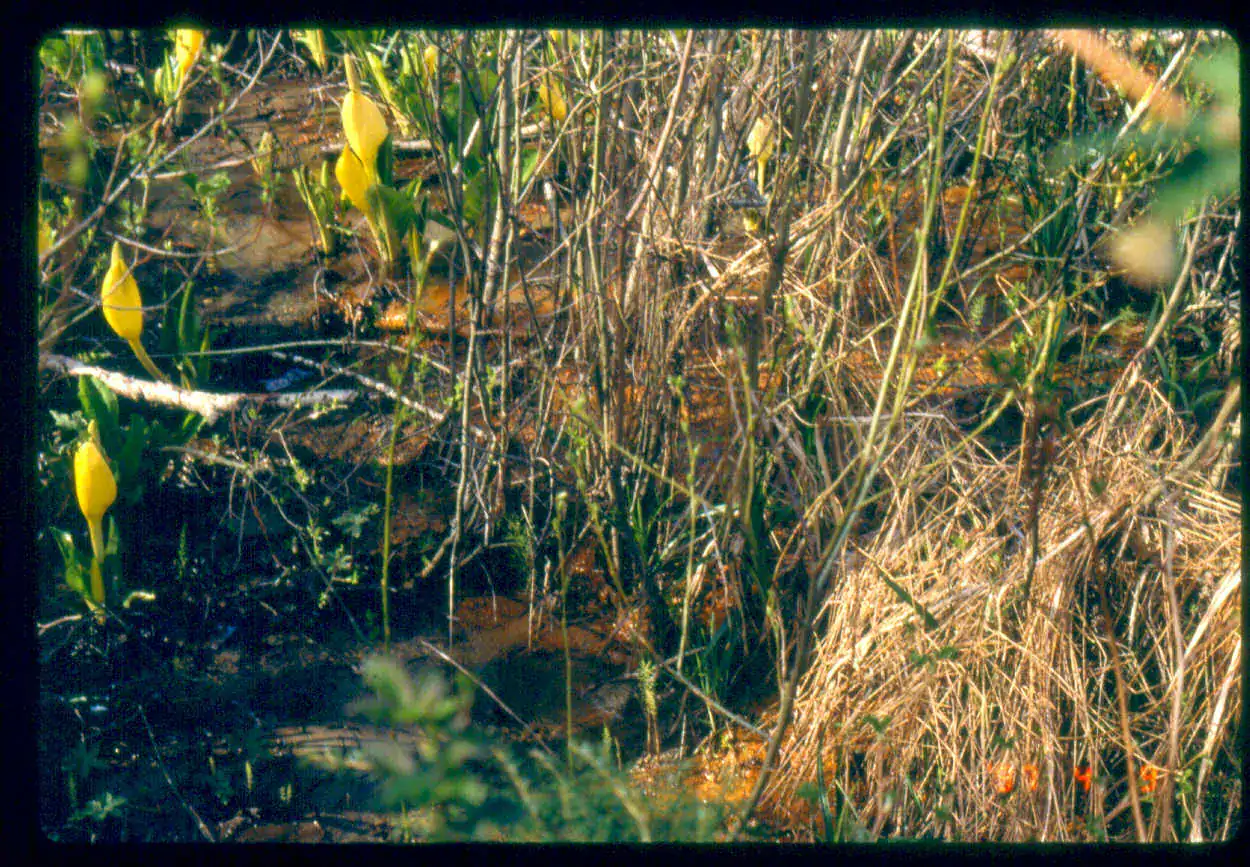
Close detail from 1997: the small channel is now held within a living rough edge.
That is the long-term target: a sediment path converted into a vegetated, self-roughening drainage feature.
What the Sequence Shows
- Install the rows only where flow energy is low enough for a permeable living structure.
- Use repeated rows to slow water and create several places for fine sediment to settle.
- Expect the system to look more like a willow wetland than a tidy construction control once it succeeds.
Related PES Context
Field References for Live Silt Fences
These references cover live silt fences, willow-coppice sediment trapping, and related living sediment-control structures for small streams, ditches, and low-energy drainage paths.

Conventional Silt Fences: The Problem
A conventional plastic silt fence failing in the field. The fabric has been undermined by concentrated flow, leaving gaps that allow sediment to pass freely into the receiving water. Plastic silt fences require frequent inspection and maintenance, often fail catastrophically in high-flow events precisely when they are needed most, and leave non-biodegradable plastic fabric in the environment when the project is complete.
Live Silt Fences: The Solution
The February 20, 1992 field record shows upright cuttings used as a permeable living barrier. Later photographs follow visible establishment.
Need a Site-Specific Recommendation?
We can help interpret the conditions on your slope, streambank, shoreline, or disturbed site and recommend the right combination of soil bioengineering methods.
Live silt fence: a five-year field record
This David Polster field sequence shows a live silt fence moving from installation to rooted willow coppice and a developing wetland edge.
The field record begins with live willow cuttings driven across the low-energy channel.
Source: David Polster field photographs already published in this field record . The source deck identifies the historical site as a Vancouver Island Gas Pipeline crossing above the Qualicum River fish hatchery, where the rows were intended to slow low-energy flow and allow sediment to settle. The viewpoints vary between dates, so this is a documented field progression rather than a fixed-camera survey comparison or a universal treatment result.