
Succession, Safe Sites, and Pioneering Species
A practical guide to ecological succession, safe sites and pioneer species, and how these processes support recovery on disturbed land.
Restoration can begin by creating conditions for early plant communities to establish. Restarting the successional process gives those plants a role in improving conditions for later vegetation.
What Succession Means Here
Succession is the gradual development of a plant community over time after disturbance.
On a healthy trajectory, bare or heavily disturbed ground is first colonized by hardy early species. Those species modify the site:
they add shade
trap litter and fine material
improve soil structure
retain moisture
create habitat for additional plants and animals
That changed environment then allows later species to establish.
Why Disturbed Sites Get Stuck
A badly disturbed site often lacks the conditions needed for the first wave to take hold. The surface may be too smooth, too dry, too compacted, too unstable, or too competitive with the wrong vegetation. When that happens, succession stalls.
This is where the concept of safe sites becomes useful.
What a Safe Site Is
A safe site is a small patch of ground where a seed or cutting has a realistic chance of surviving long enough to establish.
On disturbed slopes and reclamation sites, safe sites are often missing because:
water runs off too quickly
seed has nowhere to lodge
the surface heats and dries too fast
the soil is constantly moving
there is little organic matter or shelter
Many Polster techniques are really ways of manufacturing safe sites at scale.
How PES Methods Create Safe Sites
- Rough and Loose creates holes, mounds, shaded pockets, and debris traps that hold moisture and seed.
- Live Gravel Bar Staking establishes pioneer cuttings deep enough to access moisture, then begins trapping sediment and woody debris.
- Live Staking inserts pioneer woody species directly into a site where roots and stems can begin changing the conditions.
- Modified Brush Layers create terraces and accumulation benches on dry raveling slopes.
These methods work because they change the microsite conditions that determine whether recovery can start.
Why Pioneer Species Matter
Willows, cottonwood, alders, and red-osier dogwood are not random plant choices. They are pioneers. They are adapted to:
disturbed mineral soils
fluctuating moisture
open sunlight
unstable ground
They are the species that can survive the harsh first stage and prepare the site for later arrivals.
Pioneer species can help build the soil, shelter and vegetation structure that support later stages of recovery.
Why This Beats Cosmetic Green-Up
The old live-site material repeatedly contrasts this approach with conventional green-up strategies. A site can look vegetated and still be ecologically stalled. Grass cover alone does not necessarily create the safe sites, shrub structure, woody root mass, or successional momentum needed for a self-sustaining ecosystem.
Public-facing authority content should make this distinction explicit, because it is one of the clearest differences between PES and generic revegetation.
How to Use This Concept on Real Projects
When evaluating a site, the question is not only "what can we plant here?" It is:
what microsites already exist?
what microsites are missing?
which pioneer species belong here?
what treatment will let them establish and keep changing the site?
That is the practical value of succession theory. It turns ecology into a design and treatment framework.
Takeaway
PES methods work because they operate at the scale where recovery actually begins: the safe site, the pioneer plant, and the early successional step that makes the next step possible.
Brenda Mine: Safe Sites Start Succession
The Brenda biodiversity deck gives this concept a field record: surfaces where recovery is stalled, treatments that create microsites, and pioneer species beginning the successional work that later plants depend on.
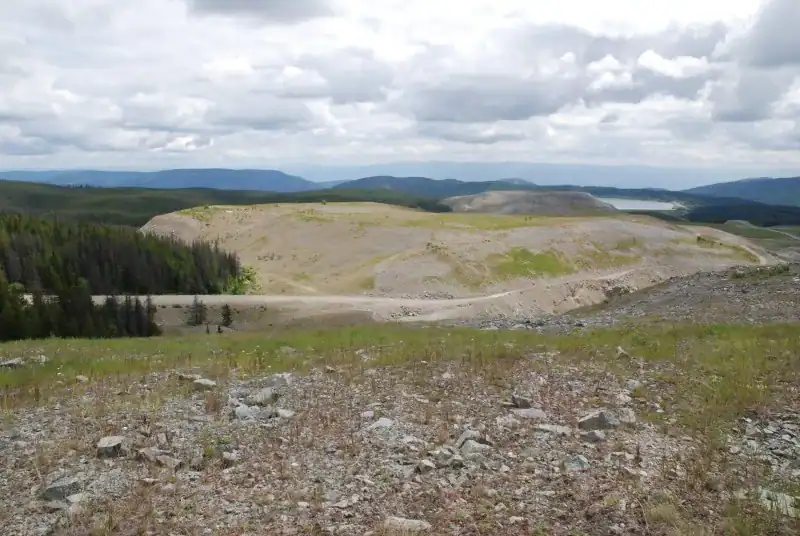
A broad reclamation surface where succession can stall without safe sites.
A disturbed surface can be green in patches and still be successionally weak. The missing piece is often not seed; it is the fine-scale pattern of protected, moist, stable places where pioneer plants can establish and persist.
Long smooth slopes and compacted benches shed water, dry quickly, and give seedlings very little shelter. They are physically simple surfaces, so they offer few ecological options.
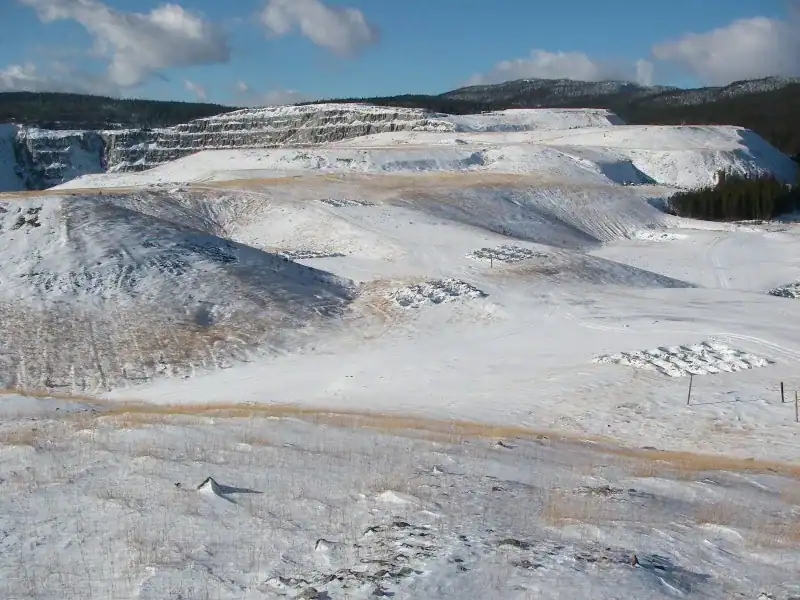
Unstable slopes and compacted benches limit productivity and diversity.
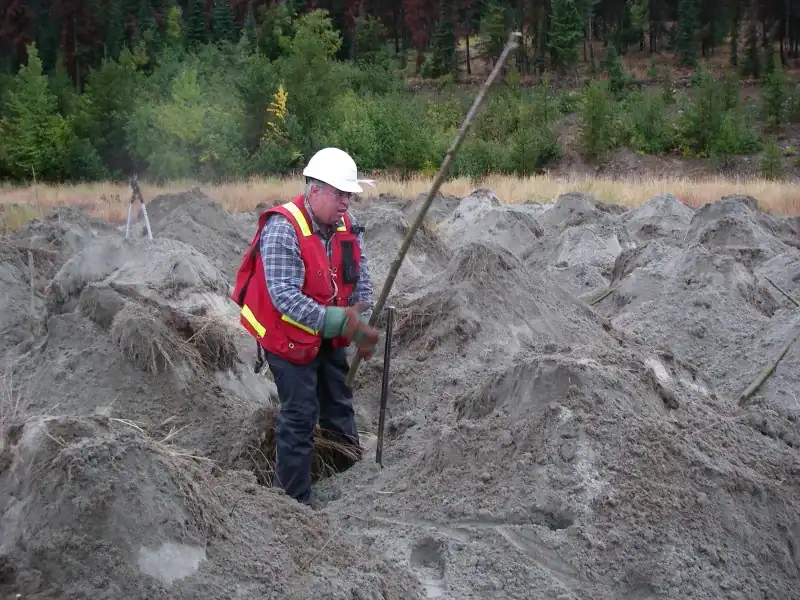
Rough and loose mounds create hollows, ridges, shade, and moisture variation.
Rough and loose treatment changes the surface before it asks plants to do any work. Mounds, hollows, and pockets create different moisture regimes and different degrees of protection, multiplying the number of possible safe sites.
The planting bar shows the practical side of succession theory. Cuttings are placed deeply enough to reach moisture, while the rough surface keeps the surrounding microsite from behaving like a smooth, hostile sheet.
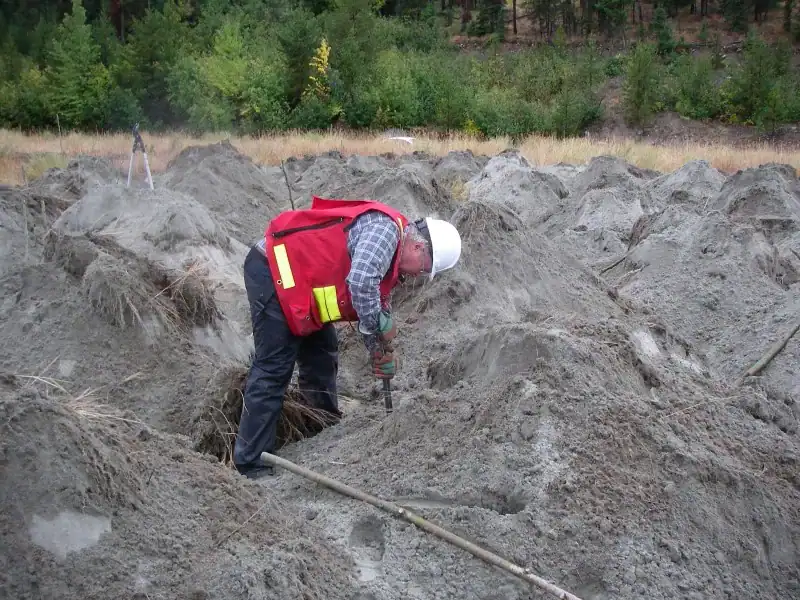
Deep live staking places pioneer cuttings where moisture is available.
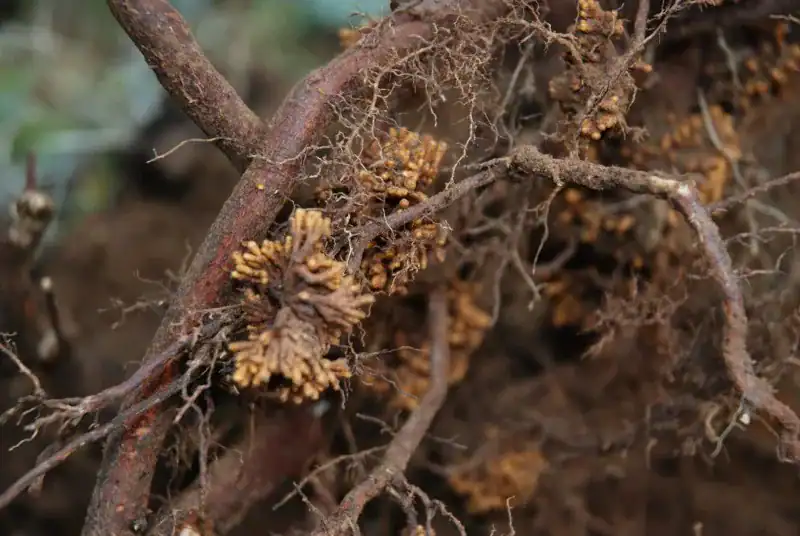
Alder and Frankia root nodules help pioneer plants build soil fertility.
Pioneer species are not simply early occupants. Alder, for example, works with Frankia bacteria to fix nitrogen. That biological partnership helps move a site from raw substrate toward soil that can support later successional species.
Once safe sites exist, recovery becomes patchy in a useful way. Plants establish where the local conditions are right, then begin modifying the next small area around them with shade, roots, litter, and trapped fines.
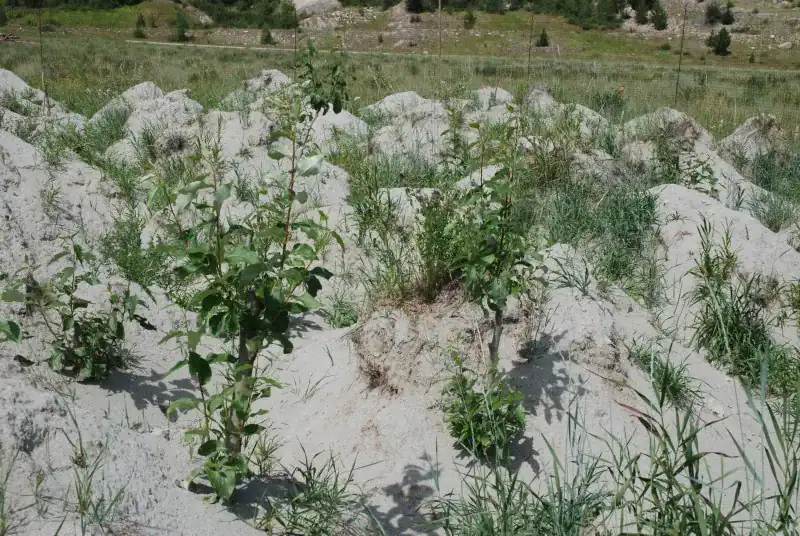
Pioneer plants using the created mounds and hollows.
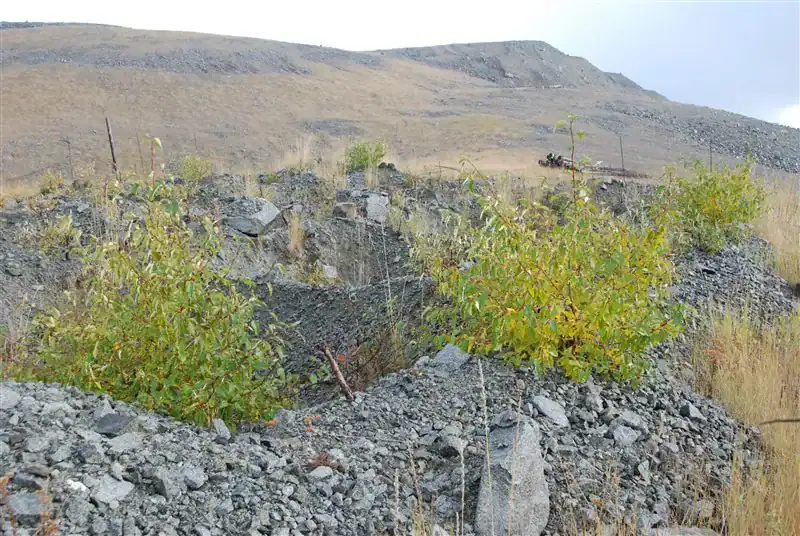
Shrubs growing on waste rock after safe-site creation.
By 2015, the planted and naturally colonized patches show the point of the method. The site is not forced into a final plant community; it is pushed onto a trajectory where pioneer growth keeps improving the conditions.
The later view closes the loop. Once compaction is reduced and safe sites exist, even coarse waste rock can support strong growth. The treatment creates the first foothold; succession supplies the next steps.
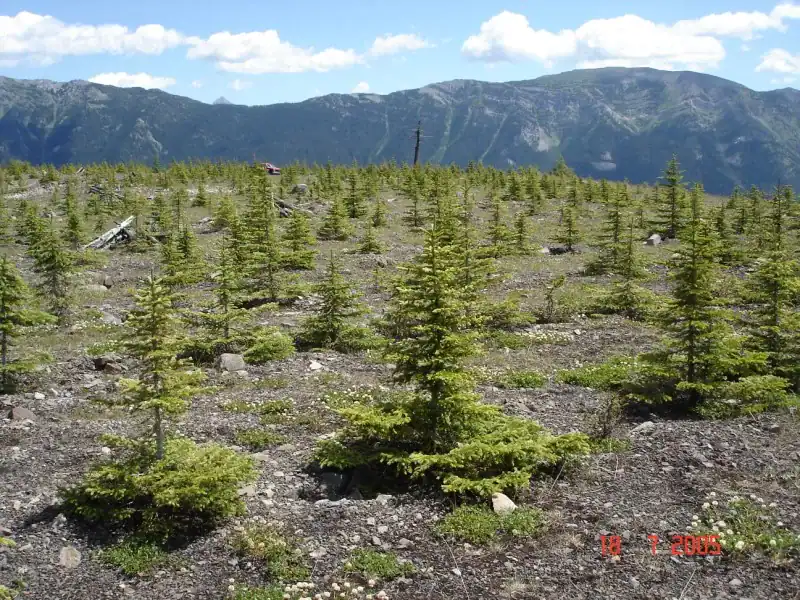
Conifers establishing where waste rock has been made plantable.
References
- Source deck: David Polster, Enhancing Biodiversity on Drastically Disturbed Sites.
- David F. Polster, Living on the Edge: A Manual for the Restoration of Drastically Disturbed Sites, safe-sites and succession sections.
- Rough and Loose Surface Treatment
- Filters to Recovery
Learn more
Safe Sites Drive Establishment
Microsites with the right moisture, shelter, and substrate determine where pioneering species successfully root and persist.
Succession Follows Structure
Installing physical structures like wattle fences creates the protected microsites that succession requires to begin.
Pioneers as Infrastructure
Early-establishing plants modify site conditions for species that follow, making them the foundation of ecological recovery.
Need a Site-Specific Recommendation?
We can help interpret the conditions on your slope, streambank, shoreline, or disturbed site and recommend the right combination of soil bioengineering methods.
Brenda Mine: creating safe sites for succession
These David Polster field views show a related Brenda Mine recovery pathway: a stalled surface, rough and loose preparation, pioneer establishment, shrub growth, and later conifer establishment.
Stalled reclamation surfaceA broad reclamation surface where succession can stall without safe sites.
These are related field views used to explain changing recovery conditions, not a registered fixed-camera comparison or a universal outcome claim.