
Soil Bioengineering Technique
Live Sills
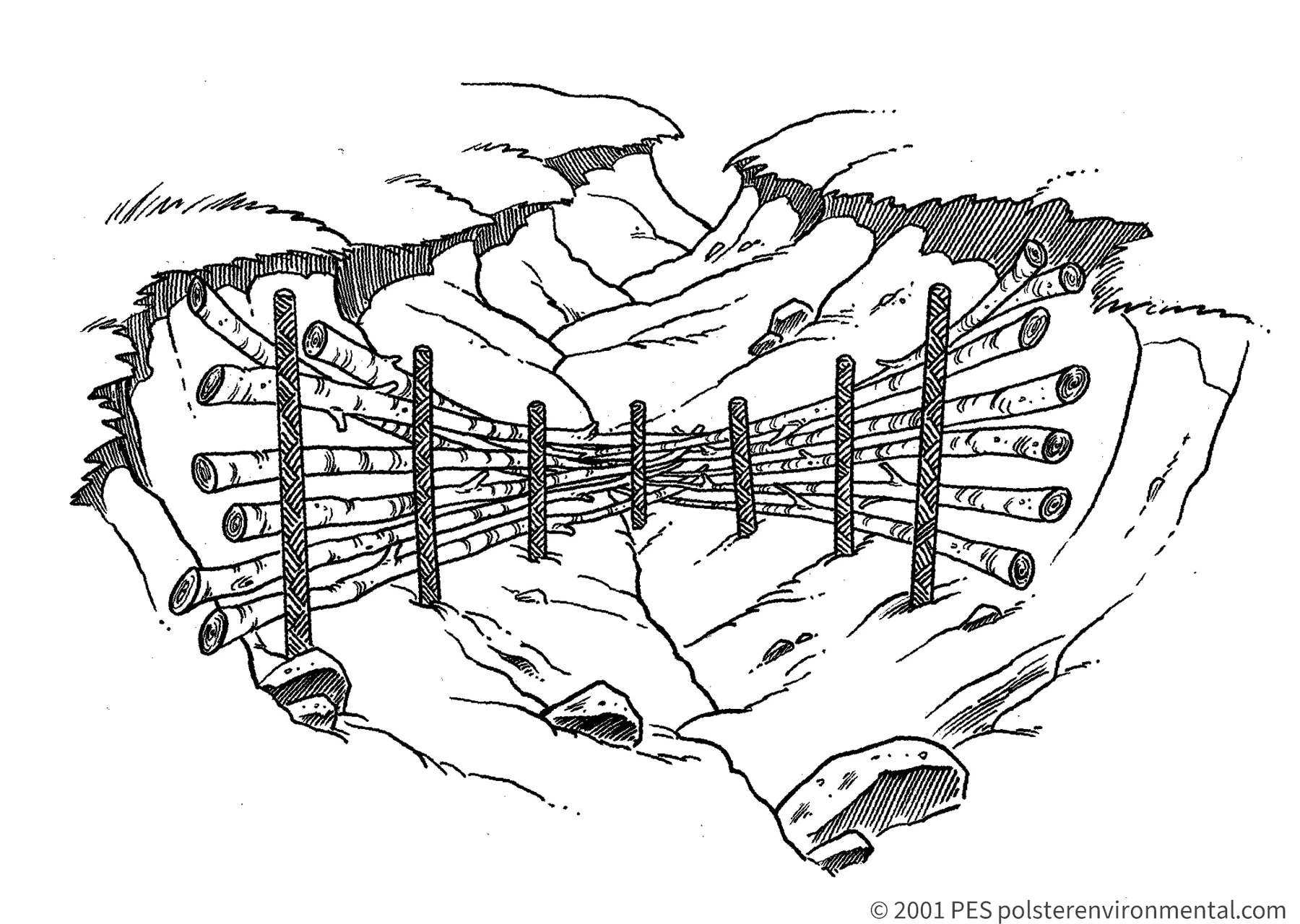
A low-profile living check structure installed across small drainages and shallow gullies. Willow or brush layers slow water velocity, trap sediment, and may establish a vegetated threshold that can add structural and ecological function where suitable plants survive and sediment response is manageable.
Cross-Channel Log Structures
Sills span a small drainage to interrupt flow and retain sediment where the channel layout supports that response.
Willow Establishment Platform
Moist sediment retained behind a sill may provide establishment sites for suitable riparian plants.
Restores Floodplain Function
Assess channel and floodplain response alongside sediment retention and plant establishment.
Original live gully-break detail
Installation Process
Site assessment and gully profiling
Walk the full length of the drainage to identify active headcuts, gully width and depth, soil type, flow regime, and proximity to native willow or cottonwood source material. Mark installation points starting from the lowest headcut and working upstream.
Harvest dormant cuttings
Select suitable dormant material for the treatment and keep it moist until installation. Choose species and cutting dimensions for the site, required burial and expected loads; this overview is not a dimensioned design.
Prepare the gully floor
Assess the bed and banks before disturbing them. Set sill locations and foundation preparation from the drainage layout, soil and expected flow, including the risk of erosion around or beneath the structure.
Install the sill
The living check structure must be integrated with the bed and banks so water cannot readily bypass it. Specify support, spacing, embedment and the placement of horizontal material in the site design.
Backfill and live stake surrounding area
Firm soil around the installed material as the design requires. Add suitable live material to adjacent disturbed margins where moisture and the expected flow support establishment.
Monitor and adjust in first season
Check sills after the first high-flow event. Replace any dislodged cuttings and add live stakes to the sediment accumulation zone behind each sill to accelerate vegetation establishment. The need for further intervention depends on establishment, sediment, and flow response; continue monitoring as site conditions require.
When to Use Live Sills
Good fit
Small drainages where a site assessment supports a living check structure.
Combine with
Live staking on gully walls to stabilize the margins. Rough and loose surface treatment on adjacent disturbed ground to support natural plant establishment. Wattle fencing where wider channels need stepped sediment traps at multiple intervals.
Timing
Plan collection for dormancy and installation for workable ground and suitable flow conditions. Stored material needs an appropriate handling plan; timing varies with location and season.
Not suited for
High-energy watercourses, unstable or undercut gully banks, and sites where substrate or moisture prevents suitable cuttings from establishing need other protection or supporting work. Assess these conditions before selecting a sill.
In-Channel Installation
Placed directly within the channel bed to raise the water table and reduce stream energy.
Sediment Capture Zone
Coarse woody material traps transported sediment and creates deposition flats upstream of each sill.
Succession Catalyst
Reduced flow velocity and raised soil moisture allow vegetation to establish naturally behind the sill.
Is a Live Sill Right for Your Site?
Every drainage has its own geometry, flow regime, and soil conditions. A site assessment identifies the right structure for the erosion stage you are dealing with and the native species available to work with.
Request a Site Assessment →Sources and further reading
These references provide wider technical context. Method selection and design remain site-specific.
Could Live Sills Stabilize Your Channel?
Share the channel dimensions, flow pattern, erosion points, and available willow material. PES can determine whether live sills belong in the treatment or should be combined with other bank and bed controls.
Request a Site Assessment