
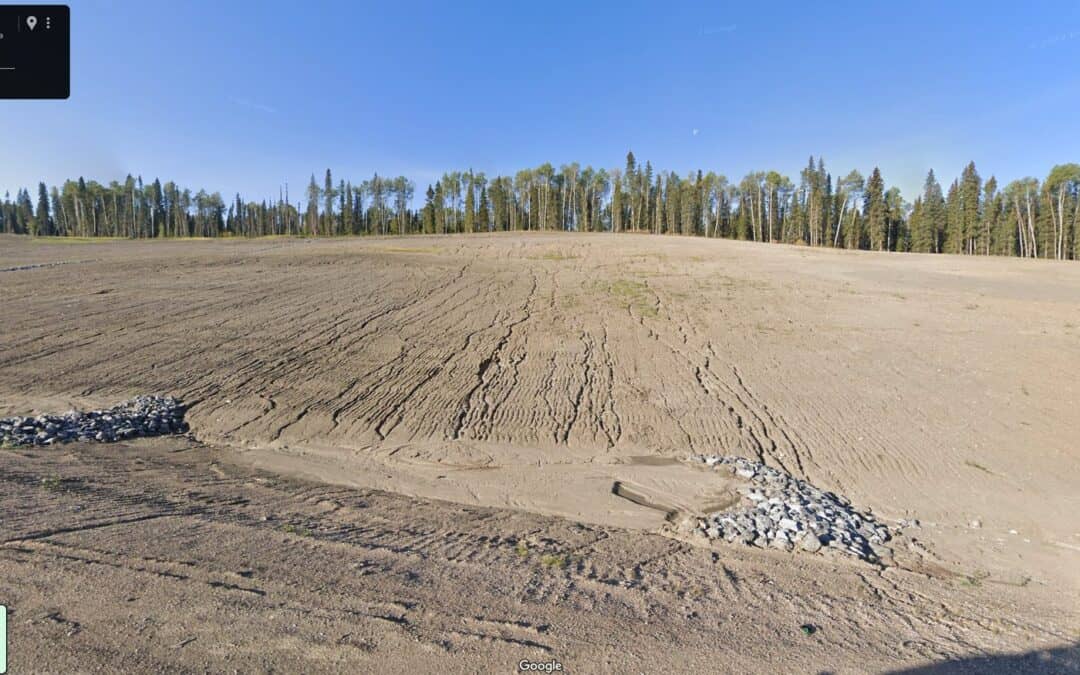
Seeding can provide quick surface cover, but cover and ecological recovery are not the same test. On coarse, compacted, or erosion-prone disturbances, the first question is whether the site conditions allow the desired plant community to establish and persist.
“The agronomic grasses and legumes we have been using for reclamation prevent effective recovery of these sites.”
David Polster, The Role of Seeding in Reclamation of Disturbed Sites
Three filters to check before specifying seed
- Surface movement: seed can be displaced where smooth slopes concentrate runoff.
- Moisture and substrate: coarse or compacted material may not retain enough moisture for reliable germination and establishment.
- Competition: dense agronomic grass and legume cover can limit the woody pioneering species needed for later succession.
When seeding can still help
Seeding is not automatically wrong. It can support temporary cover or revegetation on suitable, stable sites when the species mix and objectives fit the intended trajectory. It should not substitute for correcting compaction, drainage, erosion, or missing establishment sites.
What may be needed instead
Depending on the site, the response may include rough and loose preparation, woody debris, live cuttings, or other soil bioengineering methods. These treatments address the physical and biological filters first. The correct combination depends on slope geometry, water, substrate, source material, and the target plant community.
A dated field example
The Brenda Mine record contrasts seeded cover with a treated area monitored from 2012 to 2016. It is useful evidence for that site, but it should not be generalized into a universal schedule or performance claim.
Sources and related reading
- Reader edition of David Polster's seeding presentation
- Original presentation PDF
- Cost-Effective Strategies for the Restoration of Large Disturbances
- Making Sites Rough and Loose for Enhancing Natural Processes
Contact PES for a site-specific revegetation assessment.