
Riparian Restoration in the Field
Dated Bowker Creek photographs show streambank treatment and subsequent vegetation. A separate Vantreight video demonstrates wattle-fence installation on a steep slope.
Bowker Creek Photographs
Dated photographs document wattle-fence treatment and later vegetation along the Bowker Creek channel.
Separate Slope Demonstration
The Vantreight video shows workers installing wattle fences on a steep slope. It is not footage of the Bowker Creek streambank.
Follow-up Observations
Repeat photographs show vegetation changes. Site inspections are needed to assess bank movement, scour, sediment and habitat conditions.
Separate slope example: Vantreight
This video shows wattle-fence installation on a steep slope. It is a separate example from the Bowker Creek streambank photographs below.
Riparian Bioengineering in Practice: Bowker Creek
Bowker Creek in Victoria, BC demonstrates how bioengineering techniques can restore native riparian vegetation to an urban stream channel. Wattle fences installed in spring and fall of 2004 along the Bowker Creek at McRae Avenue stabilized eroding channel banks while providing an immediate framework for native plant establishment. By May 2007, just three growing seasons after installation, the treatment area had developed a dense, self-sustaining native riparian plant community. This sequence illustrates the fundamental principle of riparian bioengineering: living structures that stabilize immediately and then grow stronger and more ecologically diverse with each passing season.
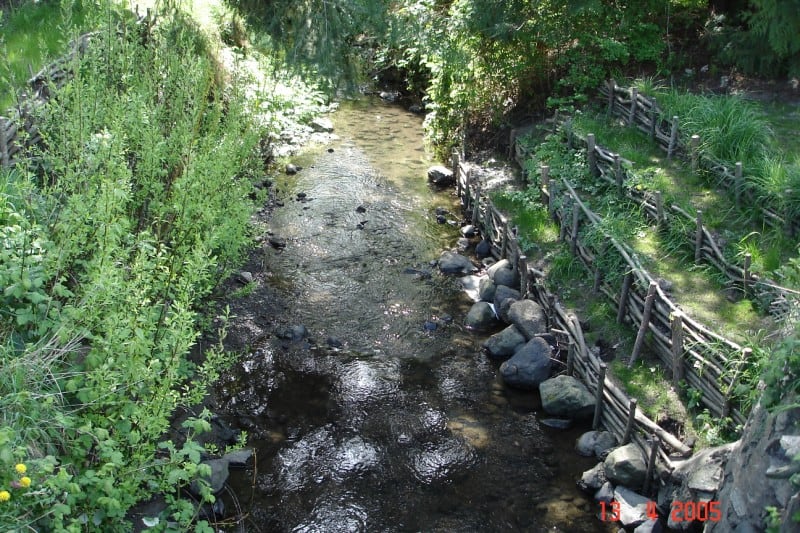
Bowker Creek at McRae, April 2005, wattle fence installation in urban stream channel
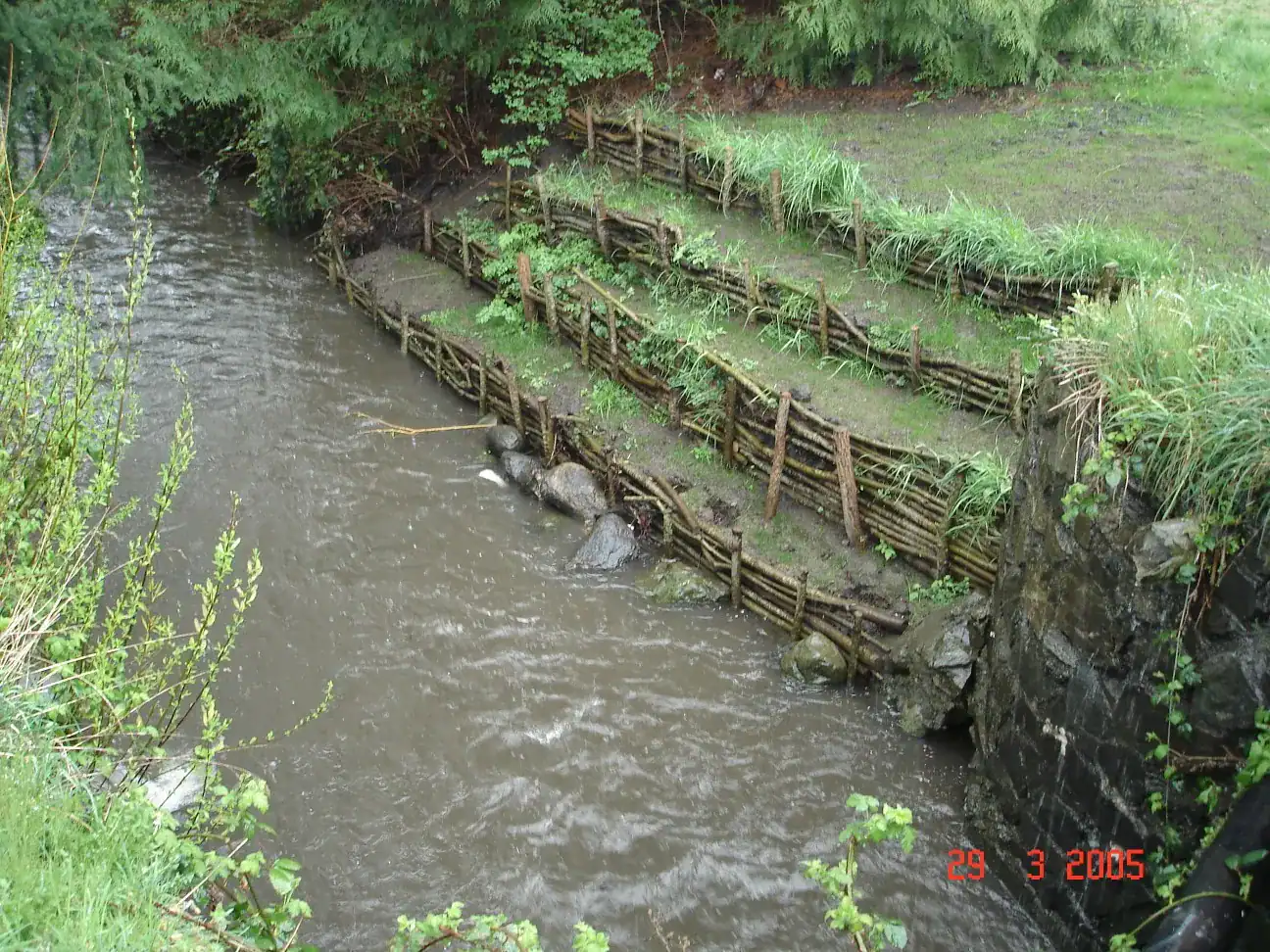
Bowker Creek March 2005, flow fluctuations in small urban stream before bioengineering established
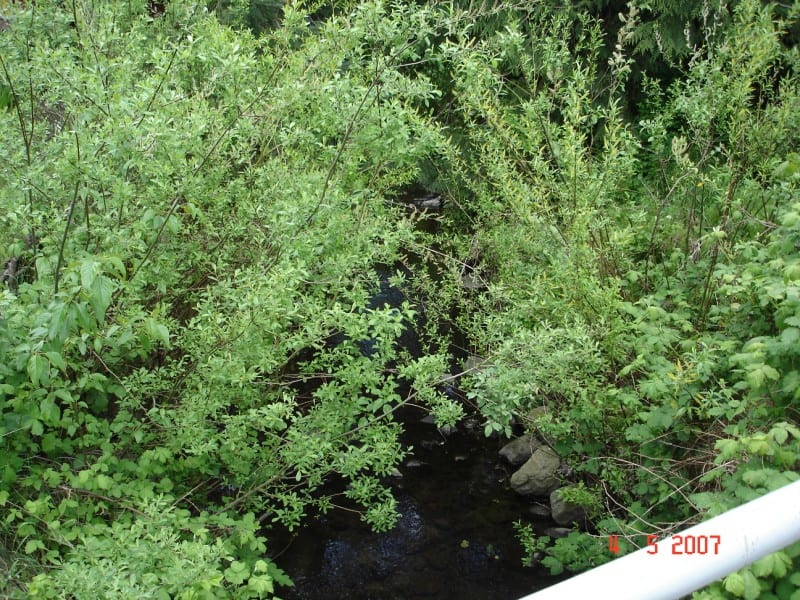
Bowker Creek May 2007, dense native vegetation fully established from wattle fence bioengineering
Use the dated field record below to follow vegetation and channel changes at each site.
Follow the treatment through repeat photographs, plant-survival checks and inspections after high water. Record bank movement, scour, sediment and damage, then adjust maintenance to the observed conditions.
The Bowker Creek photographs document streambank treatment. The separate Vantreight footage records wattle-fence installation on a slope.
What This Field Example Shows
The riparian examples reinforce a simple idea: damaged streambanks usually need more than a hard edge. They need living structure returned to the bank.
woody root systems that hold the bank
roughness that slows erosion along the edge
vegetation that shades the water and rebuilds riparian function
early pioneer species that restart succession along the disturbed margin
Why This Matters
The Bowker Creek photographs provide a dated streambank example. The Vantreight video explains a slope-construction process; it does not establish riparian recovery or a measured long-term outcome.
Methods Commonly Involved
The legacy riparian work connects closely to:
wattle fences where slope and moisture conditions support them
What to Look For in the Field
When these systems are working, the evidence is visible:
increasing woody cover along the bank
sediment being held rather than continually stripped away
a maturing riparian edge rather than a bare treatment line
the site moving toward a self-sustaining native plant corridor
Supporting Material
For the fuller technical explanation behind these examples, use:
Takeaway
These examples matter because they show that riparian restoration at PES is not abstract theory. It is field-tested work built around living systems that continue improving after installation.
Need a Site-Specific Recommendation?
We can assess the conditions on the ground and match the right living system to your slope, streambank, shoreline, or disturbed site.