
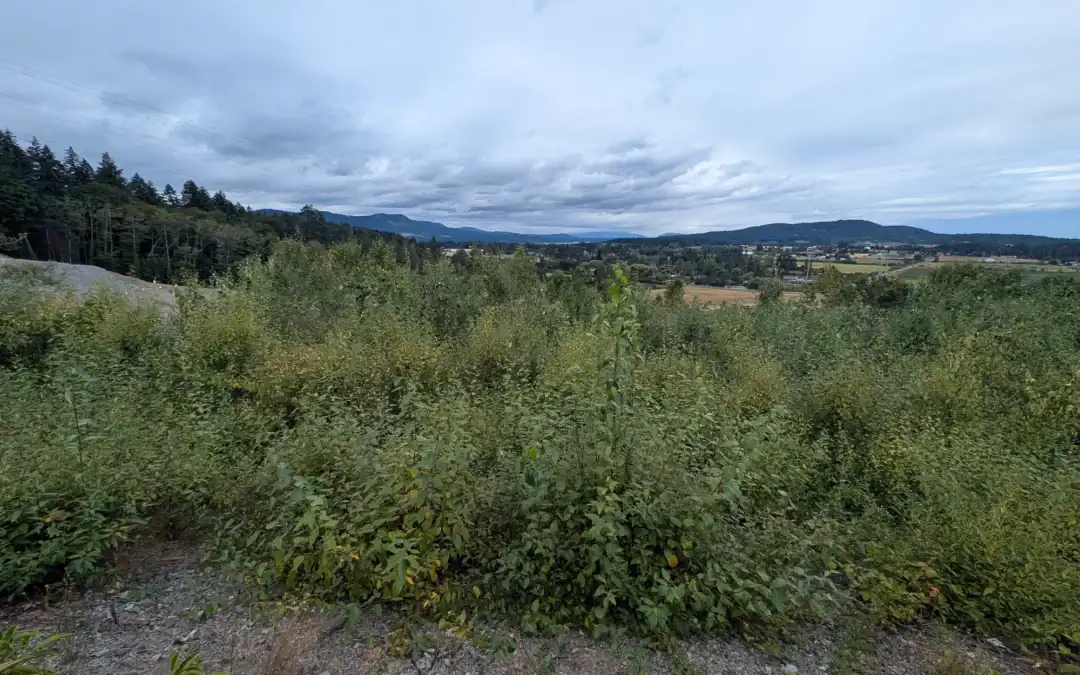
Rough and loose treatment reshapes a smooth, compacted surface into irregular mounds, hollows, and short slopes with different aspects. It is more than shallow scarification. The purpose is to restore the small-scale variation that controls moisture, seed capture, erosion, and plant establishment.
“Rough and loose sites create conditions that promote the natural recovery of the disturbed sites.”
David F. Polster, Making Sites Rough and Loose for Enhancing Natural Processes (2013)
Why surface shape matters
A smooth compacted surface tends to shed water and offers few sheltered places for seed or organic matter. Rough treatment creates a range of conditions within the same area:
- hollows that collect water, seed, and organic material;
- mound tops and short slopes with different drainage and exposure;
- broken flow paths that reduce concentrated surface runoff; and
- protected microsites where pioneering vegetation can establish.
Where the method fits
David Polster documented the method on mine wastes, resource roads, compacted access routes, and other drastically disturbed sites. Treatment depth, equipment, drainage needs, and planting decisions must follow the actual substrate and slope. Rough and loose preparation is a site treatment, not a standard recipe.
Patch treatment and natural recovery
On large disturbances, selected rough patches can provide establishment areas and seed sources while avoiding uniform treatment of the entire site. The appropriate proportion is project-specific. Polster's cost-effective restoration paper explains the broader strategy and the filters it is intended to remove.
What it looks like over time
Early rough treatment can look unfinished because bare mounds and hollows remain visible. Progress should be judged with dated monitoring, not immediate green cover. The Brenda Mine project record shows one documented four-growing-season sequence.
Source and related reading
- Reader edition of Polster's 2013 paper
- Original paper PDF
- Cost-Effective Strategies for the Restoration of Large Disturbances
- PES rough and loose method guide
Contact PES to assess whether this treatment fits a specific site.