

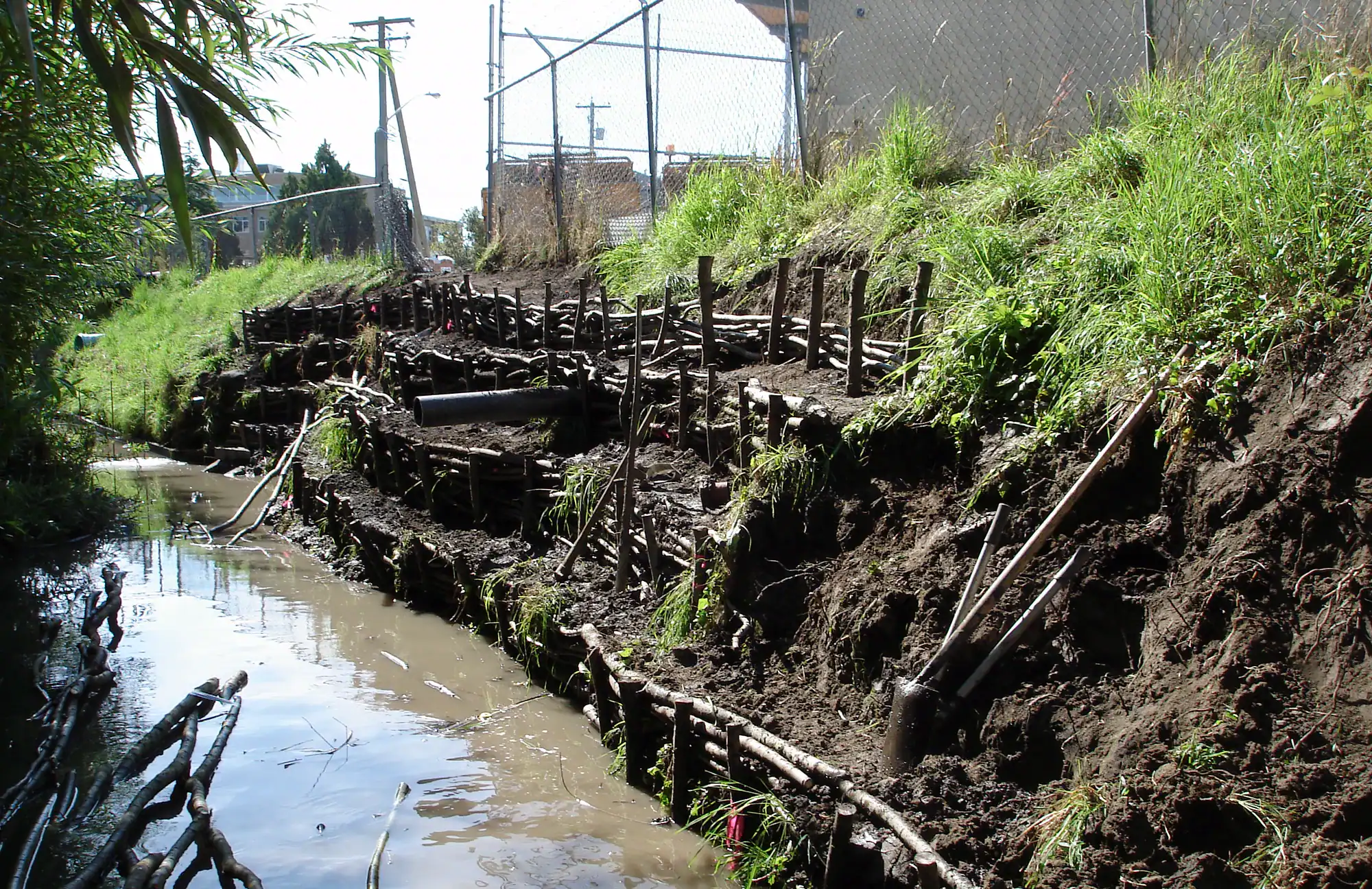
Field photograph: wattle terraces at Colquitz Creek, April 7, 2014. Explore the dated project sequence.
Wattle fences are short living retaining walls built from willow and cottonwood horizontal cuttings laid behind upright posts, then backfilled and lightly tamped down. Installed from the bottom of a slope upward, they create micro-terraces that intercept eroding material, hold moisture, and provide safe planting sites for colonizing native vegetation where slope stability and summer moisture support the treatment. This course covers what wattle fences are, how they’re built, when they work, and the failure modes that practitioners must avoid.
Wattle construction in the field
Wattle rows create small, site-specific terraces. Their performance depends on layout, material, slope, flows, backfill, and subsequent inspection.
Field references
Connect this course to the field
Use these public references alongside the lessons for quick method details, project context, and source material.
Return to the Learner Hub or course directory.
Printable field reference
A supplementary field companion for contour layout, materials, backfill, site fit, and common failure checks. It is a learning companion, not a site design or performance guarantee.
Download Wattle Fencing field reference (PDF, 4.6 KB, 1 page)