
Projects · Saanich, British Columbia
Colquitz Creek: Wattle Fences and Living Slope Repair
A field sequence showing how contour-aligned living structures helped a disturbed slope begin holding soil and rebuilding vegetation.
Working with the slope, not armouring it
The installation used bundles of live woody material laid along the contour. Those low barriers interrupted surface flow, caught moving soil and created sheltered, moisture-holding lines where willow could root.
The dated photographs matter because they show the work changing through time: newly installed fences in late 2013, early growth in spring 2014, and denser living cover in later visits. They show establishment, not a promise that every site will respond identically.
One growing season at Colquitz Creek
Wattle fences were installed across the bare slope to slow runoff, hold loose soil and create moist planting lines. By the following summer, willow growth was visible along the contours.
A repeat view of the same treated slope. The control reveals visible establishment; it is not a measured vegetation survey.

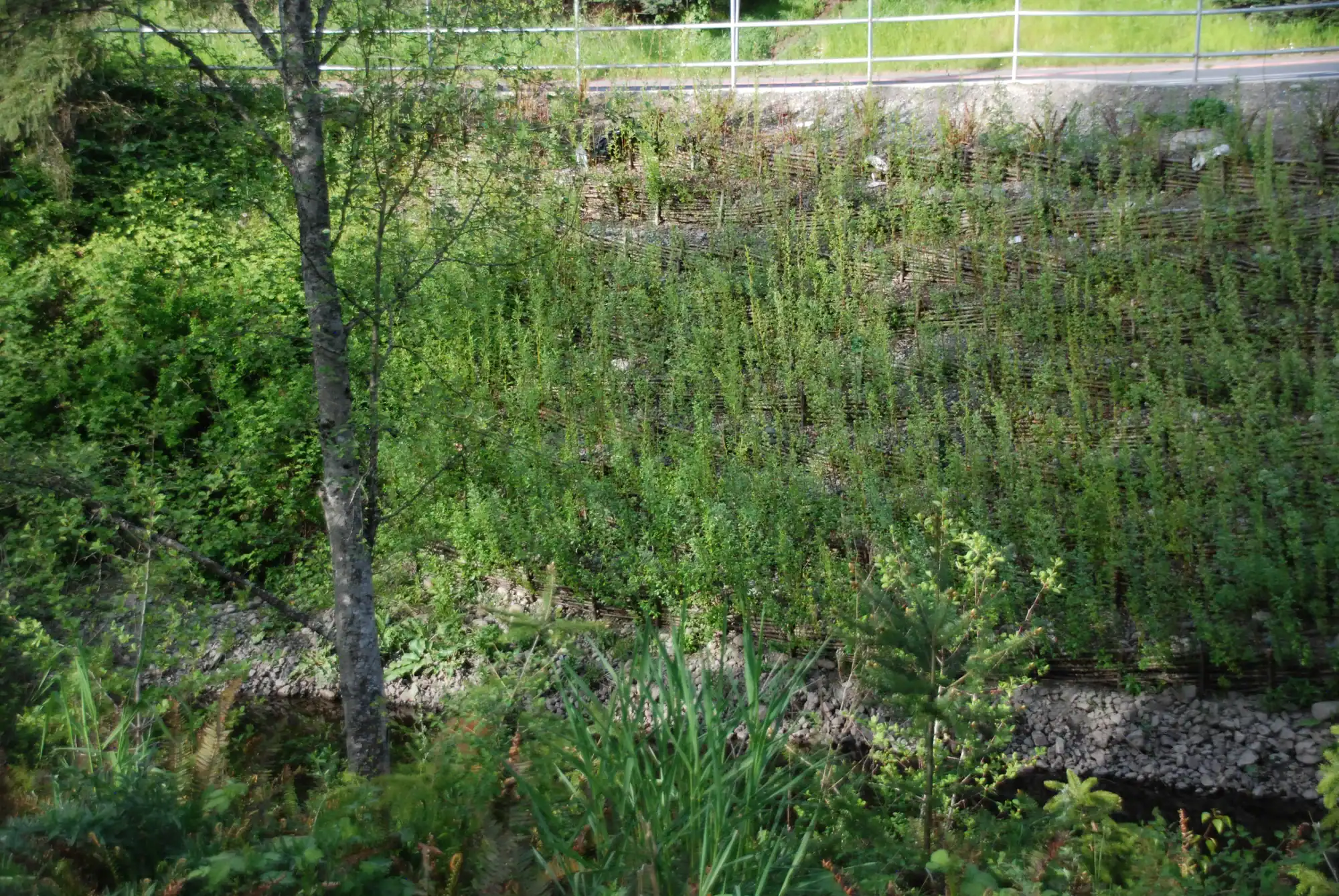
A later view: November 2024

This follow-up photograph shows established woody growth, with much of the ground hidden by stems and foliage. It extends the visual record; it does not measure slope stability or plant survival.
Why this sequence is useful
David Polster taught that restoration often works best when it gives natural processes a modest push. The structures did not replace roots; they created conditions in which roots and stems could take over. PES carries that practical approach forward in present-day site assessment and installation.
Construction views from the field record
The existing slider follows a repeat view through establishment. These additional archive frames show the treatment being built at two dated stages and are provided as supporting field evidence.

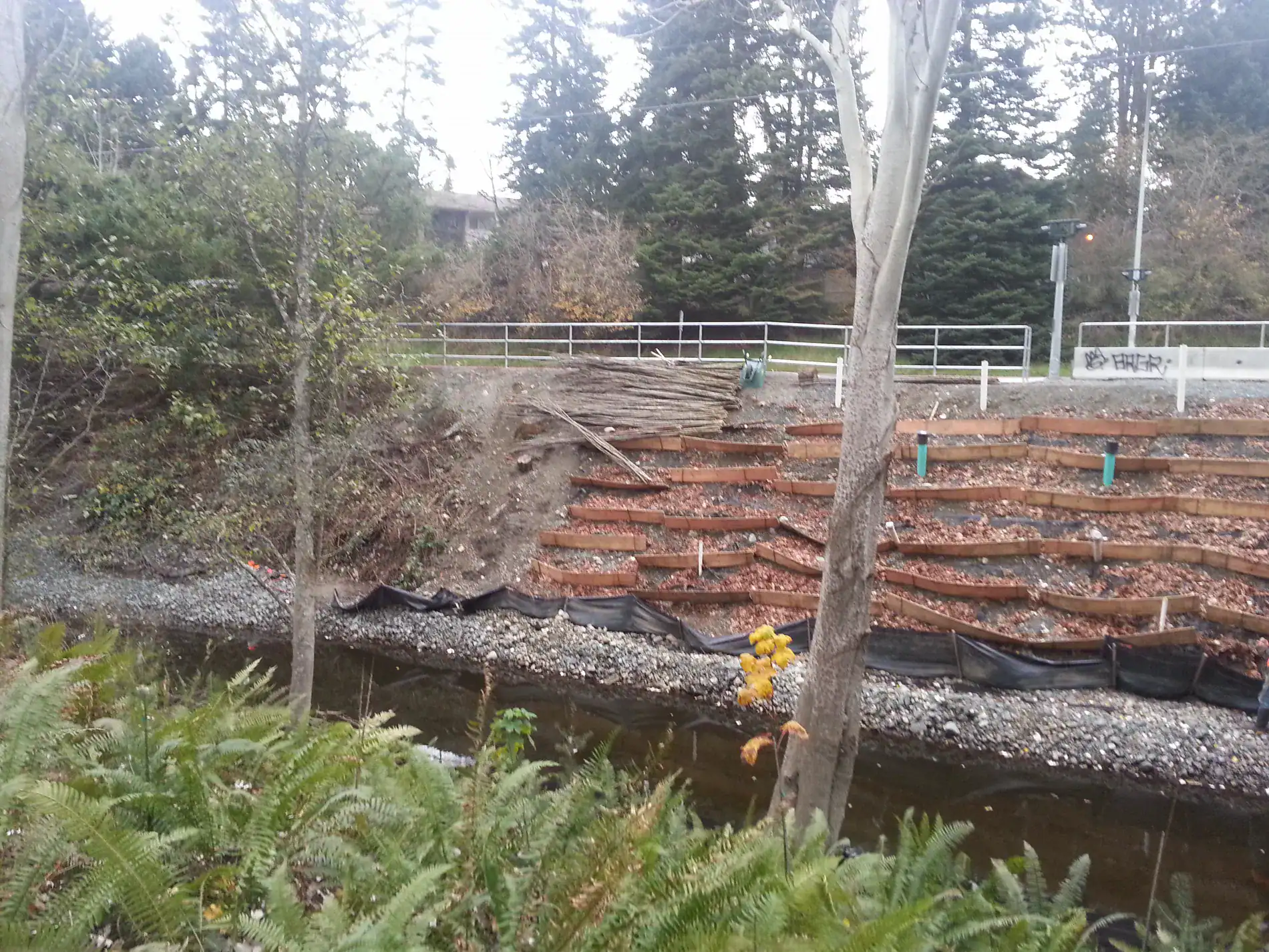
Source: dated David Polster archive photographs from the Colquitz Creek field record. These are supporting construction views, not a fixed-camera comparison and not a measured outcome claim.