
Stoltz Bluffs, Cowichan River Slope Bioengineering
Cowichan River, BC · 2001 installation · Monitored through 2018
Cowichan River Bluff
Steep riparian bluff bioengineering on a well-documented BC lowland river, presenting a challenging large-scale site.
2001–2018 Field Record
The source records a 2001 treatment and dated follow-up observations through 2018.
Bioengineering at Scale
Documents bioengineering on part of a steep river bluff, alongside the wider river-diversion and sediment-control history.
The Challenge
The Cowichan River at Stoltz Bluffs is a meandering alluvial river, its channel migrates laterally over time, and the meander bend at Stoltz had been cutting into the bluffs for centuries. By 2001, the over-steepened slope was actively failing: slumping continued seasonally, and the resulting mud was discharging directly into the Cowichan River, affecting water quality and aquatic habitat.
The failure dynamic was driven by the combination of over-steepened slopes, carved by the river cutting into the bluff, and the resulting loss of structural integrity in the silt-dominated soil material. Without intervention, the natural process of slope mass wasting would continue until the slope reached its natural angle of repose, a process that could take many more decades and deposit enormous volumes of silt into the river.
In 2006, a river diversion was funded and constructed to move the active channel away from the bluffs, addressing the root cause of lateral erosion. However, the already over-steepened slopes above the diversion continued to be susceptible to slumping.
Approach
Soil bioengineering was applied to the Stoltz Bluffs slopes in 2001 using Balsam Poplar, a species particularly well suited to this application because of its capacity to send out new adventitious roots when the stem becomes buried by subsequent slumping. This characteristic is critical on active slide terrain: as sediment buries the base of the installed plants, the stems root again from the newly buried section, effectively "following" the slope surface downward and maintaining root reinforcement even as the site continues to move.
This adaptability makes Balsam Poplar a key species for ongoing slumping terrain, unlike willows or other species that may be overwhelmed by burial, Balsam Poplar continues to root and re-establish through multiple cycles of slumping.
Results
The site history includes the following treatment and monitoring observations:
- 2001: The source records soil bioengineering that started recovery on part of the slope.
- 2006 and March 2008: The river was moved away from the bluffs; a later view records that the slope-sediment problem remained.
- February 2010: The source documents continuing slumping, filling settling ponds and mud entering the river.
- May and October 2017: May views show continuing slope failures; the October 12 view contrasts the bioengineered area with surrounding slumping.
- Winter 2017/18: The source records failure of the Clear Creek gully.
- February 2018: The source contrasts continuing slumping nearby with growth in the bioengineered area and balsam poplar spreading into adjacent areas.
- November 2018: Balsam poplar is described as growing well on the slope.
The Stoltz Bluffs presentation brings together a 2001 treatment history and later dated field observations. It contrasts continuing slumping nearby with vegetation growth in the bioengineered area; it does not provide continuous measurements of slope stability.
Stoltz Bluffs: a dated field record of slope treatment and vegetation. Request a Site Assessment →
Dated Treatment and Follow-Up Photographs
The Stoltz Bluffs presentation records continuing slumping nearby and vegetation growth in the bioengineered area during separate dated visits. The photographs show those field observations, rather than a controlled comparison of slope stability.
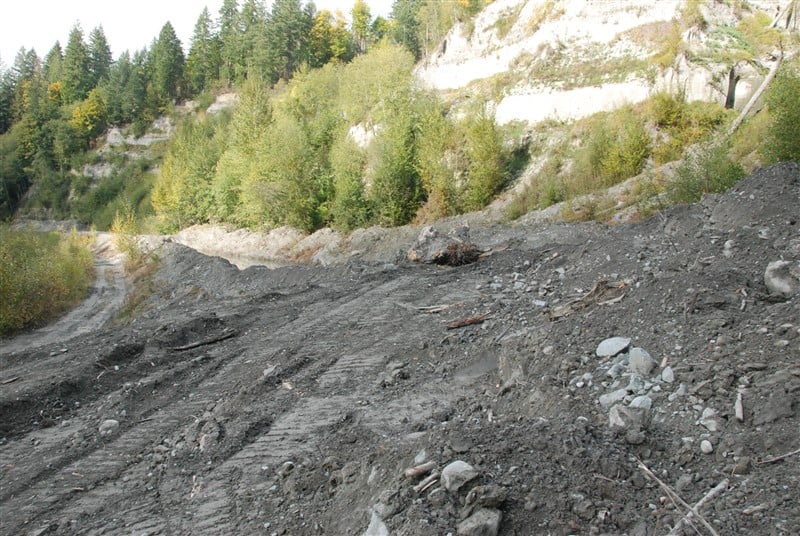
October 12, 2017: the source identifies the bioengineered area as an exception to the continuing slope failures.

February 21, 2018: the source again contrasts the bioengineered area with nearby slumping.
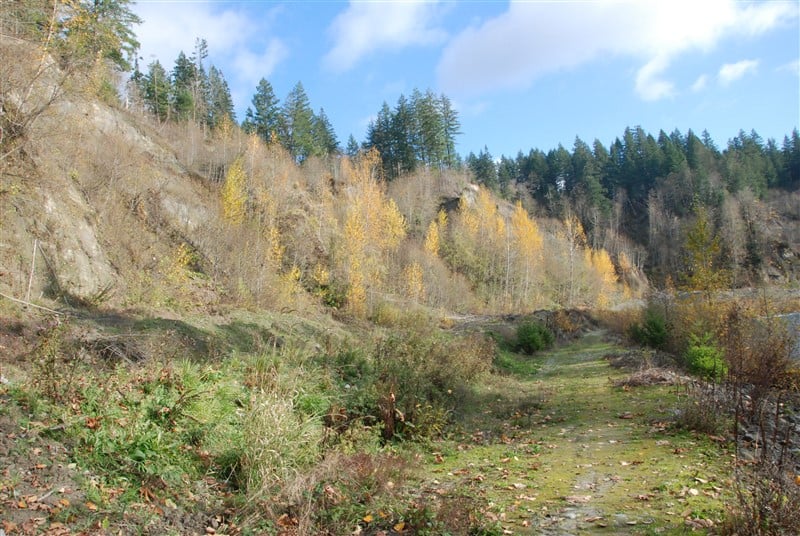
November 10, 2018: balsam poplar was growing well on the slope.
Stoltz Bluffs: Treatment and Follow-Up
After the river was moved away from Stoltz Bluffs, the over-steepened slope continued to shed sediment. Later visits recorded vegetation growth in the bioengineered area alongside continuing slumping nearby.

2006: funds were obtained to move the river away from the bluffs.
Alluvial rivers move. At Stoltz Bluffs, the Cowichan River meander had been migrating downstream until the active bend reached the toe of the silt bluff. Once the river removed the toe support, the slope above kept trying to find a new angle of repose.
Moving the river reduced direct hydraulic attack on the bluff, but the over-steepened slope remained unstable.
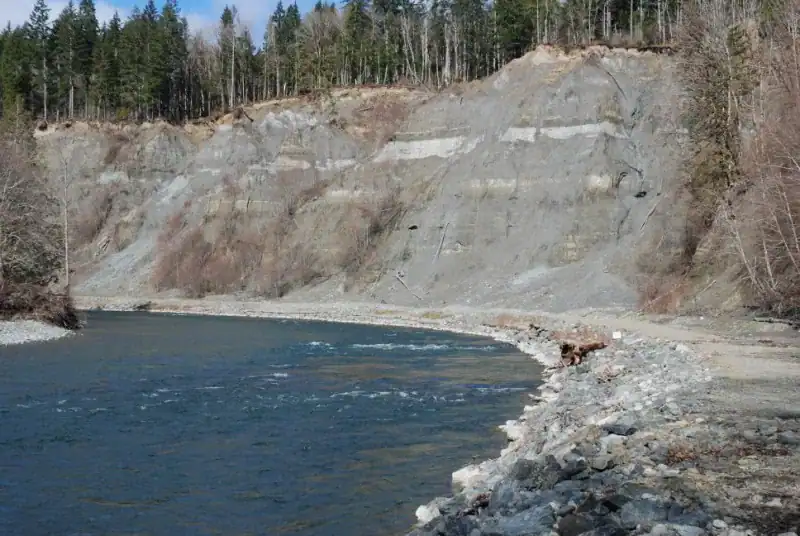
March 4, 2008: diversion had not fixed the continuing slope-sediment problem.
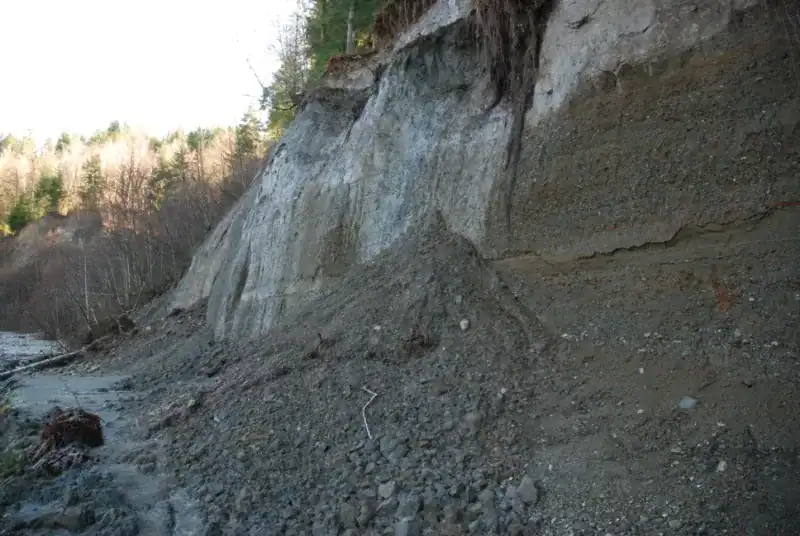
February 20, 2010: slumping continued.
The later monitoring photos show why a single structural intervention was not enough. Untreated gullies and over-steepened faces continued to fail, sending fresh sediment into the river system years after the diversion.
Continued slope movement delivered sediment to the river. Treatment planning needs to account for both existing bluff conditions and ongoing sediment movement.
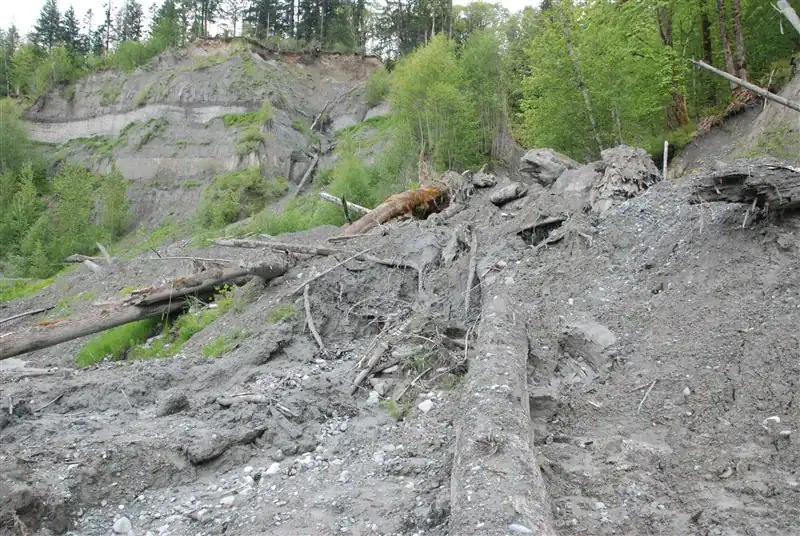
May 14, 2017: slides continued as the slope adjusted.

October 12, 2017: the source contrasts the bioengineered area with surrounding slumping.
The source contrasts continuing slumping nearby with the bioengineered area in October 2017 and February 2018. These are dated field observations rather than continuous measurements of slope stability.
Balsam poplar is especially useful in this kind of terrain because buried stems can produce new roots. As small amounts of material move and bury stems, the plant can keep rooting into the new surface rather than being lost beneath it.
November 2018: balsam poplar was growing well on the treated slope.
Stoltz Bluffs: a dated performance record
David Polster's project record follows the river diversion, later gully failure, and the section where bioengineering held while adjacent untreated slopes continued to move.
2006 river diversionThese are dated project photographs from different reaches and viewpoints, not a fixed-camera before-and-after comparison. The record supports a qualified contrast between treated and untreated slope areas.
References
- Polster, D.F. 2021. Living on the Edge: A Manual for the Restoration of Drastically Disturbed Sites. Polster Environmental Services Ltd.
- Polster, D.F. 2002. Soil Bioengineering Techniques for Riparian Restoration. SER Western Canada.
- Cowichan River Stoltz Bluffs field monitoring photographs and slide notes, 2006-2018.
Learn more
Related Methods and Resources
Facing a Similar Challenge?
We can evaluate river erosion, sediment delivery, and slope geometry to phase structural and living treatments around the active failure.