
Juniper Place Landslide Restoration
British Columbia · 2016 installation · Monitored through 2018
Post-Landslide Installation
Soil bioengineering applied to freshly failed slope material to reduce exposed soil and establish living cover.
2016 Installation
Installation in 2016, followed by dated photographs of vegetation development through 2018.
Monitored Through 2018
Dated visits through 2018 documented visible vegetation development and remaining exposed areas.
The Challenge
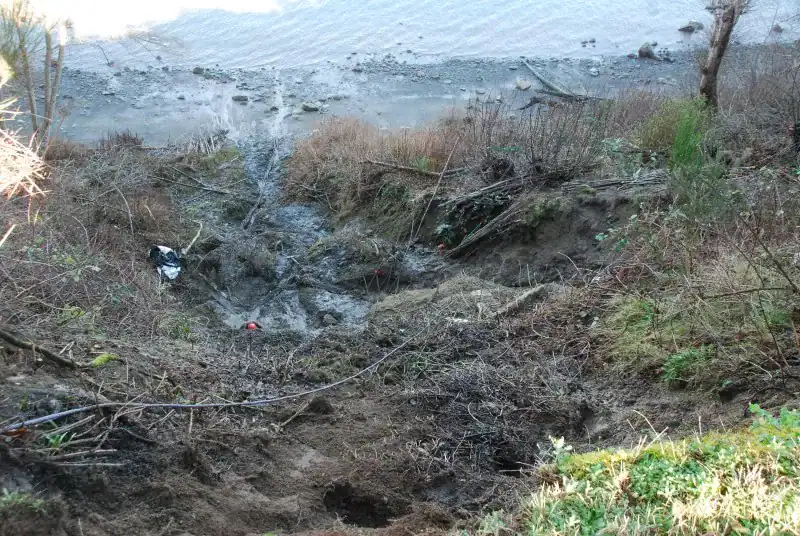
Site assessment in February 2016 identified conditions typical of a complex slope failure:
- Very steep gradient with dense blackberry colonization, a common indicator of disturbed, unstable ground
- Active seepage water emerging across the slope face, a key driver of slope instability and ongoing movement
- Compacted soils in places, limiting infiltration and root establishment
- Large slide extent: the scale of the failure required a systematic installation approach working progressively up the slope
Seepage water is one of the most important factors in landslide restoration. Unless drainage is managed, by intercepting and redirecting water rather than letting it sheet across the slope face, revegetation is undermined by continued soil saturation and movement.
Approach
Installation began in late February 2016 and proceeded systematically up the slope, with work documented at regular intervals through late March and into April. The installation was completed by April 10, 2016.
Soil bioengineering techniques applied to steep landslide terrain typically combine:
- Live stake installation using willow and other pioneering species, dormant cuttings driven directly into the slope to intercept seepage, stabilize the surface, and initiate vegetative cover
- Wattle fences or brush layering on flatter terrace areas, creating micro-topography that traps sediment and establishes rooted plant material in layers
- Live pole drains where seepage concentration points require active water interception and redirection
The approach treats seepage as a resource, directing it to planted material rather than letting it saturate the slope, while simultaneously building root biomass that will progressively reinforce the soil structure.
Results
Monitoring photographs document a clear recovery trajectory:
May 2016: Active growth visible on installed materials; vegetation establishing across the slope
July–August 2016: Substantial canopy development; slope face increasingly covered
November 2016: Established vegetation entering dormancy; structural coverage maintained
September 2017: Woody vegetation visibly established across much of the photographed area
May 2018: Dense woody cover across much of the slope; a second view recorded a remaining exposed central face
November 2018: Dormant-season woody cover remained visible across much of the monitored slope
The dated photographs show substantial vegetation establishment within two growing seasons while also documenting remaining exposed areas. They are visual field evidence, not a measured stability or survival study.
Soil bioengineering for landslide recovery, addressing the causes of instability, not just the surface. Request a Site Assessment →
Juniper Place Landslide: Installation and Early Establishment
The Juniper Place field record follows a steep, seeping slide through installation in early 2016, visible first-season growth, and monitoring visits through 2018.

February 2016: a large, steep, seeping slide.
February 2016 photographs document a very steep slope with seepage, compacted soils, and blackberry cover. The treatment focused on the slope face and seepage conditions rather than only the toe.
Over several weeks the crew installed wattle fences from the bottom upward, using each completed row as access for the next. The contour-aligned structures were intended to interrupt moving soil and hold moisture near the living cuttings. The field record also documents work intended to manage seepage across the slope.
Wattle fences built up the whole face, bottom to top.
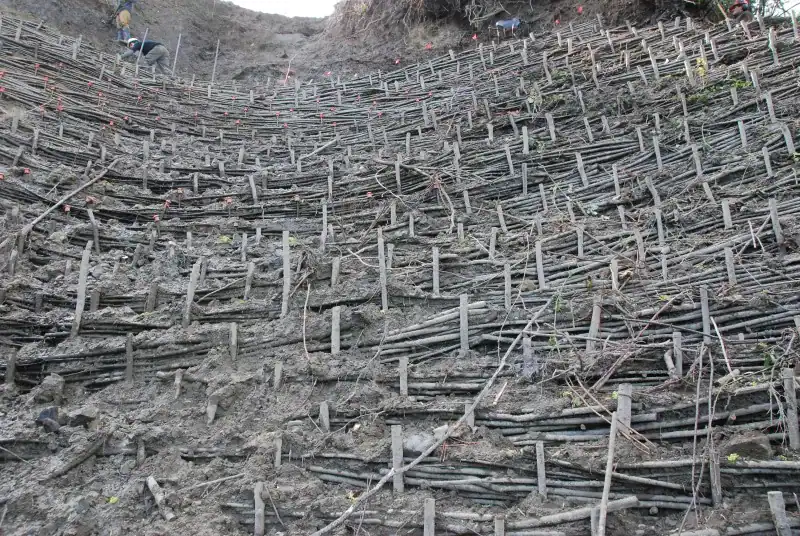
Each fence uses living willow laid behind the vertical posts, then backfilled and lightly tamped down.
Up close, a wattle fence uses long willow stems laid behind driven vertical posts, then backfilled and lightly tamped down. It provides a low contour barrier while the living material has an opportunity to root. The installation was documented as complete on April 10, 2016.
Within weeks of finishing, the cuttings were sprouting. By midsummer 2016 the bare scar was greening over. The photographs show visible above-ground growth; they do not measure root development or slope movement.
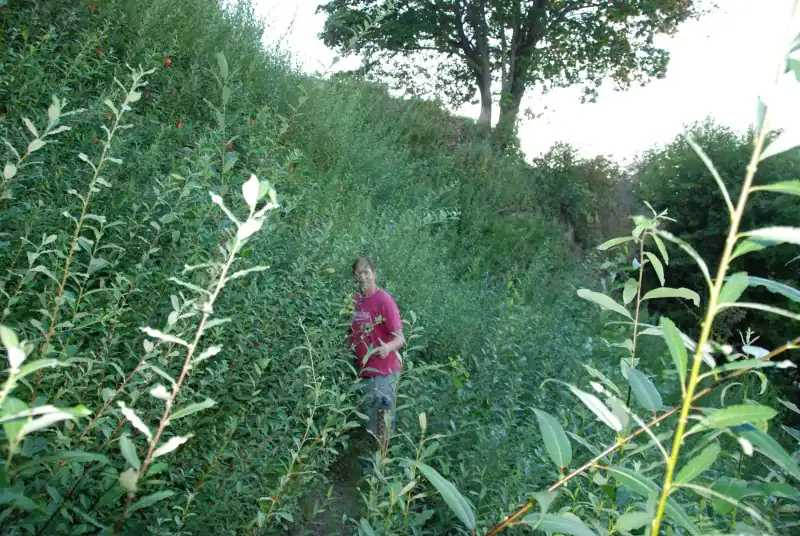
By summer, the cuttings were growing and the face was greening.
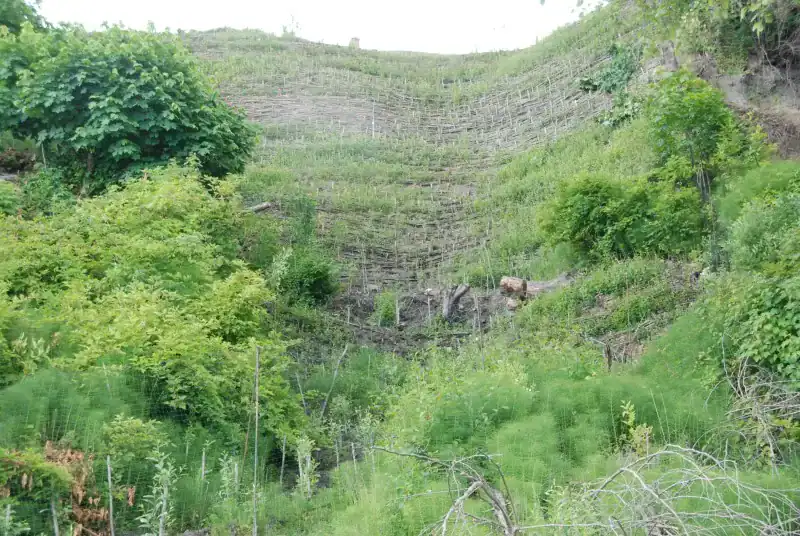
May 29, 2016: vegetation growing among the installed wattle fences.
By 2017 and 2018, later photographs show dense woody growth across much of the slope. May 2018 photographs also show a remaining exposed central face with installed woody material visible. The record documents vegetation development across the treatment area; it is not a measured stability or survival study.
References
- Polster, D.F. 1997. Restoration of Landslides and Unstable Slopes: Considerations for Bioengineering in Interior Locations. 21st BC Mine Reclamation Symposium, Cranbrook, BC.
Learn more
Juniper Place: recovery documented over time
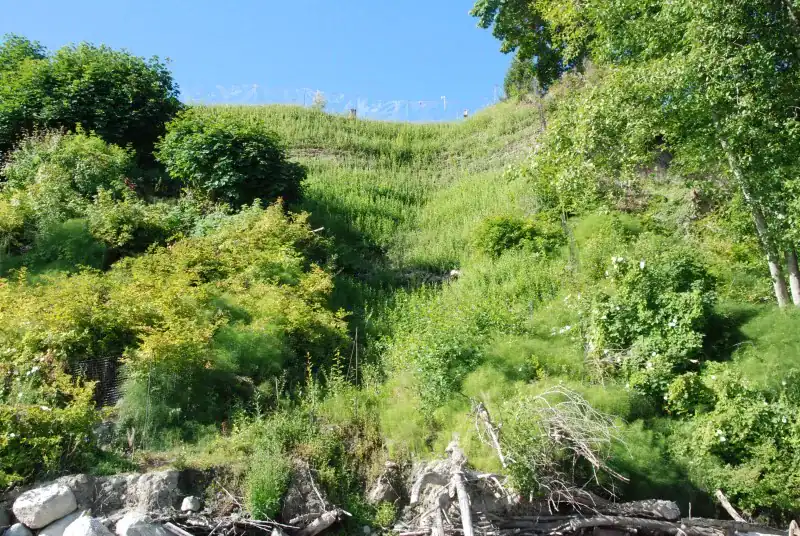
Dated photographs follow the treated landslide from installation through first-season growth, established woody cover, and the 2018 monitoring record.
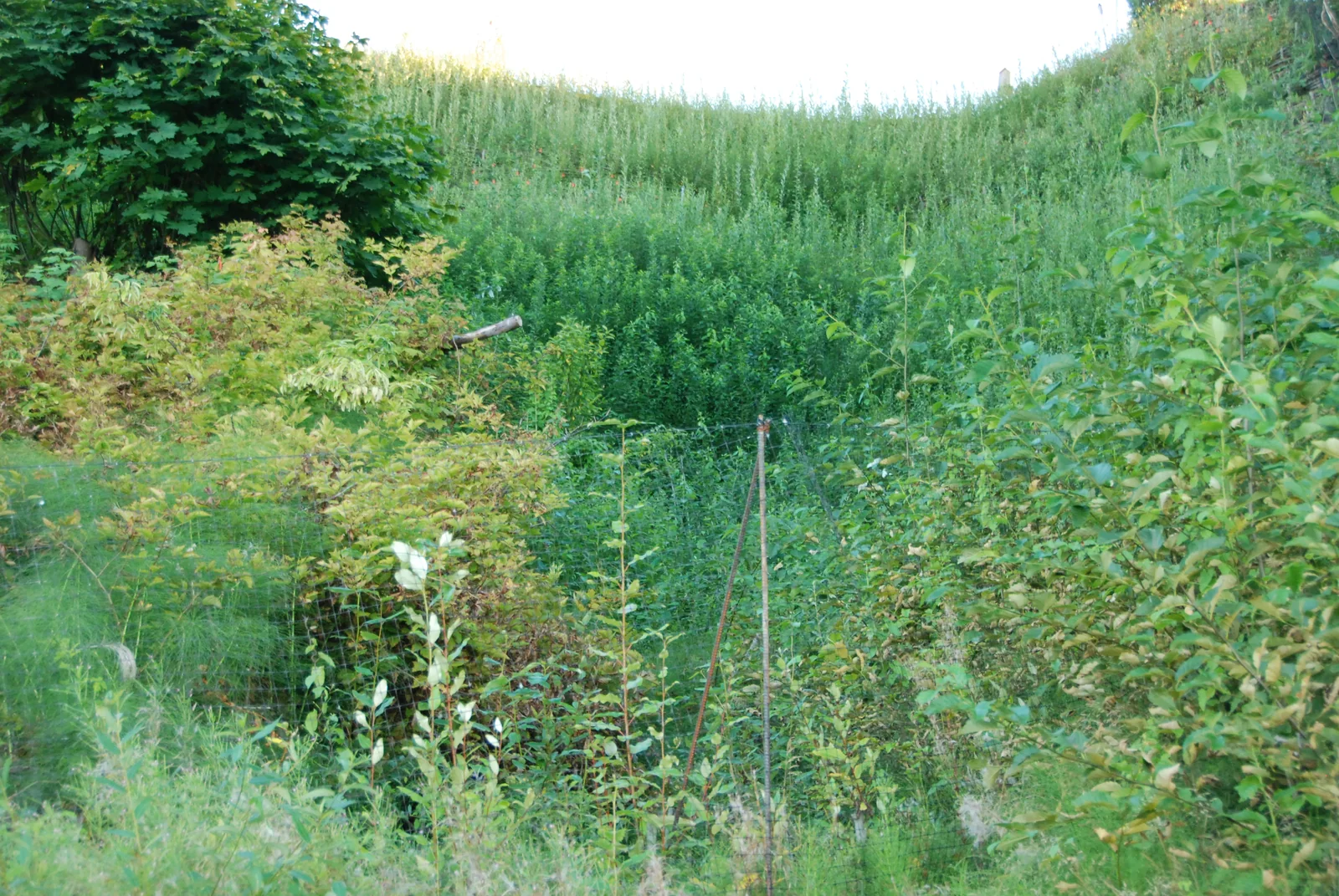
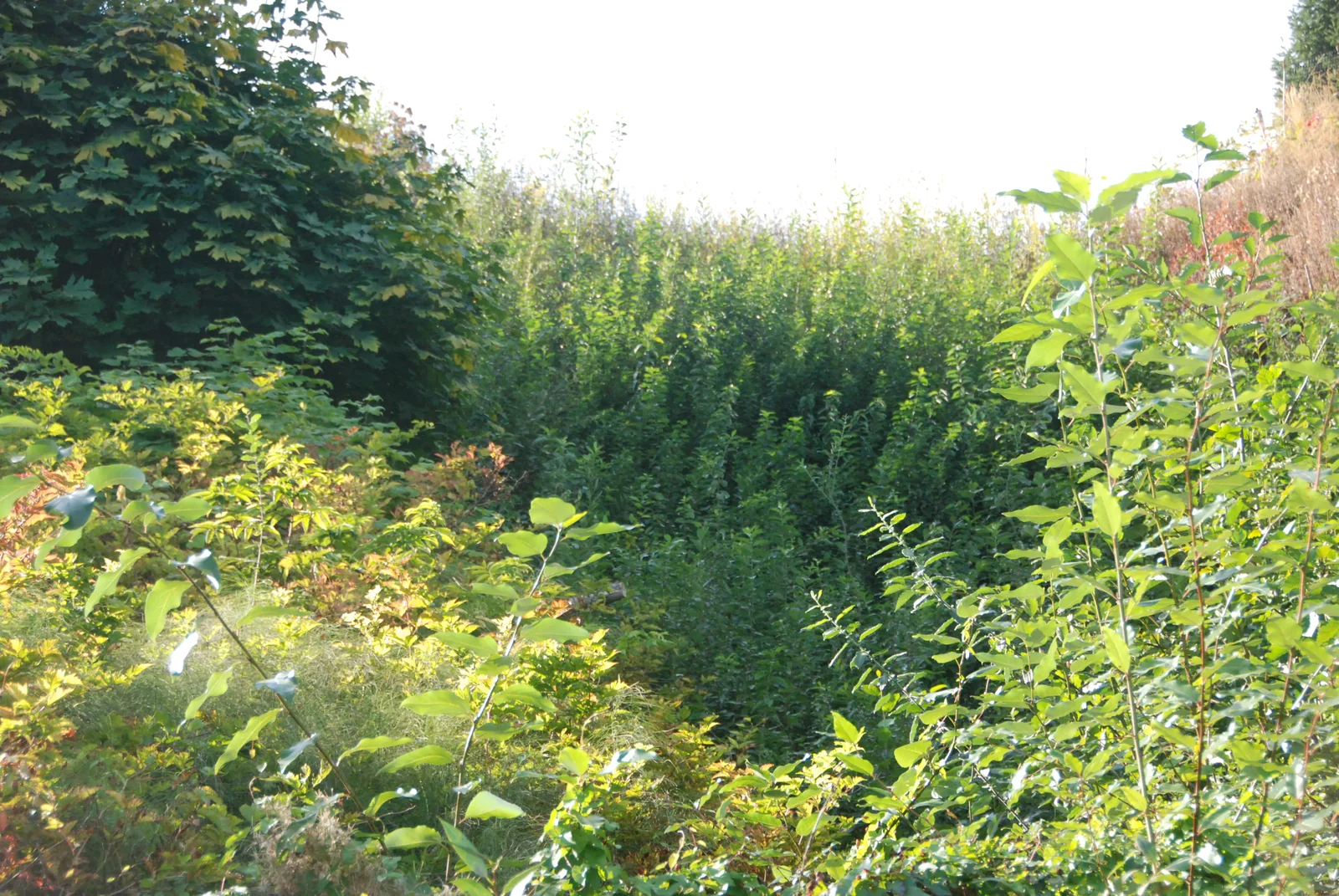
These photographs document the same landslide area from different field positions. They are not a registered fixed-camera pair, and the photographs do not by themselves measure slope stability or plant survival.
 July 6, 2016Vegetation on the treated slope during the first growing season.
- August 24, 2016First-season growth covered much of the photographed treatment area.
- September 23, 2017Woody growth was established across the photographed slope.
- May 28, 2018The monitoring visit recorded dense cover across much of the slope.
- May 28, 2018, detailA second view recorded a remaining exposed central face and visible installed material.


Dates are taken from the original Juniper Place field presentation and image metadata.
Related Methods and Resources
Facing a Similar Challenge?
We can assess the failure geometry, seepage, and available live material to design stabilization that addresses the cause, not only the surface.