
Former industrial site near Edmonton, Alberta | 2010 to 2020
Battle Lake Gas Plant Site Restoration
Restoration at this former gas plant used rough and loose ground preparation and woody cuttings. Photographs from 2010 to 2020 follow the development of a young woody plant community.
Project overview
Restoration began in spring 2010 on the remediated former gas plant site near Edmonton, Alberta. Surface preparation, dormant cuttings and browsing protection were used to establish woody vegetation.
Polster Environmental Services inspected the site in June 2011 and prepared management recommendations. Dense sweet clover was competing with planted stems, so PES recommended clearing around the stems and cutting competing vegetation.
Planning a comparable project? Explore restoration support for owners and project teams, or discuss restoration of a disturbed site with PES.
Restoration challenge
The remediated surface had little vegetation or shelter for new plants. Establishing woody cover required suitable planting conditions and protection during early growth.
Rough and loose preparation created mounds and hollows intended to retain moisture, trap snow and provide varied planting sites.
Ground Preparation and Planting
In April 2010 an excavator created the rough and loose surface. Dormant cuttings approximately two metres long were installed with about one metre below ground and one metre above ground. Willow, balsam poplar, and red-osier dogwood were used.
A fence was installed to limit browsing by deer and moose, and water was used to settle soil around the cuttings and reduce air pockets.
Battle Lake: a ten-year field progression
Use the slider to follow the site from the remediated surface in March 2010 to established woody vegetation in winter 2020.
The photographs show the same project from different viewpoints. Dates accompany each image.
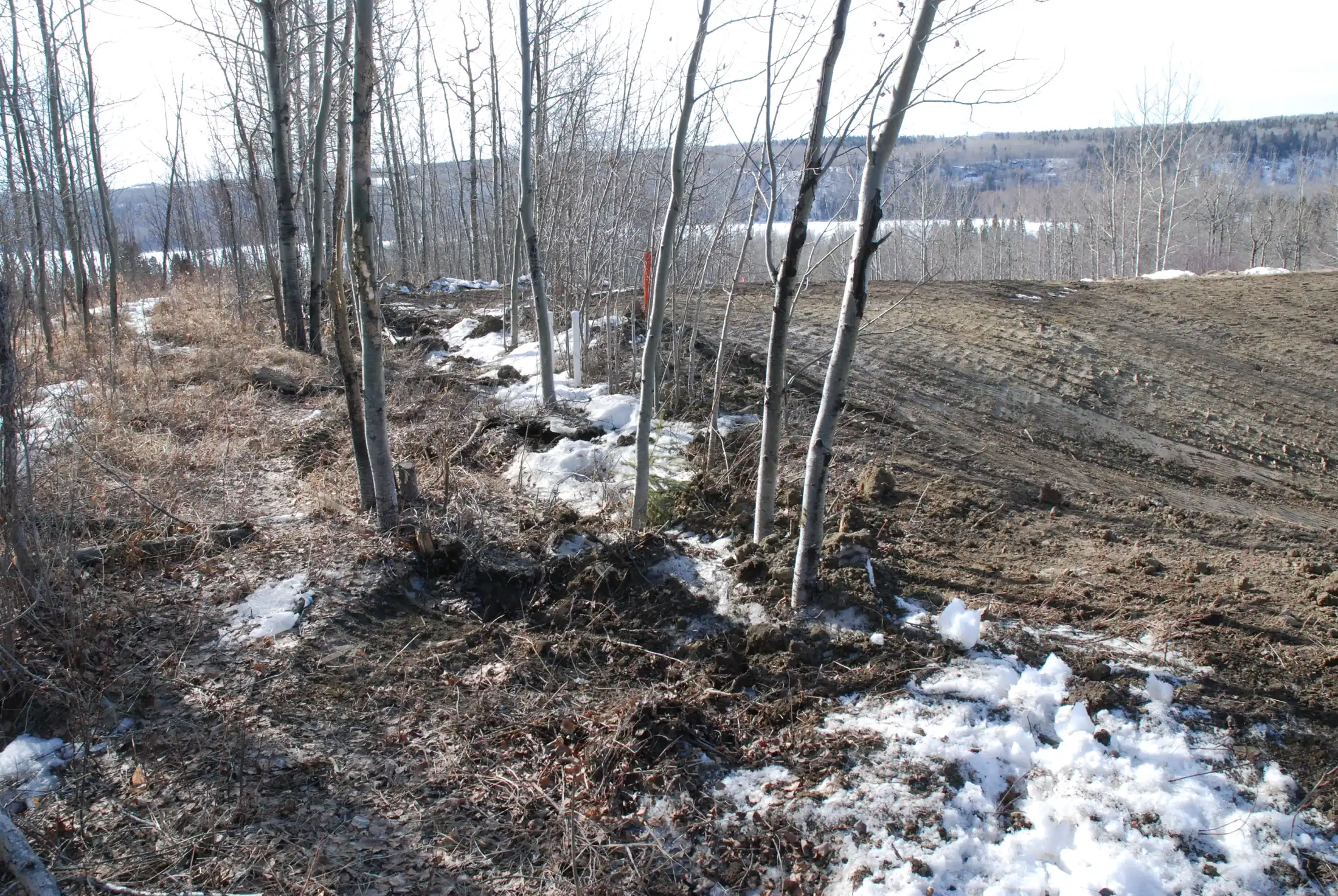
March 2010. The remediated former gas plant site before ecological restoration work began.
Photographs, 2010–2020
Browse the individual photographs and dates from the restoration sequence.
2010-03-11. The remediated former gas plant site before ecological restoration work began.
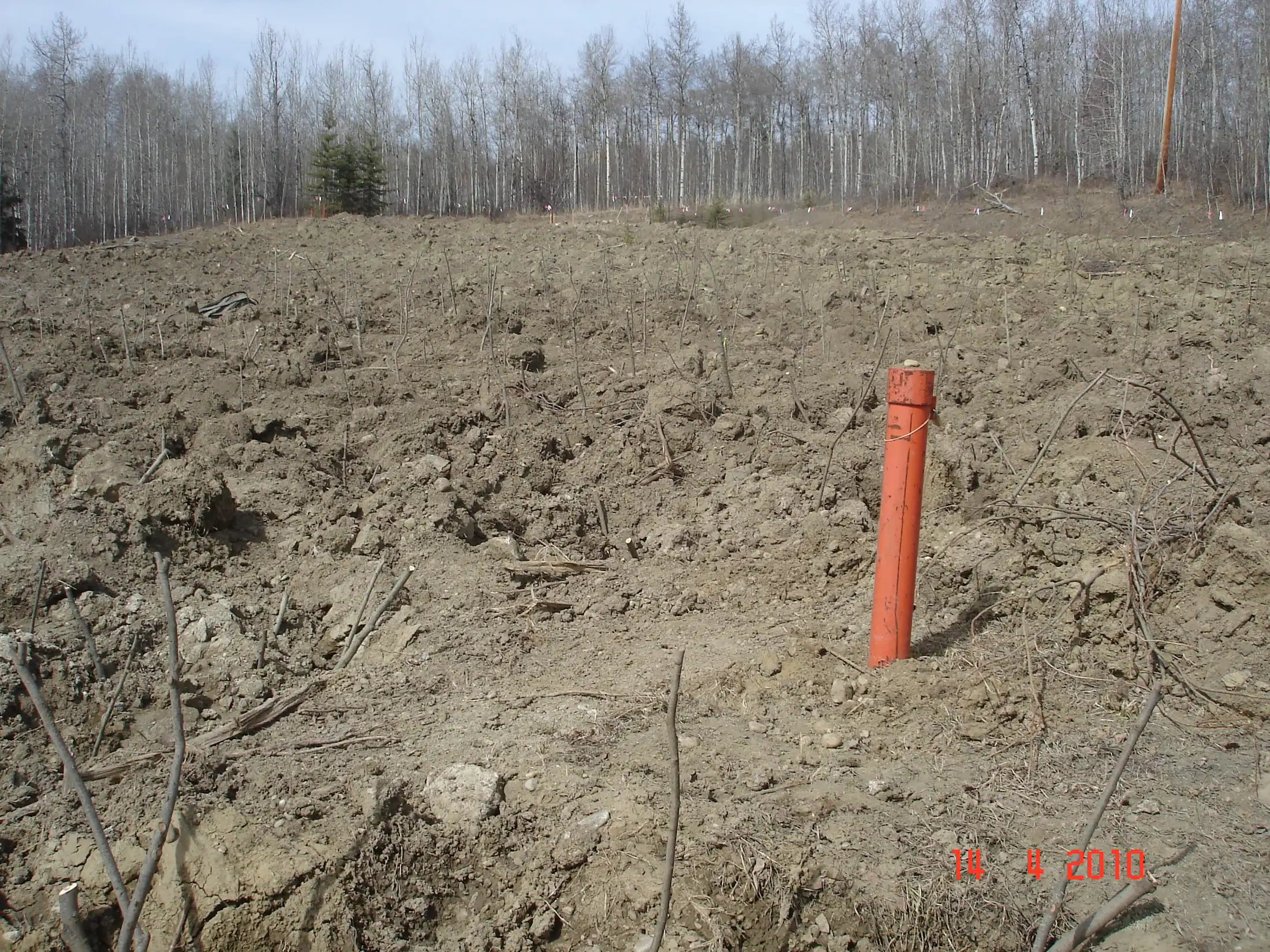
2010-04-14. Rough and loose surface preparation created varied microsites and reduced overland flow.
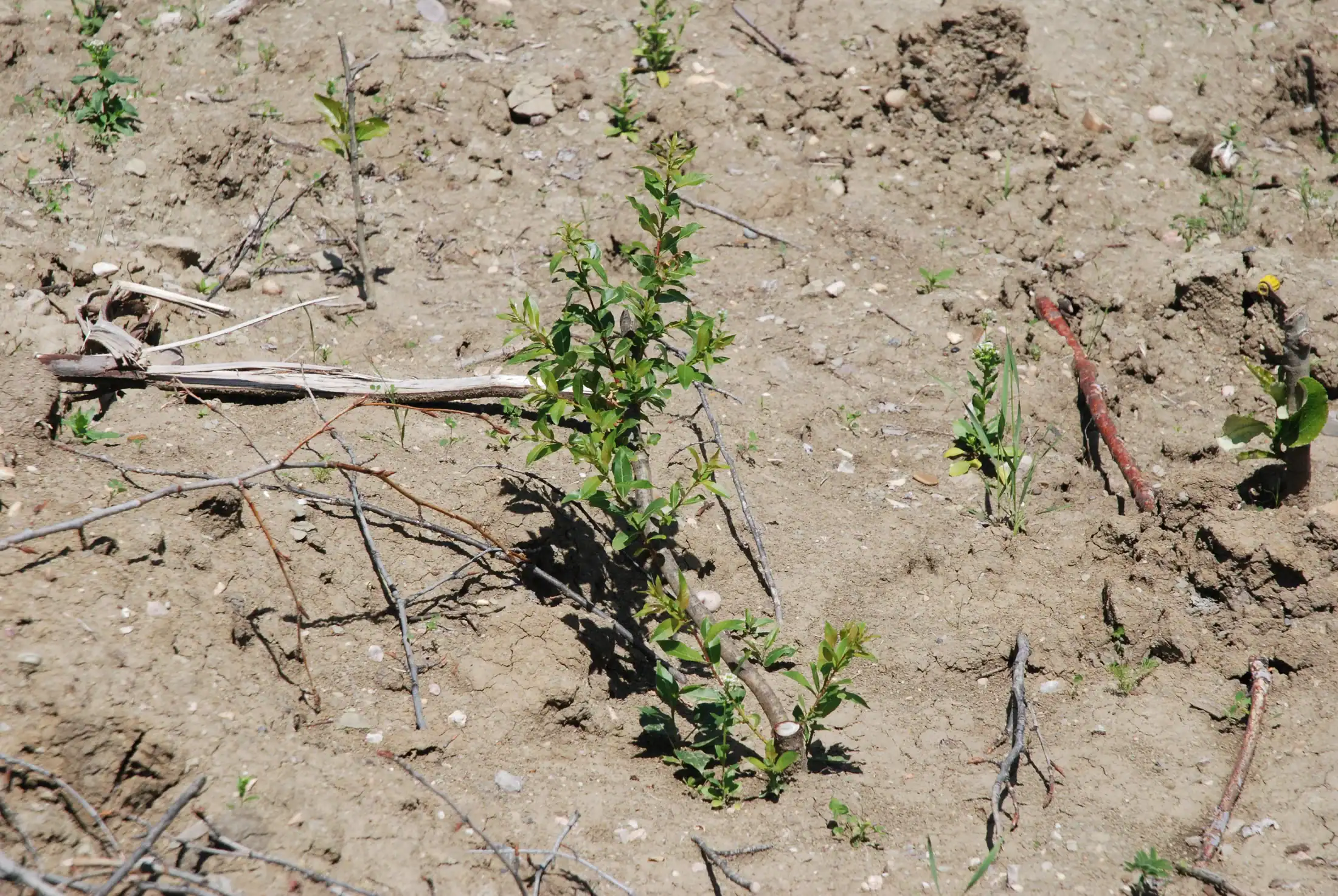
2010-06-24. Early vegetation was establishing during the first growing season.
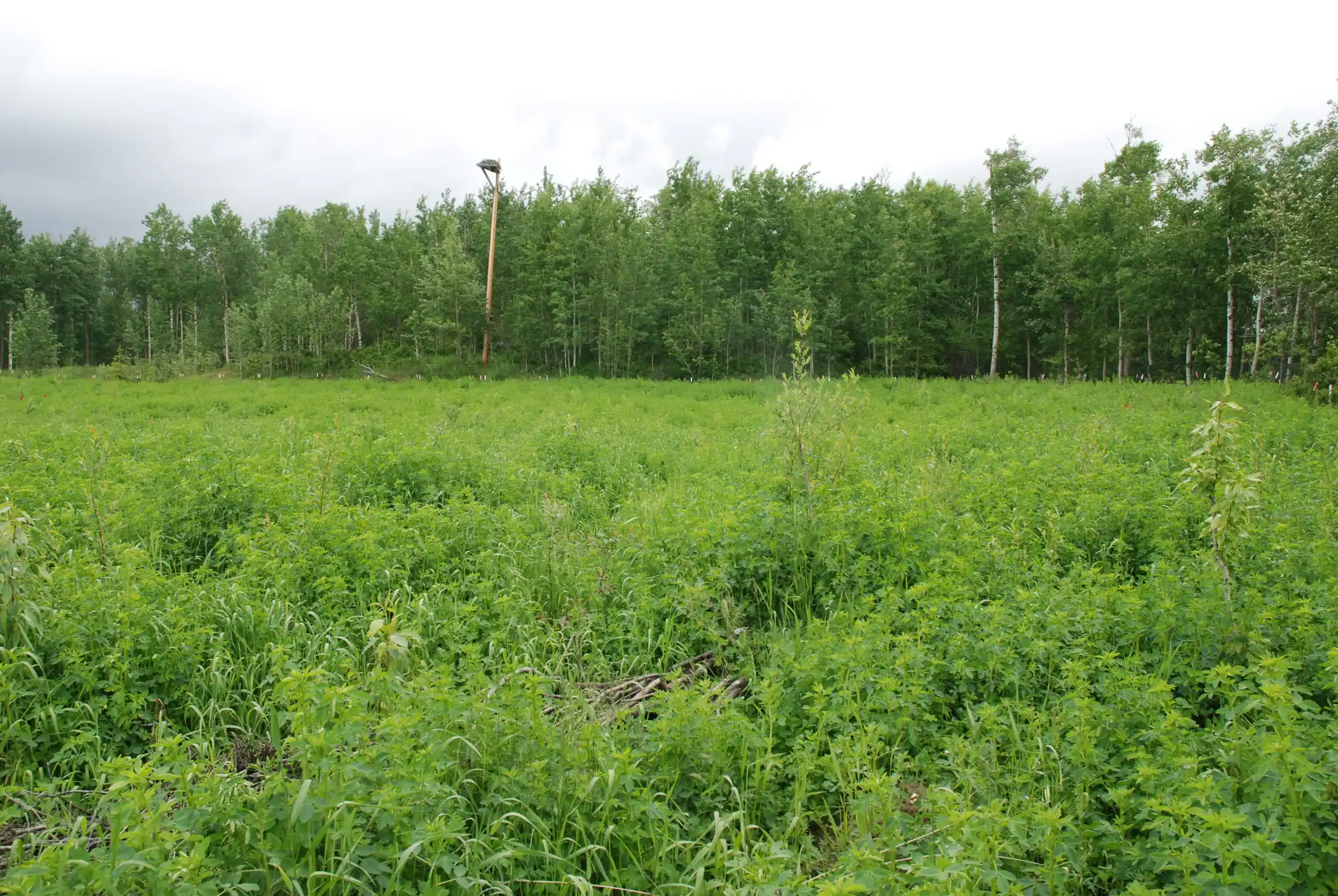
2011-06-20. Vegetation cover expanded during the second growing season.
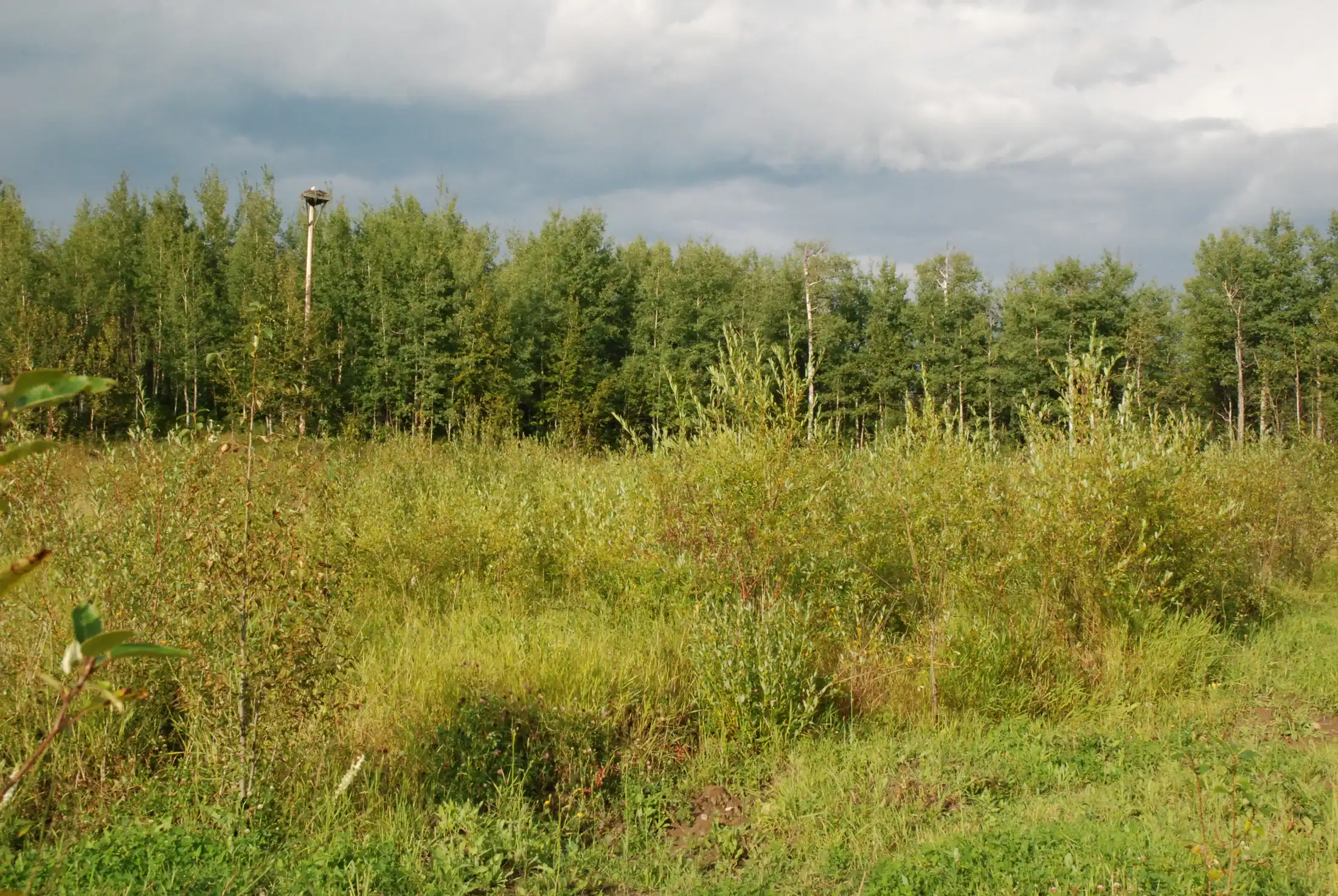
2013-08-17. Woody species were becoming a prominent part of the developing plant community.
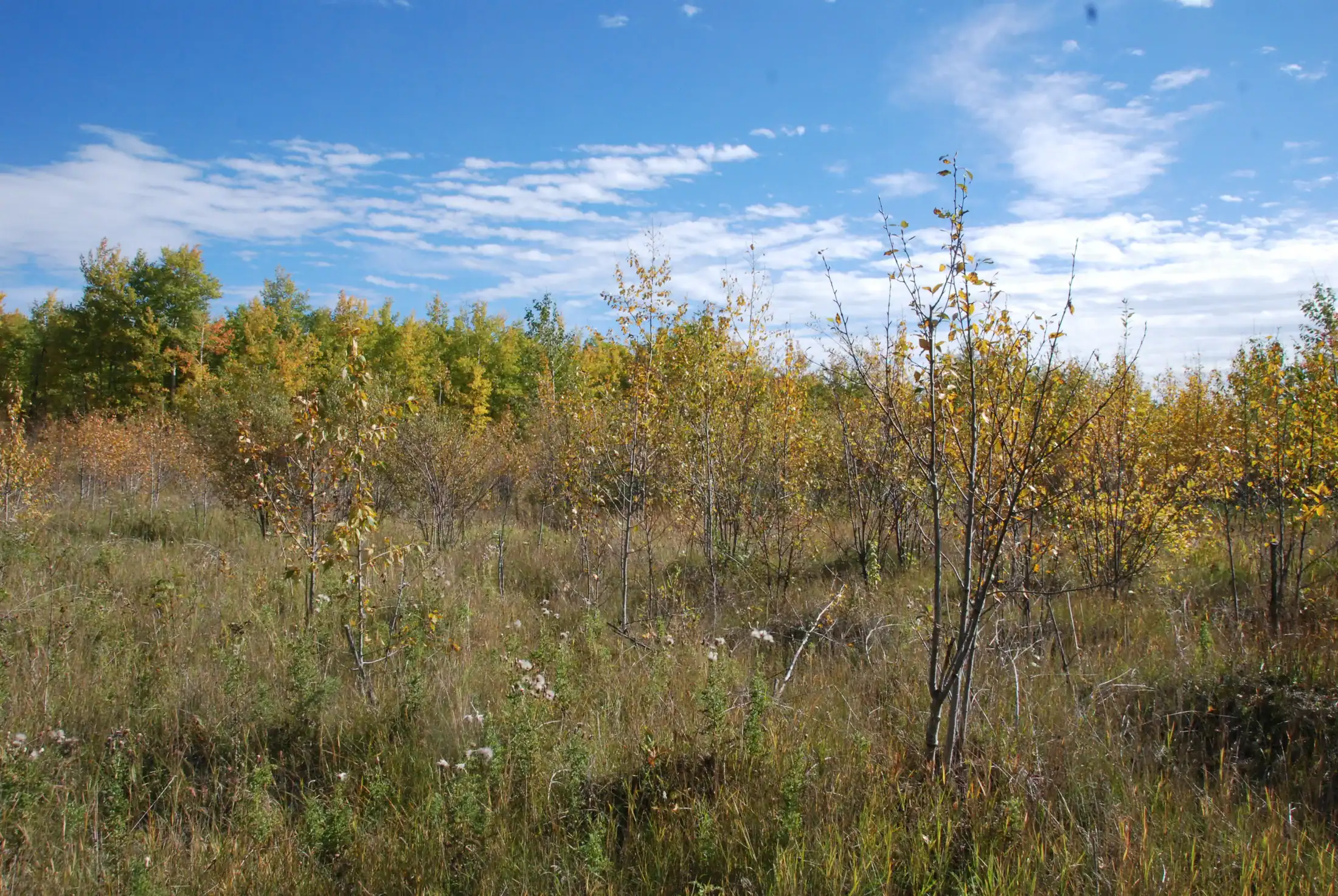
2015-09-25. Dense native growth shows continued development five years after treatment.
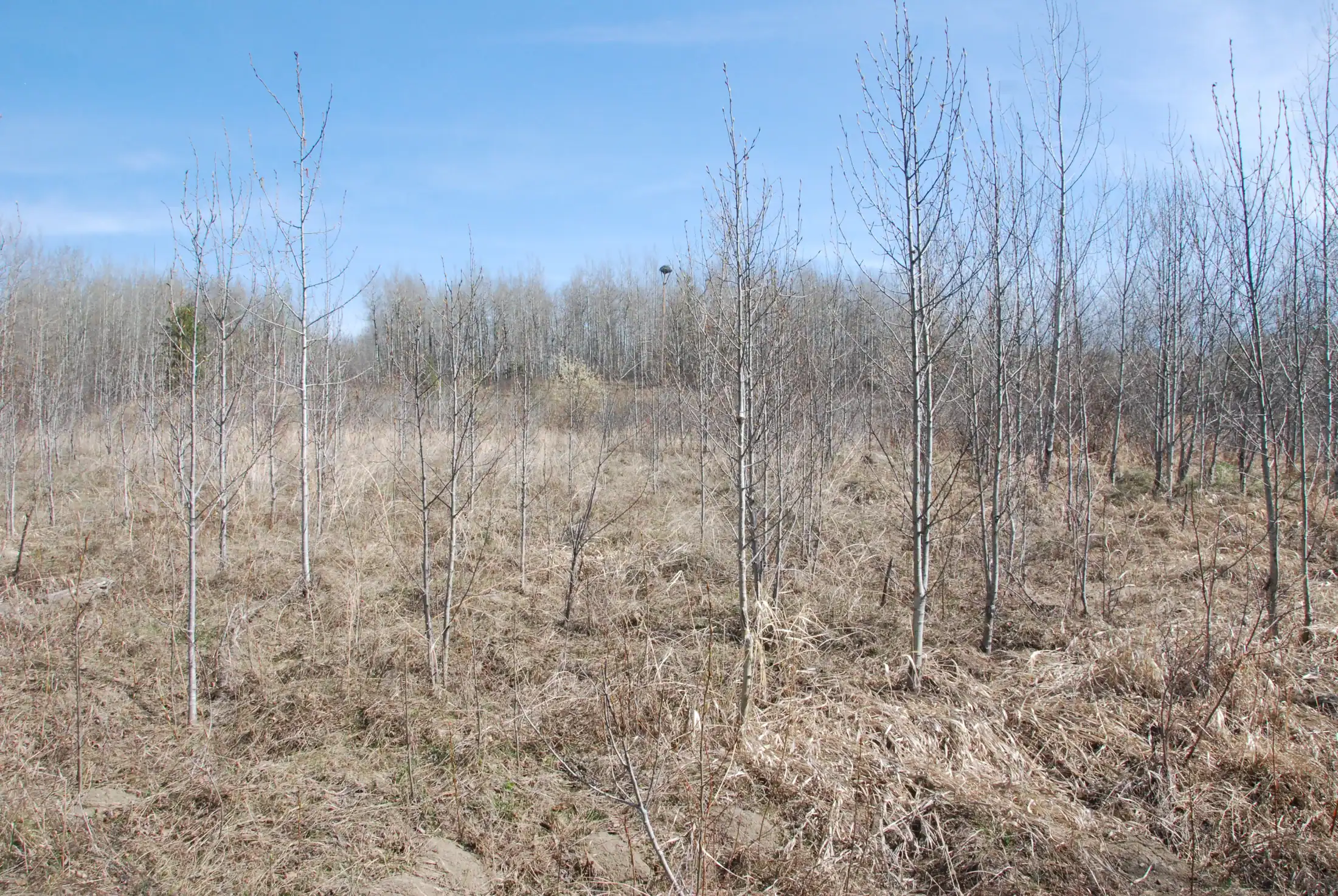
2018-05-06. The site continued to develop a woody plant community.

2020-02-28. Established stems remain visible across the site in winter conditions.
Establishment and Follow-Up
Growth was visible during the first season in 2010. In 2011, woody vegetation was expanding while sweet clover competed with planted stems. Photographs from 2013, 2015, 2018 and 2020 show continued development of woody cover.
The 2011 inspection highlights the importance of checking competition after planting and identifying maintenance needs. The later photographs show vegetation development, but do not confirm which recommended maintenance tasks were completed.
Related PES material
Planning restoration for a disturbed site?
PES assesses disturbed ground, plans restoration treatments and reviews plant establishment and maintenance needs.