
Soil Bioengineering Technique
Pocket Planting
Creating small prepared microsites in rough, disturbed, or compacted ground to give native plant seedlings and cuttings the foothold they need to survive and establish. A targeted technique that can improve establishment where broadcast seeding or open planting is limited by compaction, coarse substrate, or moisture loss.
Works in Rocky and Dry Sites
Small pockets excavated into rock joints or compacted ground allow establishment in otherwise hostile soils.
Targeted Species Placement
Each pocket matched to local moisture, aspect, and substrate conditions for maximum establishment success.
Minimal Site Disturbance
Only the planting pocket is disturbed, preserving existing substrate stability and nearby established vegetation.
What Is Pocket Planting?
Pocket planting is the deliberate preparation of small planting microsites: individual pockets of loosened, moisture-retaining soil within otherwise inhospitable ground. On mine waste rock, highway cut slopes, or compacted industrial surfaces, a plant placed in unprepared ground has little chance of surviving the first summer. A plant placed into a prepared pocket, where a shovel has been used to break compaction, concentrate available fines, and create a small depression that holds water, can have a better chance of establishing when the pocket restores contact with fines and moisture.
David Polster developed pocket planting as part of the broader rough and loose methodology for large disturbed sites. Where a machine has already created rough and loose ground, the mounds and hollows act as natural pockets. In areas where rough and loose is not possible, individual pocket planting by hand achieves a similar effect at the plant-by-plant scale.
The technique is particularly valuable on mine waste rock, where a thin layer of soil fines has been deposited but compaction prevents root penetration. A pocket breaks that compaction layer and concentrates the available fines around each plant.
At a Glance
- Site type
- Mine waste rock, highway cut slopes, compacted surfaces
- Tools
- Mattock, pick, digging bar, shovel
- Spacing
- 1–2 m between pockets for shrubs; 0.5 m for sedges and herbs
- Pocket size
- 30–40 cm wide, 20–30 cm deep
- Best species
- Native shrubs, sedges, cottonwood, willow transplants
- Combines with
- Rough and loose, live staking
Pocket planting in the field
Installation Process
Select species and source material
Choose native species suited to the site’s moisture regime, aspect, and elevation. On dry south-facing slopes: native shrubs such as snowberry (Symphoricarpos albus), mock orange (Philadelphus lewisii), or saskatoon (Amelanchier alnifolia). In moist areas: willow, cottonwood, or red-osier dogwood as dormant cuttings.
Mark pocket locations
Space pockets at 1–2 m intervals for large native shrubs, 0.5–0.8 m for smaller species. On slopes, stagger pockets in a triangular grid pattern so each plant can capture runoff from upslope without shading others. Mark locations with stakes before digging begins.
Dig and prepare each pocket
Use a mattock, pick, or digging bar to break compaction in a 30–40 cm wide, 20–30 cm deep pocket. On waste rock, work around large rocks and concentrate whatever fine material is present in the pocket base. Shape the pocket with a slight bowl to collect rainfall and reduce surface runoff from the plant zone.
Amend with available organics if present
If nearby native topsoil, duff, or woody debris is accessible, add a small amount (one shovel) to the pocket base before planting. This introduces soil organisms and improves moisture retention. Do not import non-native soils or commercial fertilizers, which can favour weedy species over native plants.
Plant and backfill
Place the seedling or cutting in the pocket, ensuring roots or the base of the cutting are in full contact with soil. Backfill with the loosened material from the pocket. Tamp firmly to eliminate air pockets. For willow and cottonwood cuttings, ensure at least 30 cm of cutting length is below the surface.
Add mulch and browse protection if needed
In deer-browsed areas, a small wire cage protects the plant through its first 2–3 seasons until it exceeds browse height. On very dry sites, a small rock mulch (2–3 rocks placed around the plant base) reduces soil moisture evaporation. Do not use plastic mulch mats, which can impede natural succession around plants.
When to Use Pocket Planting
Primary applications
Mine waste rock where a fine particle layer exists but compaction prevents root entry. Highway cut slopes and fill embankments where surface seeding has failed to establish. Rough and loose treated ground where additional target species are needed in specific locations. Sites where plant establishment is limited after the treatment filters are understood.
Why broadcast seeding fails here
On compacted or coarse substrates, broadcast seed germinates at the surface but roots cannot penetrate the compaction layer. Seedlings may fail during a first-summer drought when roots cannot access moisture. Pocket planting bypasses this filter by preparing a rooting zone before the plant is installed, matching the installation to how the site works.
Timing
Plant dormant willow or cottonwood cuttings in late winter. Plant container-grown native shrubs in early spring before leaf break, or in fall after summer stress has passed. Avoid planting in midsummer on dry exposed sites without irrigation.
Cost and scale
Pocket planting is a hand-labour technique well-suited to small to medium sites (0.5–20 ha). On large mine sites, it is most cost-effective when used to fill gaps in areas that were already treated with rough and loose machinery but where target species establishment was sparse after the first season.
Pocket Planting on the Seaton River: A Rock Bank Comes Alive
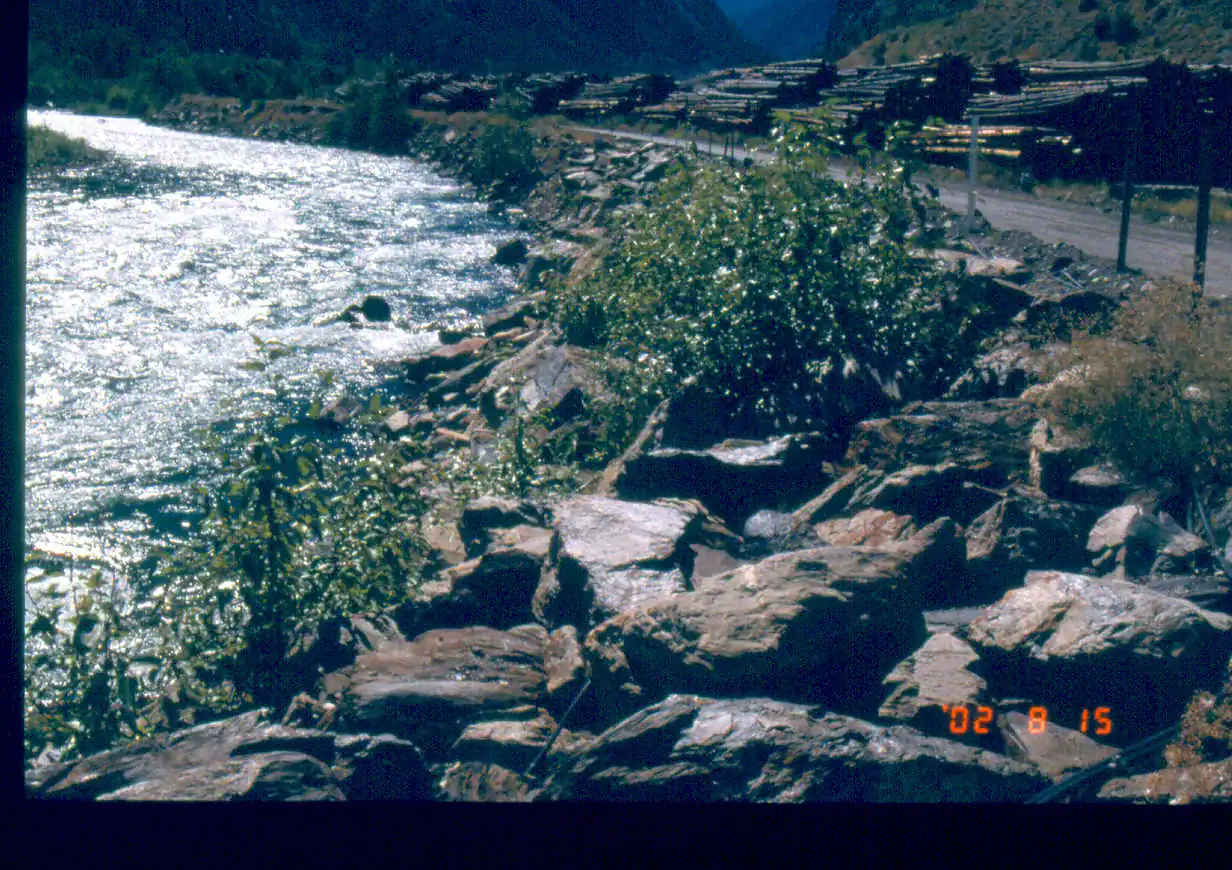
Pocket planting works with the way vegetation naturally colonizes coarse ground by tucking rooted stock and cuttings into pockets of soil between the rocks. On the Seaton River, a bare riprap bank was pocket planted and then followed for more than a decade as it filled in to a continuous, self-sustaining woody cover.

The origin of pocket planting: trees and shrubs establish naturally in pockets of finer material among coarse talus.

Pocket planting detail: rooted stock and cuttings are tucked into pockets of soil between the rocks.
Seaton River, August 2002: pocket plantings freshly set into the coarse riprap bank.
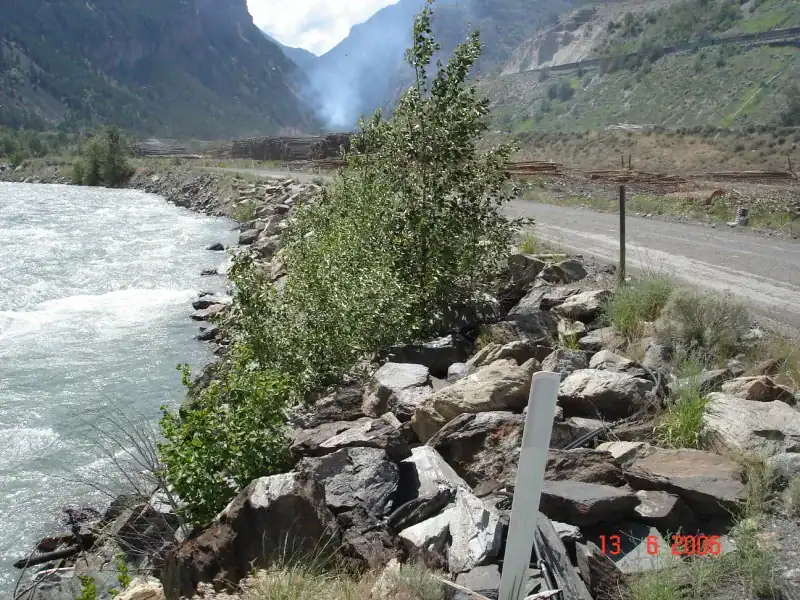
Seaton River, June 2006: the plantings have established and begun to spread across the bank.

Seaton River, May 2013: continuous woody cover on the rock bank.

Seaton River, March 2014: mature woody cover remains visible in early spring.
Is Pocket Planting the Missing Step for Your Site?
On sites where broadcast seeding has repeatedly underperformed, pocket planting may address an establishment filter without expanding the treatment footprint. A site assessment identifies which filters are limiting recovery and whether microsite preparation is the right intervention.
Request a Site Assessment →Seaton River pocket planting: a dated bank record
David Polster's Seaton River field record follows the same rock bank from fresh pocket planting through establishment and later woody cover. Use the control to move through the dated stages.
August 2002 · freshly plantedPocket plantings freshly set into the coarse riprap bank.
This is a dated field sequence, not a registered fixed-camera comparison. Captions describe the visible condition at each stage.
Sources and further reading
These references provide wider technical context. Method selection and design remain site-specific.
Working With Rock, Talus, or Thin Soil?
Tell us where soil pockets occur, how moisture moves through the site, and what locally adapted plant material is available. PES can help determine whether pocket planting is practical for the site.
Request a Site Assessment