
Bowker Creek Bioengineering Sequence
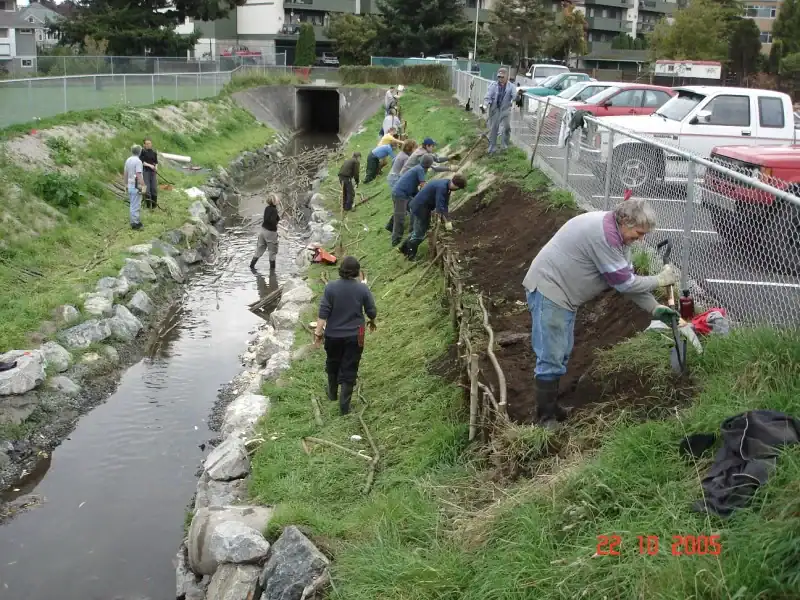
Bowker Creek at McRae from 2005 to 2007, showing how wattle fences supported organic soils, handled flow fluctuations, and transitioned into a functioning riparian edge.
Wattle Fences on Urban Creek
Wattle installations at McRae Avenue stabilized the creek bank during the establishment window before live material took over.
Handles Flow Fluctuations
The bioengineering sequence was designed to withstand both low-flow and storm conditions through establishment.
2005–2007 Documented Sequence
Multi-year photographic record shows how the installation progressed from structural to fully vegetated riparian edge.
At Bowker Creek, photographs from spring 2005 through 2007 show the treated streambank and subsequent vegetation growth.
Why This Sequence Matters
Many slope and streambank photos are persuasive only in the first week after construction. Bowker Creek is better evidence than that. It shows:
a creek corridor with flow fluctuations
wattle fences supporting organic soils along the edge
repeated dated follow-up images after establishment
a visible shift from fresh construction toward a vegetated stream margin
For municipal and public-works teams, the sequence provides a streambank example in a constrained urban setting.
What the Wattle Fences Were Doing
In this sequence, the wattle structures are not decorative. They are doing immediate physical work while the stream edge re-establishes:
retaining soft bank material
reducing localized slumping and unraveling
creating a stepped edge that can hold moisture and organic matter
giving willow and other riparian species a chance to root into place
The wattle structures supported the bank during establishment while planted woody material developed.
What the Dated Follow-Up Shows
The public slide dates matter:
April 13, 2005 shows the treated corridor early in the establishment window
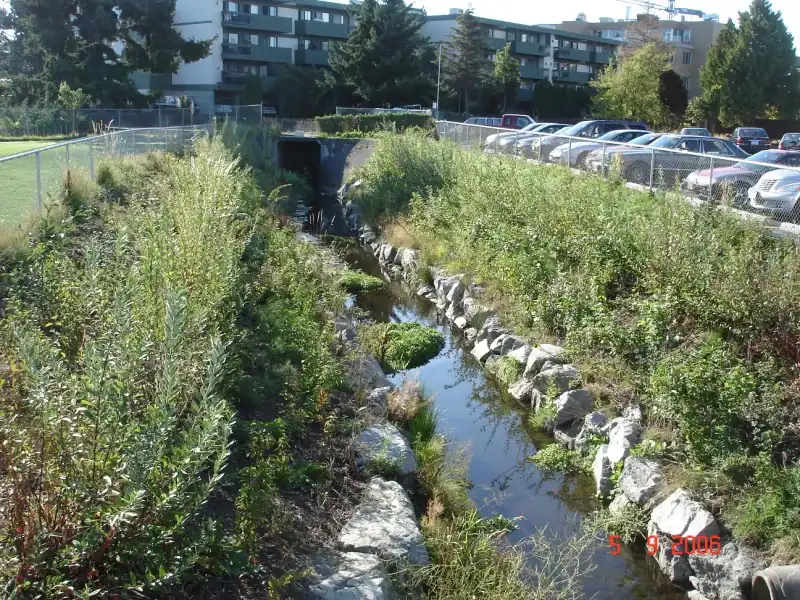
September 8, 2006 shows a stronger vegetated condition after another growing season
March 15, 2007 and May 4, 2007 show continued persistence and woody growth
Later views show more vegetation along the treated edge. Compare the dated photographs to follow that change.
How This Fits the Published PES Logic
The aim was to re-establish a vegetated riparian margin that could:
hold bank material with roots rather than only dead structure
contribute shade and organic matter to the channel
recover ecological function while also solving erosion problems
That same logic appears in the Soil Bioengineering for Riparian Restoration resource and in the broader Highway Bioengineering Examples and Lessons page.
Related Methods and Resources
Takeaway
PES uses examples like Bowker Creek to discuss how living treatments fit a site, how they are installed and what needs monitoring as vegetation establishes.
Bowker Creek: a dated field progression
Move through the Bowker Creek record from wattle construction to later woody cover.
These photographs come from the same documented project record, but the viewpoints vary and the sequence is not a registered fixed-camera comparison. The dates and labels follow the PES archive and David Polster's Bowker Creek source deck.
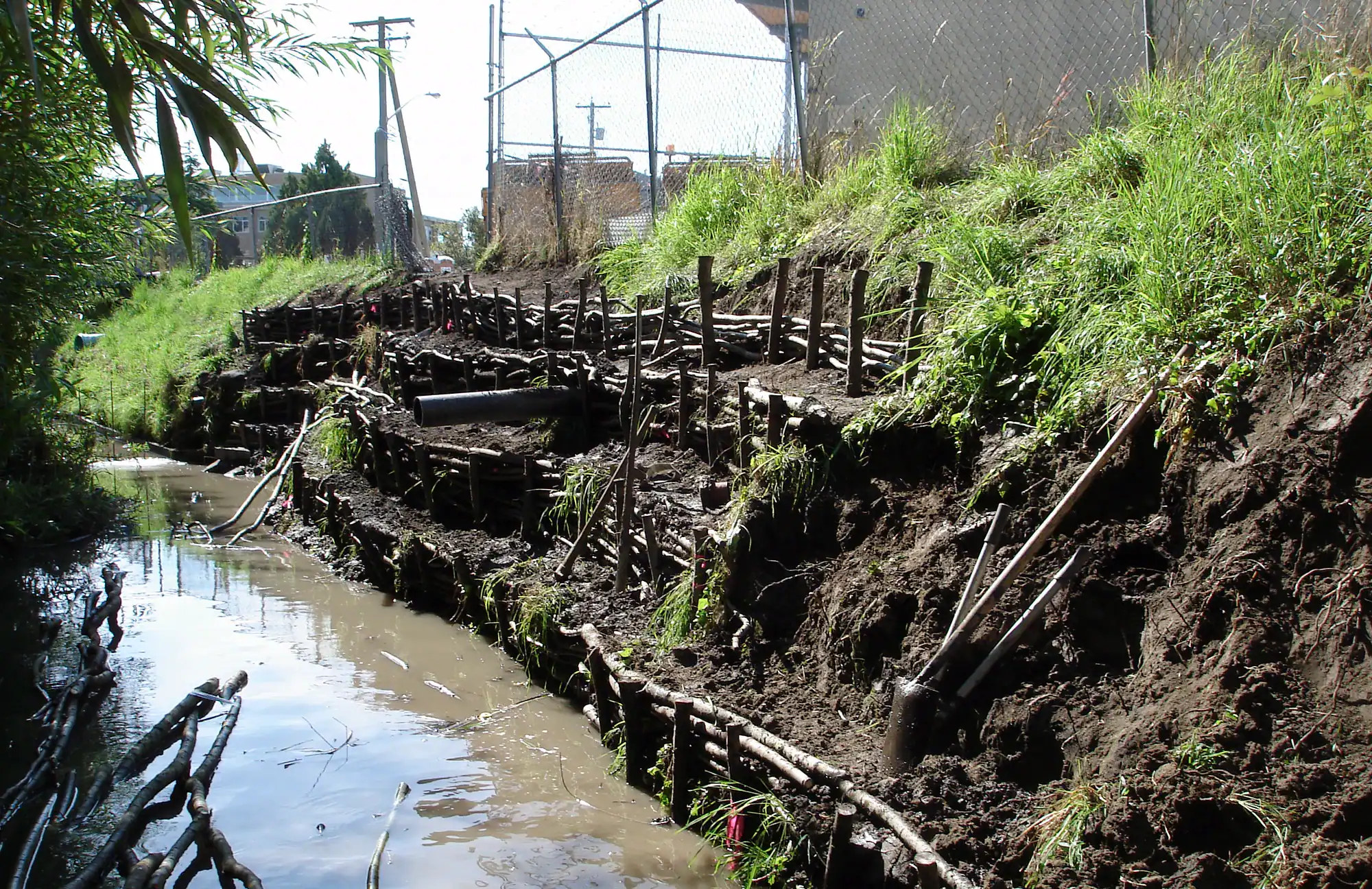 2005
Horizontal live-branch structures installed along the Bowker Creek channel edge
Bowker Creek Dated Field Sequence
Follow the dated photographs from the installed wattle structures to later vegetation along the bank.
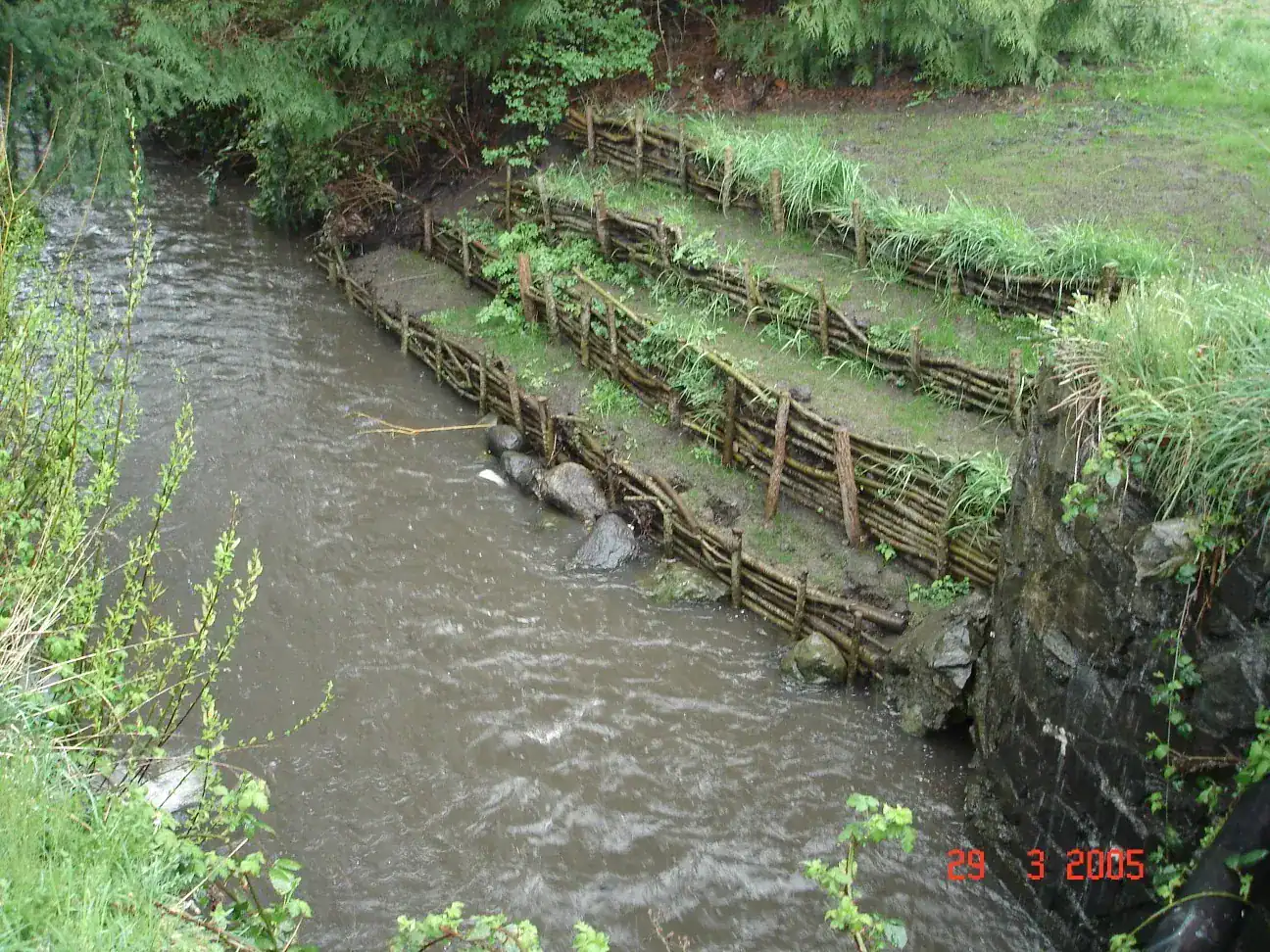
March 2005: wattle fence terraces supporting organic soils along the stream edge early in the establishment window.
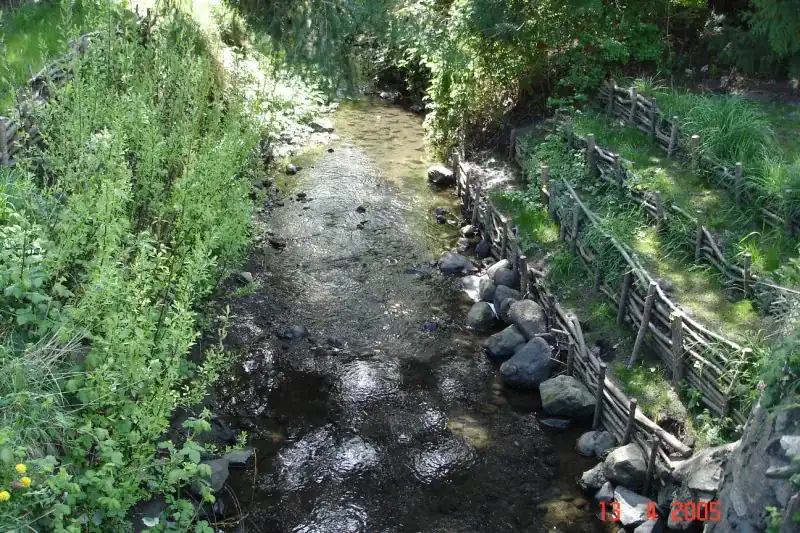
Early recovery view showing vegetation and edge definition building into the treated corridor.
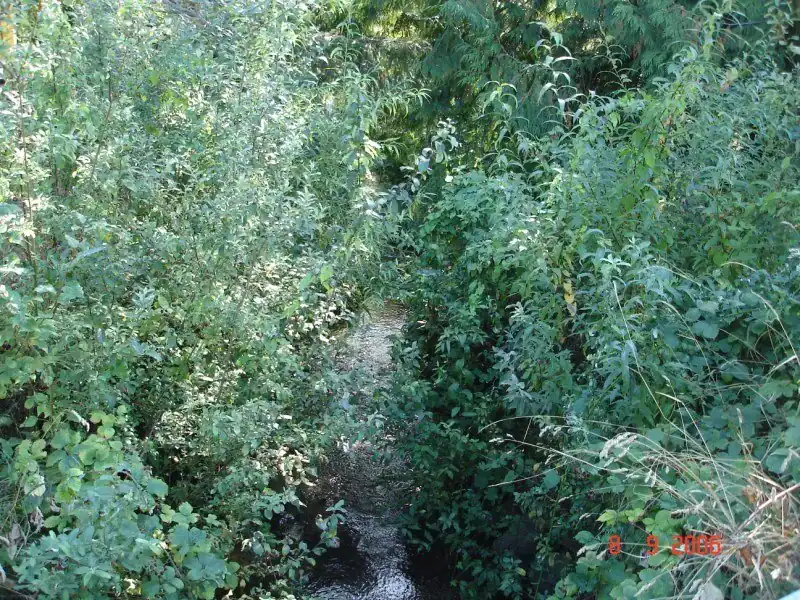
September 2006: another growing season later, the creek edge is carrying more woody cover and structural continuity.
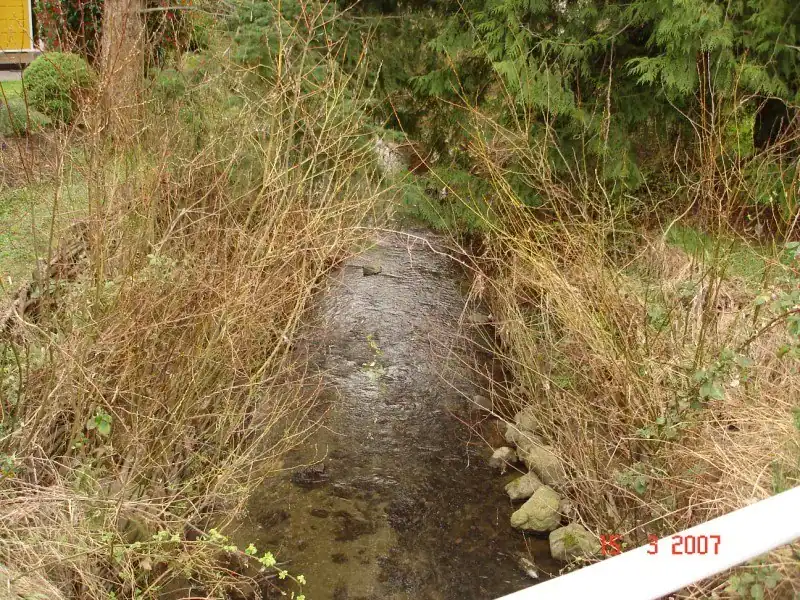
March 2007: the treatment remains legible and intact through another wet-season cycle.
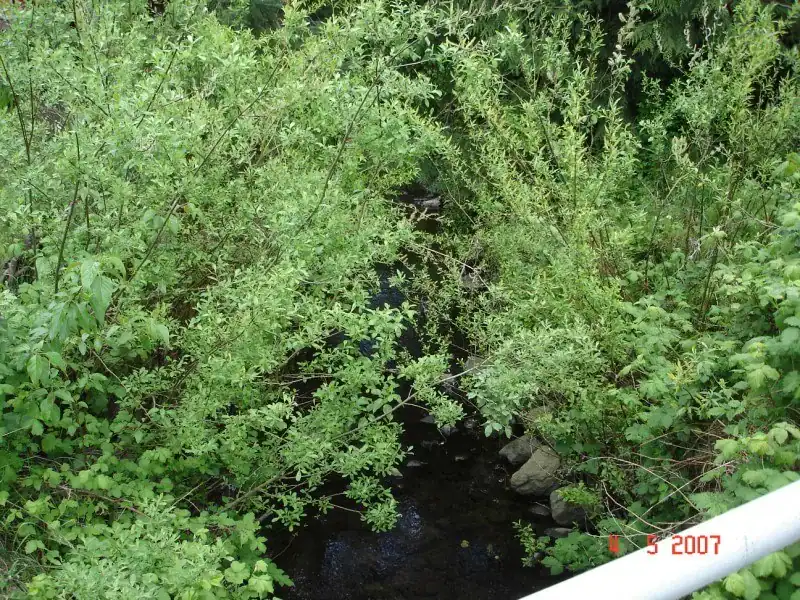
May 2007: dense willow growth makes it clear the living system is taking over more of the stabilizing work.
Bowker Creek: Fully Established, May 2007
The May 2007 view shows dense vegetation along the treated channel banks, with much of the original structure hidden by growth.
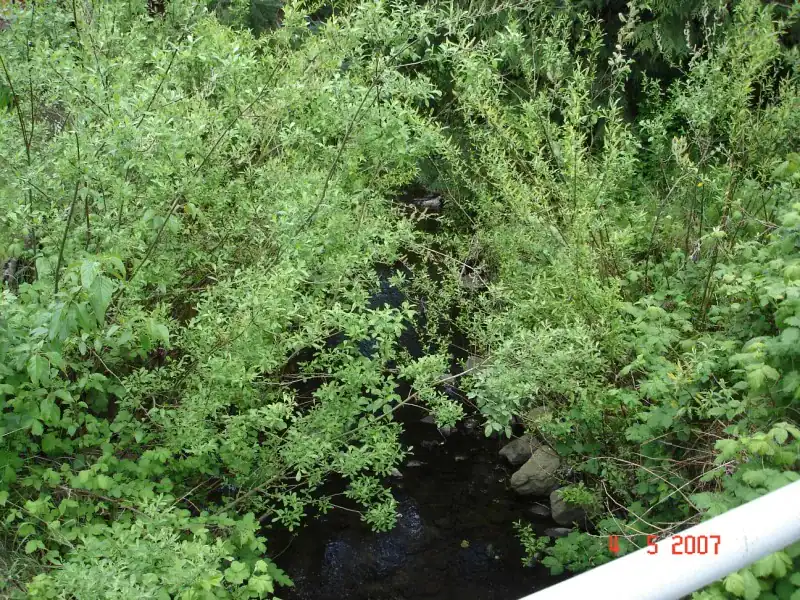
Bowker Creek at McRae, May 4, 2007, dense native vegetation fully established from wattle fence bioengineering installed in 2004.
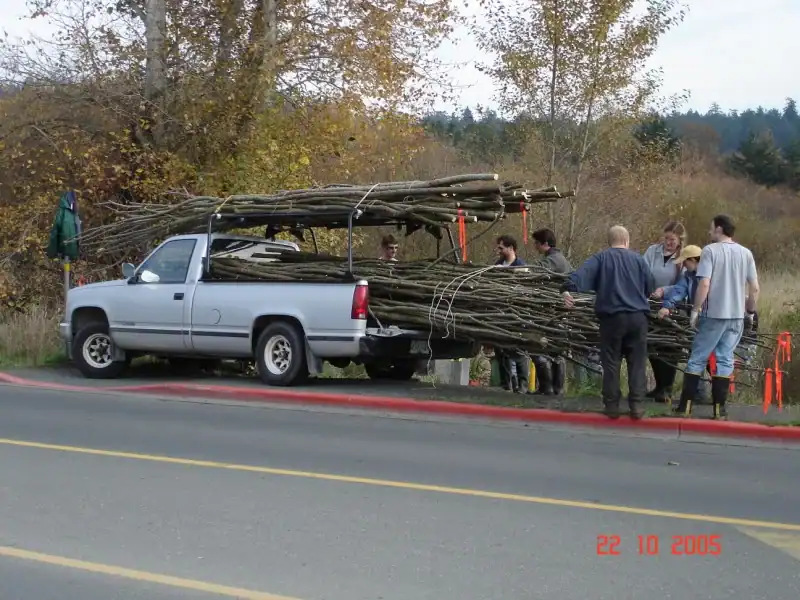
Community Involvement, Friends of Bowker Creek
The Friends of Bowker Creek organized community involvement in the restoration of Bowker Creek, a small urban stream in Victoria that had been channelized through much of its historic course. Soil bioengineering methods were chosen for bank stabilization because they could be implemented by volunteers with hand tools, a critical advantage in an urban restoration context where heavy equipment access is limited and community engagement is a project goal.
CRD Project Works
The CRD Bowker Creek Project brought institutional support to the restoration effort, enabling a more comprehensive program of bioengineered bank stabilization. Live stakes, fascines, and brush layering were used to replace eroded bank sections. The treatments provided immediate structural protection against scour while native riparian species re-established from the installed live material.
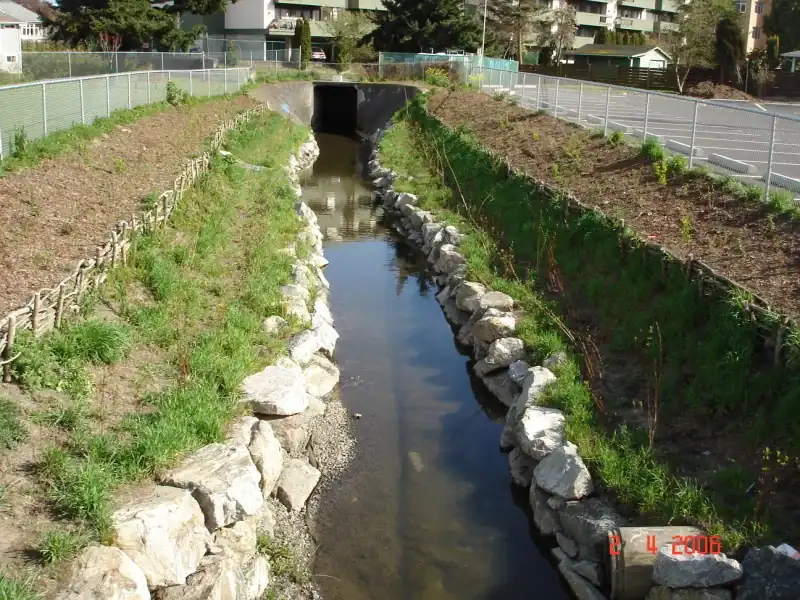
Spring 2006, Treatment Succeeds
The photograph records vegetation along the treated Bowker Creek bank. Together with the later dated views, it extends the visual record of establishment.
Fall 2006, First Season Complete
The fall 2006 photograph shows woody vegetation along the treated bank. The dated sequence follows its visible establishment.
Need a Site-Specific Recommendation?
We can assess the conditions on the ground and match the right living system to your slope, streambank, shoreline, or disturbed site.