Use of Natural Successional Processes to Inform Vegetation Management – A Yukon Example
David Polster · Yukon vegetation-management example
Let the System Lead
Designing restoration to follow natural successional trajectories reduces intervention costs and improves long-term species diversity.
Yukon Field Evidence
Northern BC and Yukon examples document succession patterns on mine and road disturbances over multi-year monitoring periods.
Identify the Trajectory
Knowing which succession stage a site occupies determines what intervention, if any, is needed and when.
Reader Edition and Source PDF
The edited presentation summary is available online, with the complete slide/PDF source linked below.
Citation: Polster, D. Use of Natural Successional Processes to Inform Vegetation Management – A Yukon Example. Polster Environmental Services Ltd. [Conference Presentation]
David Polster
Polster Environmental Services Ltd.
This presentation examines how understanding natural plant succession can guide cost-effective vegetation management, using Yukon roadsides as a primary case study.
The Problem: The Early Successional Treadmill
Cleared roadsides pass through an initial successional stage, then pioneering species establish and provide abundant moose browse. This blocks sightlines and hides signs (and moose). The cleared roadside grows to a dense thicket that provides good cover for moose.
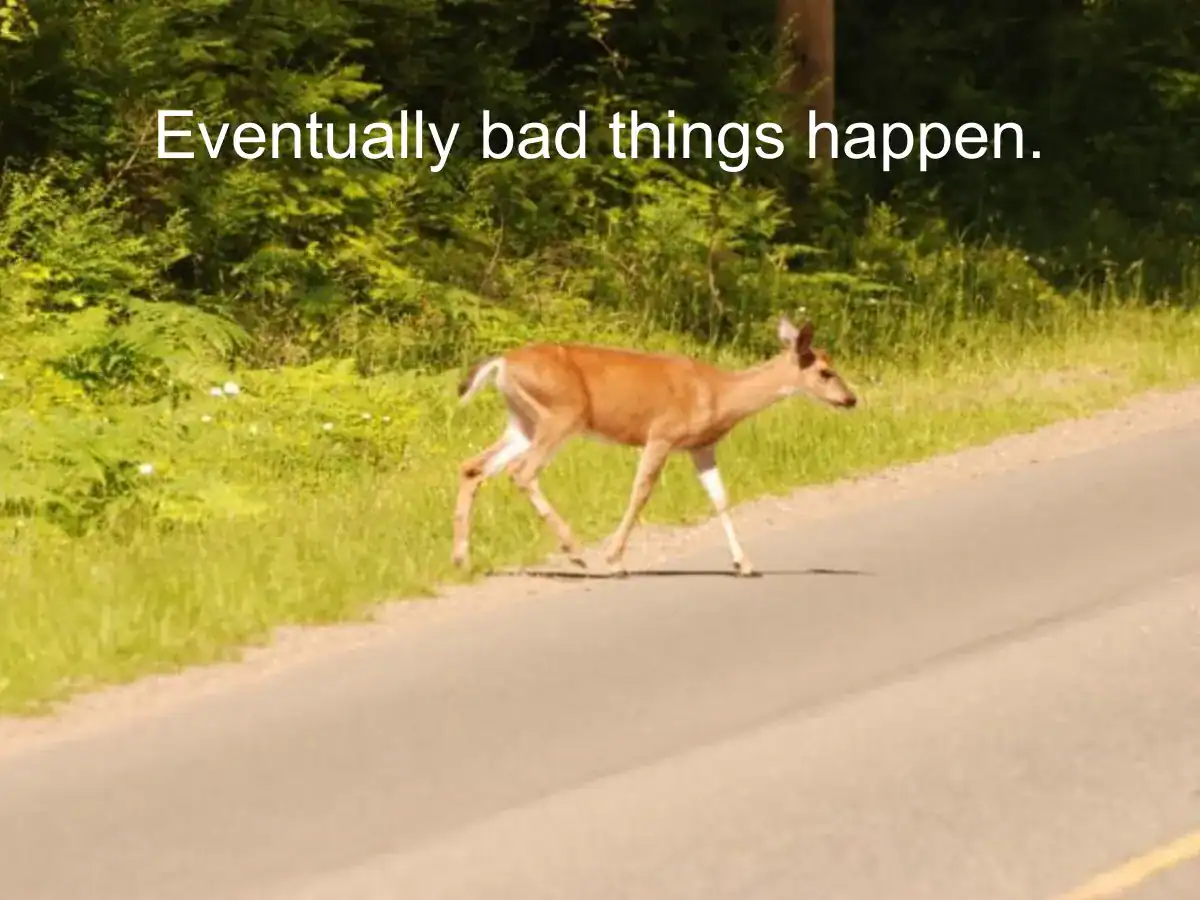
Wildlife collisions are a major problem, but current vegetation management practices actually worsen the situation. Fresh grass in the spring brings deer to the roadside, creating a hazard for wildlife and motorists. Planting tasty forage crops or maintaining early successional moose food along highways attracts animals with fatal results, mostly for the animals but sometimes humans.
The Conventional Response and Its Failure
Sending in brush cutters brings management back to the beginning, with all the moose food growing back. Repeated clearing in 2005, including costly grubbing of the right-of-way, was followed by these observations: by 2006 the pioneering vegetation was back; by August 4, 2014 it had grown to the point where it was again obstructing sightlines.
Rapidly growing aspen, rapidly growing balsam poplar, and a variety of rapidly growing pioneers are what establish after clearing. Cutting these pioneering woody species causes re-growth through suckering and returns management to the same early stage.
The Solution: Work with Succession
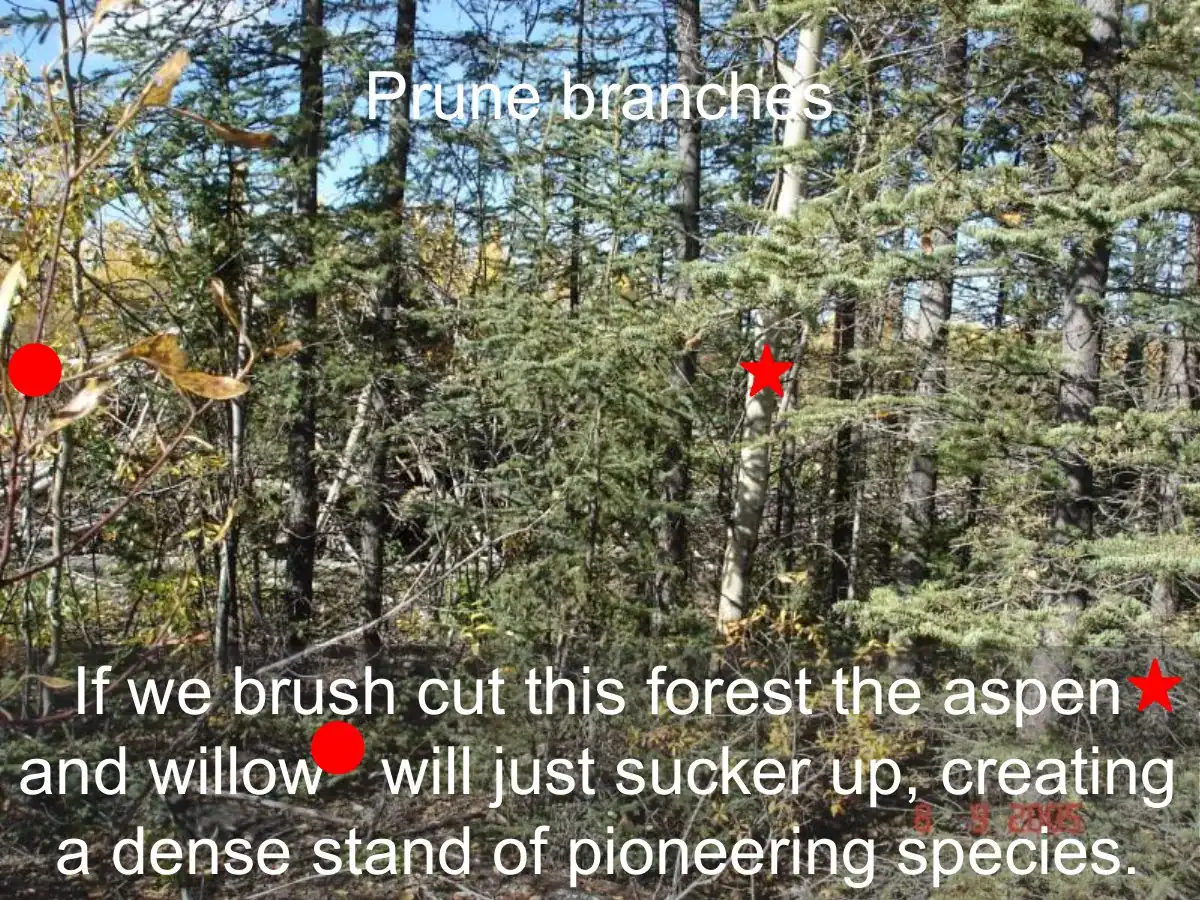
Look to the forest to get off this early successional treadmill. An open aspen forest provides limited cover and forage for moose, making it a less attractive stopping point near roads. The key is selective removal of understory stems to speed the opening up of the forest, combined with selective removal of understory trees and pruning of spruce boughs.
If brush cutters are applied to this forest, the aspen and willow will just sucker up, creating a dense stand of pioneering species. The correct approach is to prune branches. With branches pruned, there is no need to touch the site for decades. Understanding vegetation successional patterns allows cost-effective management.
Whitehorse Case Studies
At a forestry intersection in Whitehorse, selective pruning during clearing opened blocked sightlines. Following trimming in 2007, sightlines remained open as of August 17, 2014, seven years later with no further maintenance recorded. A second Whitehorse road showed the same result: sightlines opened at 2:30 PM on the day of treatment, remaining open August 17, 2014.
Nanaimo, B.C. Example
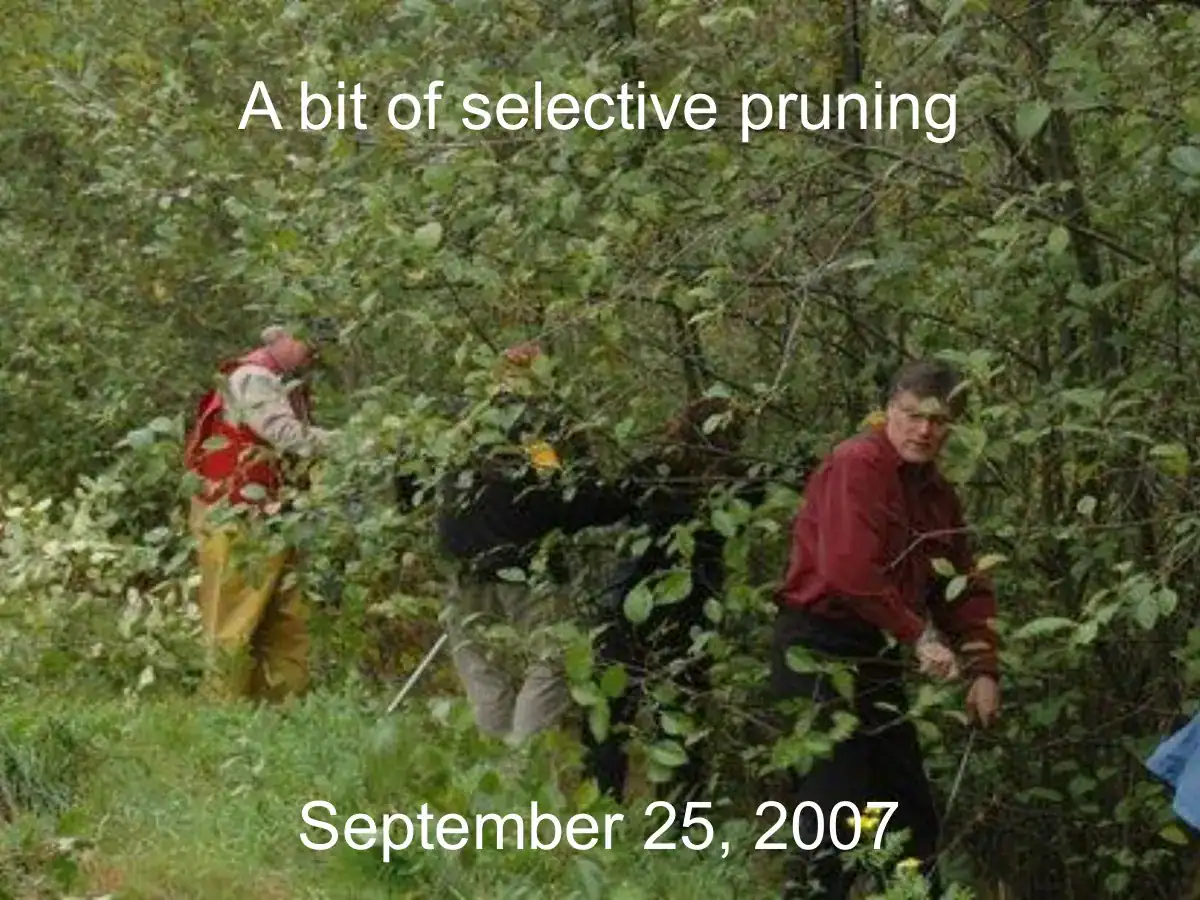
Dense early seral vegetation blocking sightlines on September 25, 2007 in Nanaimo, B.C. was treated with a bit of selective pruning. The opened sightlines were documented on the same day (September 25, 2007) and remained open through May 21 2008, May 15 2009, June 18 2011, and May 10 2013, six years later with no maintenance recorded.
Key Lesson
Understanding vegetation successional patterns allows cost-effective management. Rather than repeatedly clearing the site, selective pruning can advance it toward a later successional stage with less moose browse. The dated examples above document how long sightlines remained open after treatment.
From the Presentation
Selected slides from David Polster’s talk on using natural successional processes to guide vegetation management along Yukon highways.