Clam Bay, Thetis Island
Thetis Island, Gulf Islands · 2025-2026 shoreline restoration
Project Overview
Thetis Island, in the southern Gulf Islands of British Columbia, is home to shoreline properties with erosion and slope stability challenges typical of dry coastal bluffs and wave-affected banks. At this Clam Bay site, Polster Environmental moved from assessment and design into a completed shoreline restoration that addressed both the wave-cut lower bank and the dry slope above.
Project documentation identified a combination of constraints common on Gulf Islands waterfront properties:
- Dense basal glacial till in the bank, described as silty sandy clay with gravel
- A 32-metre shoreline treatment length with roughly 6 metres of slope height
- Wave undercutting at the toe, producing a near-vertical erosional scarp about 1.2 to 2.0 metres high
- Invasive species pressure, especially Himalayan blackberry and Scotch broom, suppressing the deep-rooting native vegetation needed for long-term stability
Completed Restoration Work
Construction was completed in May 2026. All work remained above the High Water Mark and focused on invasive removal plus biologically driven slope repair rather than excavation-heavy shoreline armouring.
The completed work included:
- Manual invasive removal across the treatment area, with biomass bagged and removed from the site
- Lower-scarp bioengineering using dormant live willow stakes installed between retained native shrubs
- Pilot holes created with augers, a hammer drill, and steel planting bars so the cuttings could reach dependable soil moisture in the hard glacial till
- Upper-slope revegetation with nursery stock and live staking near the crest
- Mulch application to mimic forest-floor conditions and hold moisture
- Heavy-duty deer fencing to protect the planting zone
- Drip irrigation coordinated with the homeowner to improve establishment through dry periods
Across approximately 192 square metres, the installation combined 467 nursery plants and plugs with live willow stakes selected for the lower, moisture-accessible portion of the bank.
Planting Strategy
The installed plant palette reflects the actual dry-coastal restoration problem at Clam Bay. The lower scarp relied on live willow staking where moisture could be reached in the bank. The upper slope was planted more broadly to stabilize surficial soils, improve habitat, and rebuild native shrub structure.
The 2026 final report lists the following nursery-stock installation:
- Oceanspray (Holodiscus discolor) - 15
- Common snowberry (Symphoricarpos albus) - 30
- Nootka rose (Rosa nutkana) - 23
- Indian plum (Oemleria cerasiformis) - 30
- Red flowering currant (Ribes sanguineum) - 21
- Saskatoon serviceberry (Amelanchier alnifolia) - 10
- Evergreen huckleberry (Vaccinium ovatum) - 5
- Sword fern (Polystichum munitum) - 8
- Vancouver Jade kinnikinnick - 50
- Coastal strawberry (Fragaria chiloensis) - 235
- Dune grass (Leymus mollis) - 40 plugs
Soil Bioengineering Approach
At Clam Bay, dry exposure limited where willow-based treatments could be used. The design varied planting and treatment with moisture conditions across the bank.
For Clam Bay, the installed approach relied on:
Moisture-targeted live staking. Willows were installed where pilot holes could carry the cuttings to moisture within the glacial till bank.
Upper-slope native planting. The drier upper portions were handled with a dense shrub and ground-layer matrix suited to those conditions, rather than applying a willow-heavy treatment across the entire bank.
Protection and aftercare. Mulch, deer exclusion, and irrigation were all treated as part of the restoration system, not as optional extras.
The result is a useful example of zone-based design: technique and species selection changed with moisture, soil resistance, exposure, and maintenance access.
Green Shores Consideration
Like the Pender Island project, Clam Bay fits the broader Green Shores direction because the work favors living structure, native vegetation, and a functioning shoreline edge over hard armouring. Retained trees, native understory planting, and restraint at the toe all support that framework.
Request a Site Assessment
If you own a Gulf Islands or BC coast waterfront property with a wave-cut bank, invasive species, failing ground cover, or a shoreline that has been over-hardened, Polster Environmental can assess the site and develop a restoration plan calibrated to the actual moisture regime, slope materials, and ecological context.
Polster Environmental Services, shoreline restoration and soil bioengineering across British Columbia.
32 m Shoreline
The treatment followed approximately 32 linear metres of wave-affected shoreline bank.
192 m² Treated
Lower live-stake and upper planting zones covered approximately 192 square metres above the High Water Mark.
467 Plants & Plugs
The installed palette included 467 nursery plants and plugs, plus live willow stakes in the lower scarp.
Clam Bay: site condition to completed restoration
Move through the project record from the April 2025 shoreline condition to the completed May 2026 restoration.
These photographs document the same project, but the viewpoints vary and the sequence is not a registered fixed-camera comparison. The before frame is the public Clam Bay site image; completion frames show the installed restoration.
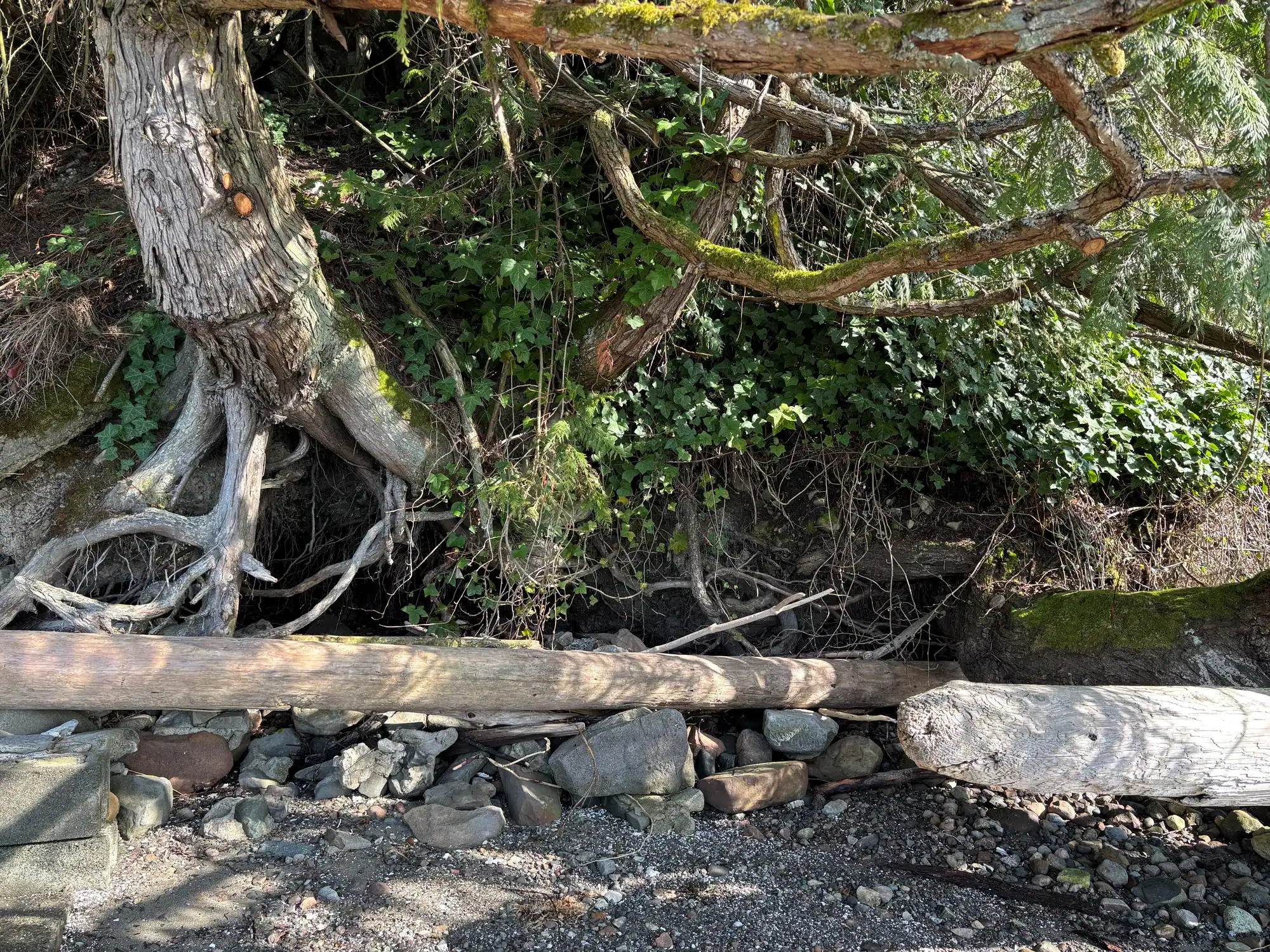 Before construction · April 2025
Clam Bay shoreline before restoration, April 2025, showing exposed roots and shoreline logs
Completed Installation: May 2026
The completed installation shows how live stakes, nursery stock, mulch, deer protection, and drip irrigation were integrated across a dry Gulf Islands shoreline bank.
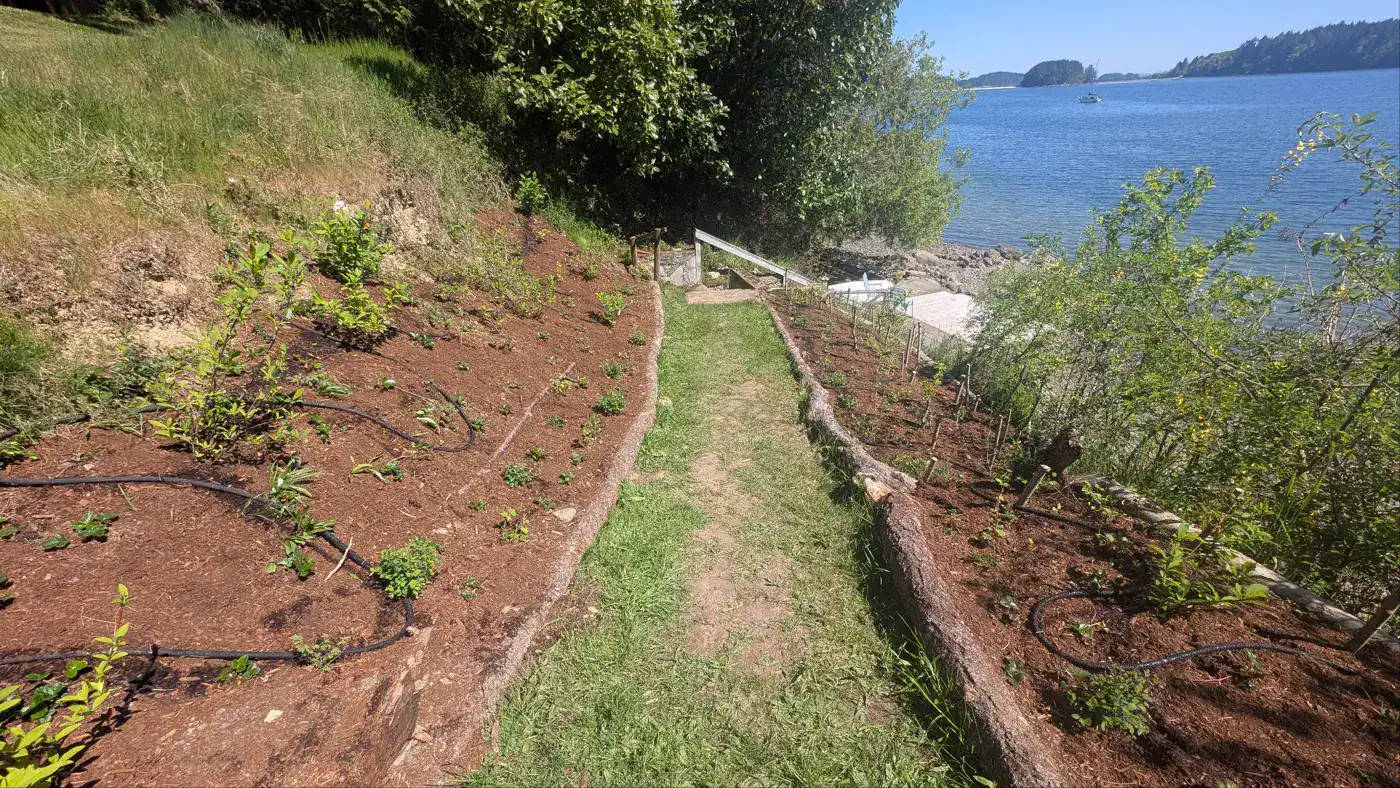
Completed upper and lower planting zones with retained vegetation, mulch, and drip irrigation.
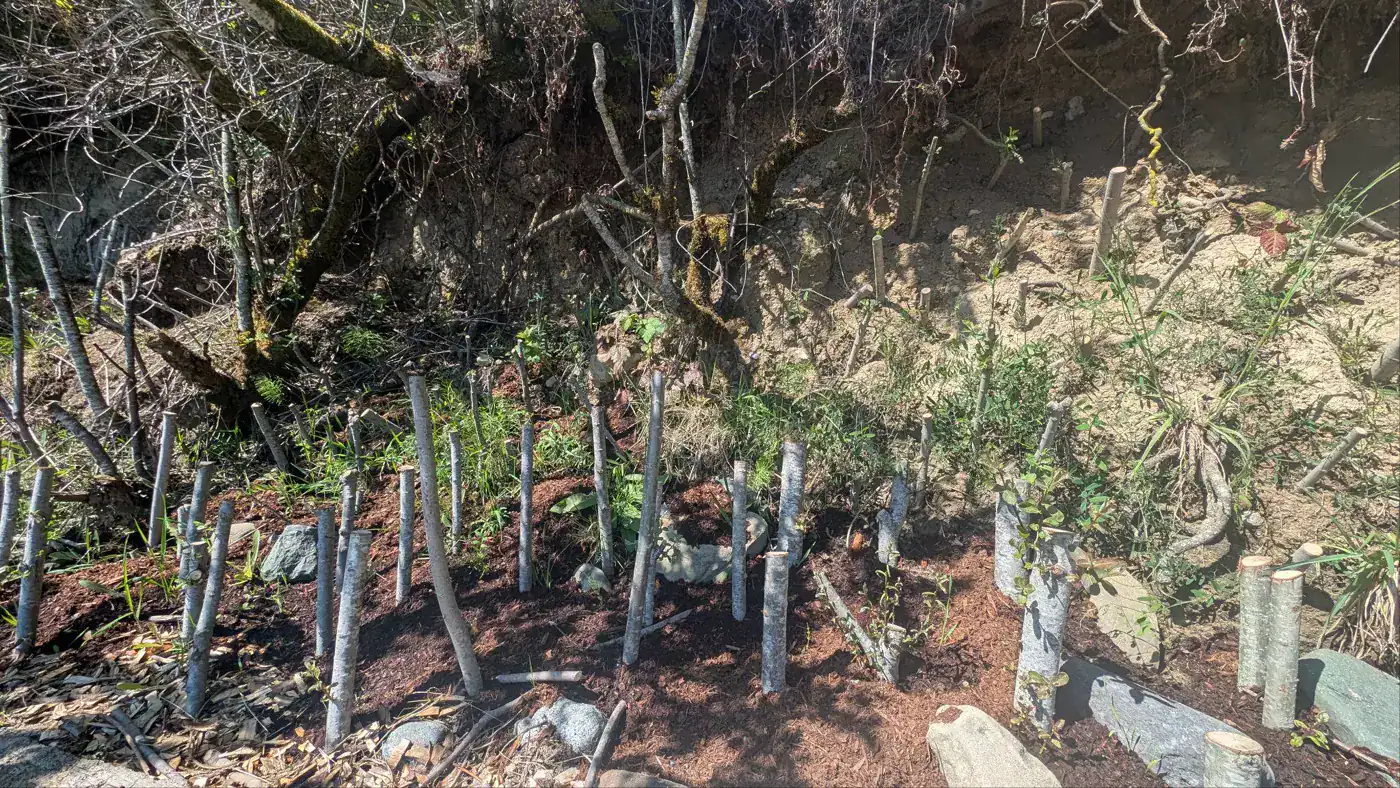
Live willow stakes were installed into pilot holes deep enough to reach moisture in the hard glacial till.
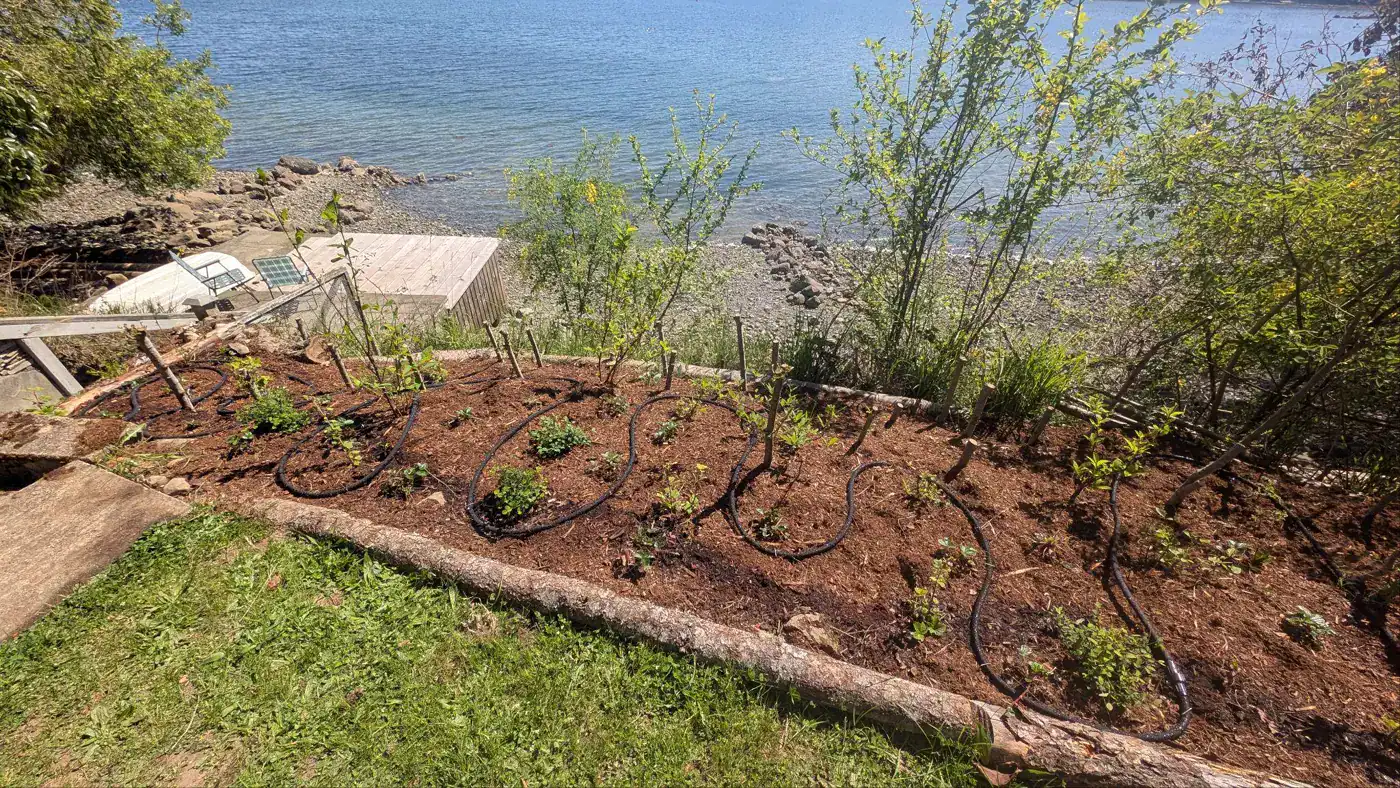
The shoreline-facing zone combines living structure, protected soil, and establishment irrigation.
Facing a Similar Challenge?
We can evaluate tidal exposure, eroding bank conditions, and access constraints to develop a living shoreline treatment.