
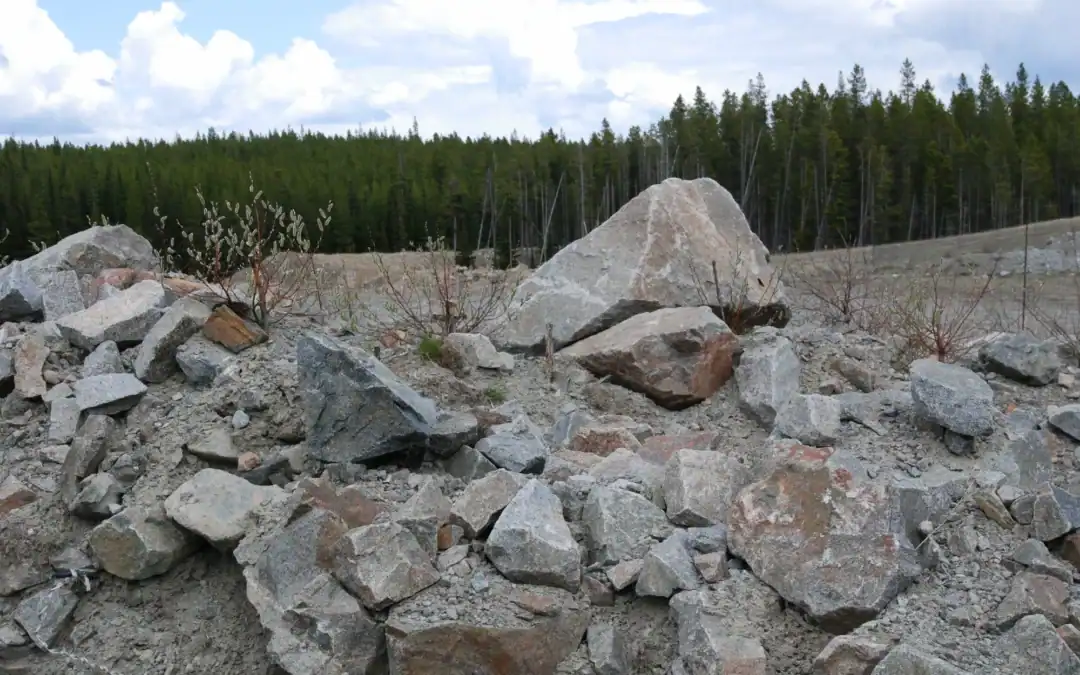
The PES archive contains a dated Brenda Mine photographic record from 2012 to 2016. It documents the treated area's change from compacted waste rock and grass-legume cover to established woody vegetation. This field note separates what the photographs show from the broader principles discussed in David Polster's papers.
Starting condition and diagnosis
The archive describes four overlapping filters: dense seeded cover that limited native recruitment, smooth compacted surfaces, little habitat structure, and browsing pressure on establishing woody plants. Treating only one filter would have left the others in place.
Treatment recorded at Brenda Mine
The field record combines rough and loose surface preparation with alder live stakes, retained woody debris, temporary fencing, and nest boxes. The excavator-created mounds and hollows provided varied microsites instead of one smooth surface. The other measures supported woody establishment and added structure while the site developed.
Four growing seasons in the archive
- June 5, 2012: cuttings installed on the newly roughened surface.
- August 9, 2012: first-season growth visible; fencing remained in place.
- May 13, 2013: woody growth established in a patchy pattern across different microsites.
- May 18, 2015: substantial shrub cover visible across treated areas.
- September 20, 2016: dense woody cover documented four growing seasons after installation.
What this case can support
The sequence supports a limited, useful conclusion: on this treated area, rough surface preparation and the accompanying measures were followed by visible woody establishment over four growing seasons. It is a project record, not a promise that every mine site will respond on the same schedule. Site materials, moisture, species selection, browsing, and follow-up care still matter.
Sources and related reading
- Brenda Mine project record and dated image sequence
- Rough and Loose Biodiversity Notes from Brenda Mine
- David F. Polster, Making Sites Rough and Loose for Enhancing Natural Processes (2013)
Explore the project archive, or contact PES for a site-specific assessment.