
Pender Island Shoreline Restoration
North Pender Island, BC · 2024–2025 · Green Shores
The project at a glance
The problem: An eroding residential shoreline slope and threatened beach access.
PES’s role: Shoreline restoration and soil bioengineering within a project supported by geotechnical and marine-biologist input.
Work completed: PES and Big Dig-Em Excavating completed the shoreline stabilization work between May 22 and June 13, 2025, including regrading, anchored beach logs, willow-wattle terraces, and native planting.
Documented result: Green Shores for Homes Gold following July 2025 verification. August follow-up photographs recorded established willows and shrubs and dune grass doing well.

Project Overview
This North Pender Island property presents a classic residential shoreline erosion problem: a steep slope descending from a contemporary house to a gravel beach, with ongoing instability threatening the stairway access, the lower landscaped areas, and the long-term integrity of the shoreline.
Polster Environmental was engaged to provide the shoreline restoration and bioengineering component of a comprehensive project that also included a geotechnical assessment, a marine biologist review, and coordination with regulatory approvals under the BC Development Permit and Foreshore Licence framework.
The project used the Green Shores for Homes framework, which provides a science-based approach to residential shoreline stewardship on BC's coast. Green Shores is developed by the Stewardship Centre for BC and recognizes shoreline restoration work that improves ecological function while providing appropriate shoreline protection.
The Challenge
The shoreline had been progressively failing. Key problems at the time of the initial assessment:
Slope instability: The geotechnical assessment recommended cutting back the slope crest approximately 1.5–3 m horizontally and regrading to a stable angle (approximately 34 degrees) before any bioengineering treatment. The in-situ slope was over-steepened, a precondition that no surface revegetation alone could address.
Stairway undermining: Photographs from the pre-project condition show active erosion cutting beneath and beside the stairway access to the beach, with exposed soil on both sides of the steel stair structure.
Riprap and armoring removal: The previous shoreline hardening, a common but ecologically problematic approach on Pender Island properties, was disrupting natural sediment dynamics and preventing the establishment of natural beach processes.
Vegetation loss: The slope between the house and the beach had lost much of its native vegetation, leaving exposed mineral soil susceptible to surface erosion, runoff, and ongoing instability.
Approach
Swell Environmental's completion report dated 28 August 2025 records construction from 22 May to 13 June 2025. The installed work combined slope regrading, anchored beach logs, willow-wattle terraces and native planting. The following sections describe that work; the report distinguishes installed quantities from the earlier proposal.
Phase 1: Slope Regrading
The completion report records a slope-crest cutback of approximately 3 metres and regrading to approximately 34 degrees, following the project's geotechnical recommendation. These dimensions describe this site, not a standard design for other shorelines.
This was a precondition for the bioengineering treatment: there is no value in live staking a slope that will continue to fail by mass movement. The geotechnical work creates the stable surface that the bioengineering then revegetates.
Phase 2: Beach Log Placement
Consistent with Green Shores methodology, large beach logs were placed along the shoreline to:
- Provide passive shoreline protection against wave uprush
- Create habitat structure on the beach
- Begin the re-establishment of natural large woody debris dynamics at the shoreline interface
The initial site photographs show large driftwood logs already present on the beach (May 2024), indicating favorable conditions for natural log accumulation that the restoration plan builds upon.
Phase 3: Willow Wattle Fencing and Native Planting
Following slope regrading, the exposed slope was treated with:
- Live stakes of native willow, used in willow-wattle terraces across the regraded slope. Horizontal cuttings are laid behind the vertical posts, then backfilled and lightly tamped down
- Native plant installation: the beach-adjacent vegetation zone was replanted with species appropriate to the marine riparian context
- Invasive species removal: any invasive plants competing with the restoration plantings were addressed
A marine biologist was engaged as part of the project team to advise on intertidal habitat restoration and the foreshore component of the Development Permit application.
Phase 4: Access Stair Stabilization
The completion report records invasive-species removal, erosion-reduction measures and native grass seeding beneath the raised staircase. It does not establish a structural rebuild of the stairs. Drainage extensions, browse fencing and establishment irrigation were also part of the installed work.
Regulatory Context
The project involved multiple regulatory streams:
- Development Permit: Shoreline work within the local Development Permit area required municipal approval, supported by an approved avoidance-and-mitigation plan.
- Foreshore Licence: Work below the natural boundary required coordination with the Province (Ministry of Forests, Lands, Natural Resource Operations and Rural Development).
- Marine biologist: A marine biologist assessed the intertidal and foreshore component of the project.
This regulatory complexity is typical of BC residential shoreline work. Polster Environmental has direct experience navigating these approvals and can assist property owners in understanding what is required.
Green Shores Framework
The Green Shores for Homes program provides a points-based rating system for residential shoreline stewardship. Points are awarded for:
- Removal of shoreline armoring (riprap, seawalls)
- Planting of native riparian vegetation
- Retention or placement of large woody debris
- Reduction of impervious surface on the lot
- Presence of a natural beach and riparian zone
Green Shores for Homes uses Silver and Gold ratings based on documented credit requirements. Qualifying projects receive a rating after verification, which generally includes a site visit. Regrading, log placement and live planting are the shoreline restoration measures described for this project. The completion report records a site verification on 11 July 2025 and 46 points for a Green Shores for Homes Gold rating. See the Green Shores for Homes: credits and rating levels for the rating requirements.
Request a Site Assessment
If you own a BC coastal or lake property with an eroding shoreline, a failing slope-to-beach interface, or over-engineered riprap armoring that you want to restore ecologically, we can assess the site and develop a Green Shores-compatible restoration plan.
Polster Environmental Services, shoreline restoration and Green Shores bioengineering across British Columbia.
Coastal Gulf Island Site
Shoreline bioengineering on Pender Island demonstrates technique adaptation for coastal BC ecosystems and tidal influence zones.
Native Coastal Species
Species selection accounts for salt spray, tidal exposure, and the specific moisture regimes of coastal Gulf Island shorelines.
Phased Shoreline Design
Regrading, beach logs, live planting, and access stabilization were sequenced around the site's physical constraints. Explore the wattle fencing and live staking method guides for background on living structures and cuttings.
From the Site
The Pender Island Shoreline Restoration project applies Green Shores design principles to address erosion and habitat loss on a North Pender Island shoreline. The Green Shores approach prioritizes natural shoreline function, using bioengineering and low-impact materials rather than conventional rock armour or concrete, to restore ecological function while stabilizing the site. Field documentation from the site visit and design phase are shown below.
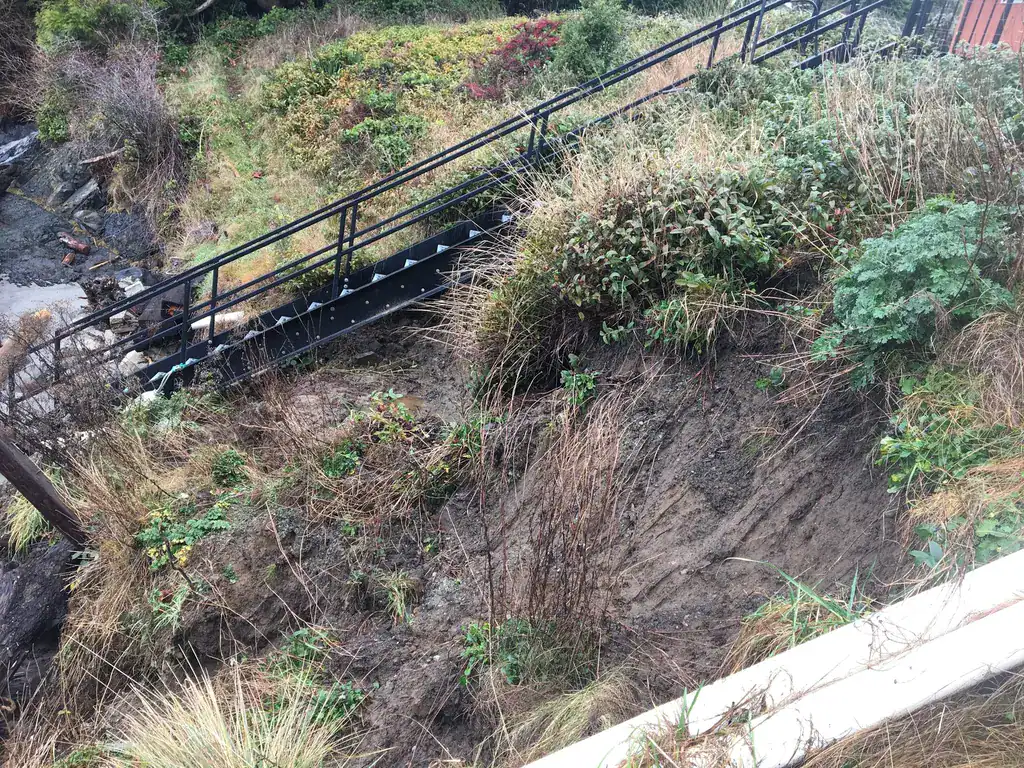
Pender Island shoreline restoration site, North Pender Island, BC

Site documentation, Pender Island shoreline, Green Shores project

Pender Island site, shoreline bioengineering restoration work
Facing a Similar Challenge?
We can assess shoreline exposure, bank geometry, and available live plant material, then shape a treatment suited to the island site.