Cottonwood, Dogwood & Alder for Soil Bioengineering in BC
Three genera complement willow in BC soil bioengineering: cottonwood for poles and canopy development, dogwood for shaded sites, and alder for nitrogen fixation. Drawn from David Polster’s bioengineering course and PES field practice.
Beyond Willow: The Companion Species
Willow does most of the work on a soil bioengineering site, but three other native genera serve specific roles in the British Columbia plant palette. Two root from cuttings like willow; the third does not, and is established a different way entirely.
The Species in Field Context
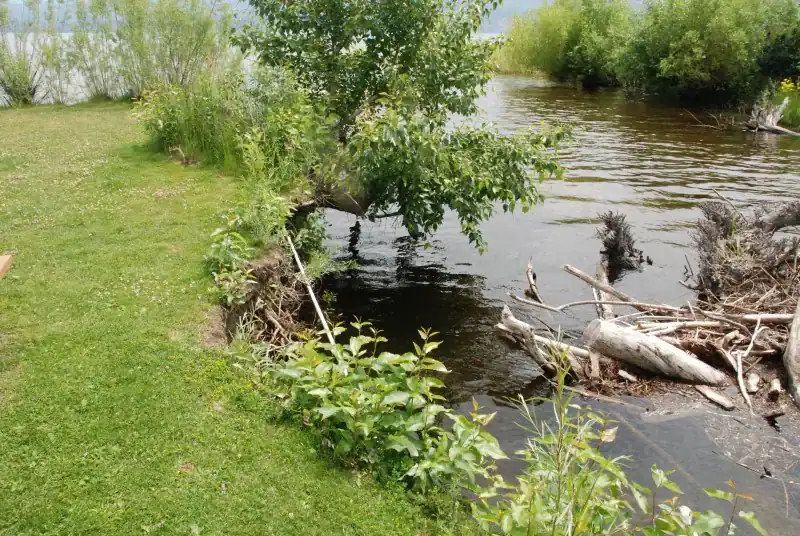
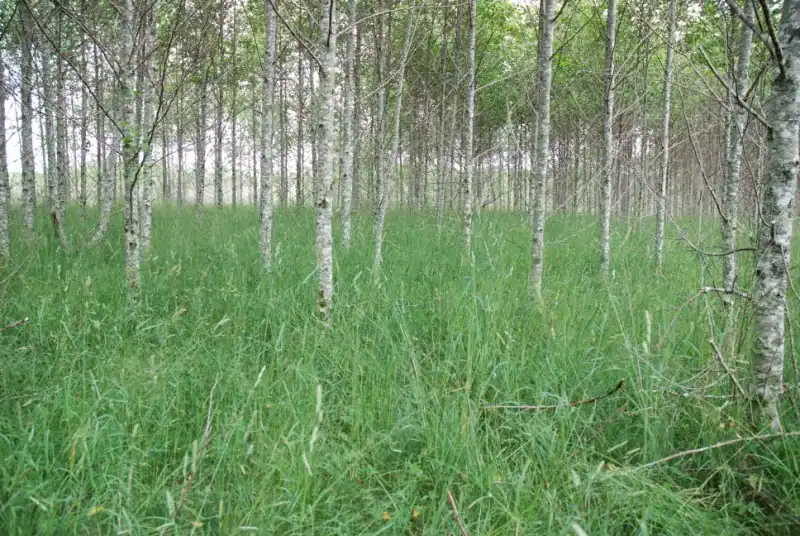
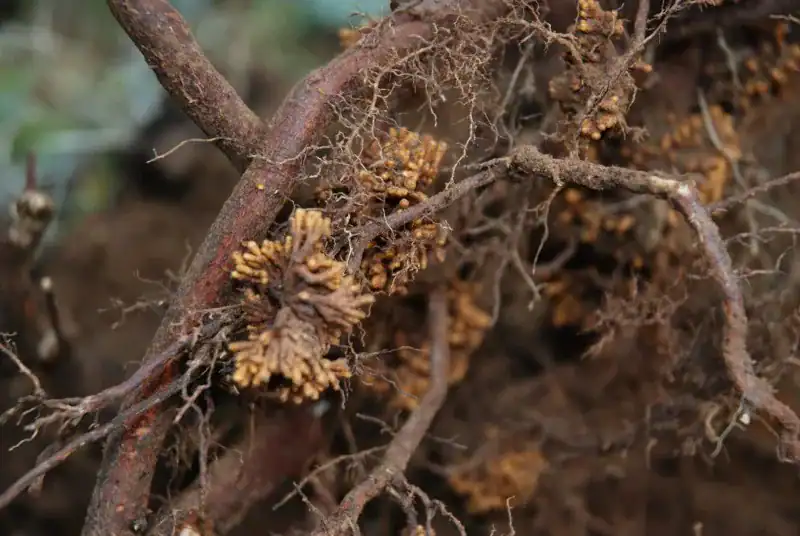
These PES field images show the roles described below: rapid woody cover, alder establishment on disturbed ground, and the nitrogen-fixing root nodules that help rebuild poor substrates.
Cottonwood & Balsam Poplar (Populus spp.)
Black cottonwood (Populus balsamifera ssp. trichocarpa) is the primary species on BC coastal and interior riparian sites; balsam poplar is more common in the northern interior. Both root readily from large-diameter cuttings, or “poles,” and are excellent for larger structural elements. Riparian cottonwood poles (1–2 m long, 3–5 cm diameter) are the primary material for live pole drains. Cottonwood is less tolerant of standing water than willow but thrives on the moist alluvial soils adjacent to streams. It can grow faster than willow in its first few years. David Polster’s course material notes that roots can extend as much as a centimetre per day during the growing season, contributing to riparian canopy development.
Red-Osier Dogwood (Cornus sericea)
A native shrub of riparian zones throughout BC. It is used less often than willow or cottonwood, but is valuable on sites where dogwood is a natural part of the understory community, and particularly where the site is under partial or full shade in which willows would not receive enough sunlight to thrive. Red-osier dogwood cuttings root readily. One caution: the established plant is highly palatable to ungulates. Avoid it on sites with heavy deer or elk pressure unless protection is provided.
Alders (Alnus spp.): Nitrogen Fixers
Sitka alder and red alder are important nitrogen-fixers for reclamation sites, and they self-seed readily onto disturbed ground where conditions are favourable. But alders do not root from cuttings the way willows and cottonwood do. They must be established from seed or container stock. Do not attempt to use alder as cutting material. Red alder (Alnus rubra) is a critical pioneer on rough-and-loose sites: its nitrogen-fixing capacity dramatically improves soil conditions for the species that follow. The bioengineering strategy with alder is to create site conditions, including rough and loose surfaces and puddles, that let natural alder seedlings establish, rather than to plant cuttings.
Quick Reference
| Genus | Roots from cuttings? | Primary bioengineering use | Key caution |
|---|---|---|---|
| Cottonwood / balsam poplar | Yes: large poles | Live pole drains; fast riparian canopy | Less tolerant of standing water than willow |
| Red-osier dogwood | Yes | Shaded sites; understory diversity | Highly palatable to deer and elk; protect it |
| Sitka & red alder | No: seed or container only | Nitrogen fixation on rough-and-loose sites | Never use as cutting material |
Put these methods to work on your site
Polster Environmental Services designs and installs soil bioengineering and natural-process restoration across British Columbia, including mine reclamation, riparian restoration, and slope stabilization.